Yes, barrel saunas are generally weather resistant, and this is one of the main reasons they are so popular for backyards, patios, cabins, gardens, and other outdoor wellness spaces. A well-built barrel sauna is designed to handle common outdoor conditions such as rain, snow, wind, changing humidity, and seasonal temperature shifts. Its rounded shape naturally helps water slide away instead of collecting on a flat roof, while durable woods such as cedar, spruce, thermowood, or aspen can provide strong resistance against moisture, decay, and outdoor wear when properly cared for.
However, it is important to understand that weather resistant does not mean completely maintenance-free or permanently waterproof. A barrel sauna is still a wooden outdoor structure, which means it needs the right placement, good drainage, enough airflow, occasional inspection, and suitable exterior protection to remain in excellent condition over the years. If it is placed directly on wet soil, exposed to constant standing water, or left without maintenance in harsh climates, even a high-quality barrel sauna can begin to show signs of aging.
The good news is that barrel saunas are naturally better suited for outdoor use than many people expect. Their compact structure, curved exterior, tight wooden staves, and efficient heat circulation all work together to create a sauna that is practical, attractive, and durable. Whether you live in a rainy area, a snowy region, a sunny climate, or a place with changing seasons, a barrel sauna can be a long-lasting outdoor retreat as long as it is installed and maintained correctly.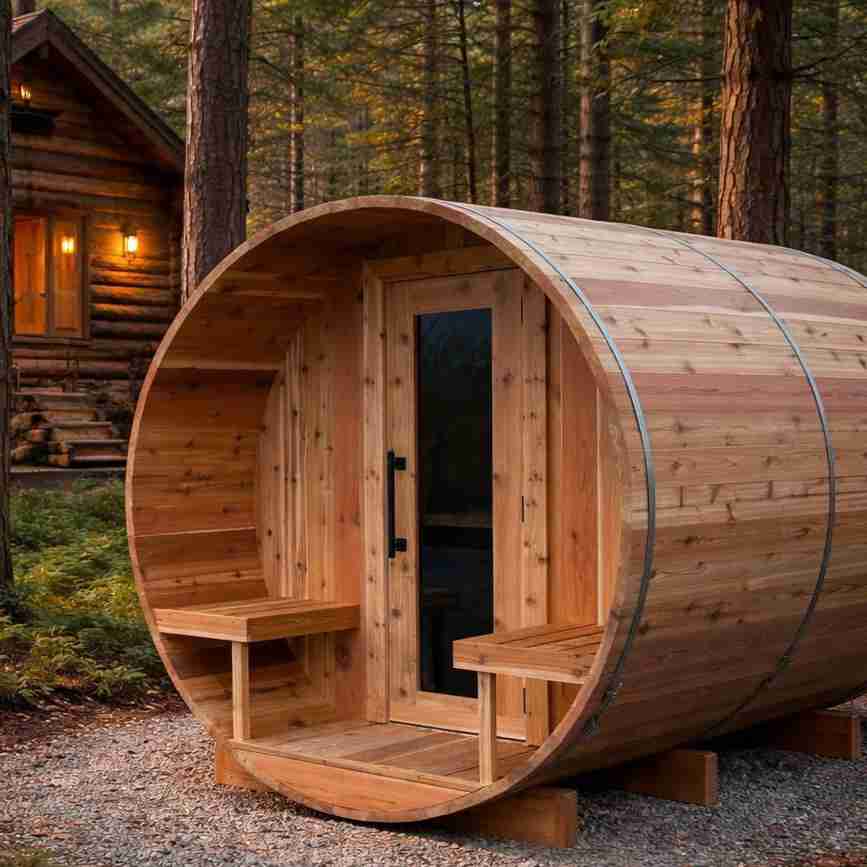
1. What Makes Barrel Saunas Weather Resistant?
Barrel saunas are popular because they combine outdoor durability with a warm, rustic appearance. Their curved shape is not only attractive; it also plays an important role in weather protection. Unlike square or rectangular sauna buildings that may collect rainwater or snow on flat surfaces, a barrel sauna has a rounded exterior that encourages water to run down the sides.
This simple design advantage helps reduce standing moisture, which is one of the biggest threats to outdoor wooden structures. When water sits on wood for too long, it can lead to swelling, cracking, mold, mildew, or rot. The barrel shape helps limit this risk by allowing water to shed more naturally.
Most barrel saunas are built with tightly fitted wooden staves held together by strong metal bands. These staves expand and contract as temperature and humidity change. In good-quality models, this natural movement helps the sauna maintain a tight structure over time. The steel bands keep pressure on the wooden body, helping the sauna remain stable through changing seasons.
The materials also matter. Cedar is one of the most common choices because it naturally resists moisture, insects, and decay. Spruce is also widely used and performs well when properly treated and maintained. Thermowood, which has been heat-treated to improve stability, is another strong option for outdoor sauna use. These woods can withstand a range of weather conditions, making them suitable for patios, backyards, gardens, and other outdoor spaces.
2. Why Are Barrel Saunas Designed for Outdoor Use?
Barrel saunas are often designed specifically for outdoor installation. Their compact, self-contained structure makes them easier to place outside than many traditional indoor saunas. A barrel sauna can usually fit on a patio, deck, concrete pad, gravel base, or garden area without requiring a full building renovation.
This outdoor-friendly design is one of the biggest reasons people choose barrel saunas. Instead of converting a bathroom, basement, or spare room into a sauna, homeowners can create a relaxing retreat in the backyard. The sauna becomes part of the outdoor landscape, offering a spa-like experience without taking up interior living space.
The curved body also supports efficient heating. Because there are fewer corners inside the sauna, hot air circulates more evenly. Heat does not get trapped in awkward spaces, and the sauna typically reaches a comfortable temperature faster than a larger, box-shaped sauna room. This efficiency can be especially helpful outdoors, where colder air may affect heating performance.
Barrel saunas also have a naturally charming look. Their rustic wooden shape blends well with gardens, cabins, lake houses, mountain homes, and modern backyards. For many buyers, the appeal is both practical and visual. A barrel sauna is not just a wellness product; it can also become a standout outdoor feature.
3. Where Should You Place a Barrel Sauna for Better Weather Protection?
Placement has a major influence on how weather resistant a barrel sauna remains over time. Even a high-quality sauna can age faster if it is placed directly on wet soil, in a low-drainage area, or under constant falling debris.
The best location is a level, stable surface that allows water to drain away. Concrete pads, paver bases, gravel foundations, and well-built decks are common choices. Gravel is especially useful because it allows rainwater to move away from the sauna instead of collecting underneath it. A concrete surface can also work well, provided it does not create puddles around the base.
Avoid placing the sauna in a spot where water flows toward it during storms. If the surrounding ground slopes inward, rainwater may collect around the support cradles and lower wooden sections. Over time, this can increase the risk of moisture damage.
It is also helpful to leave space around the sauna for airflow. Good airflow allows the exterior wood to dry after rain, snow, or heavy humidity. A sauna placed too tightly against a wall, fence, or dense vegetation may stay damp longer than one placed in a more open area.
Shade can be useful in hot climates because it reduces sun exposure and may help protect the wood from fading or drying too quickly. However, deep shade in a damp environment can slow drying. The ideal placement balances sun, airflow, and protection from extreme weather.
4. When Do Barrel Saunas Need Extra Weather Protection?
Although barrel saunas are built for outdoor use, some climates require additional protection. If you live in an area with heavy rainfall, long snowy winters, intense sun, coastal salt air, or extreme temperature changes, extra care is wise.
In rainy climates, a rain jacket, shingles, or an added roof cover can help protect the top of the barrel. Even though the curved shape sheds water, the upper half of the sauna receives the most direct exposure. A protective cover can reduce how much moisture the wood absorbs and may extend the sauna’s lifespan.
In snowy regions, removing heavy snow buildup is important. The rounded roof helps snow slide off, but wet, compacted snow can still accumulate. Regularly clearing excess snow reduces stress on the structure and helps prevent prolonged moisture exposure.
In hot, sunny climates, UV rays can fade and dry out wood. Over time, this may cause the exterior to turn gray or develop surface cracks. Applying an exterior wood treatment suitable for sauna use can help slow weathering while preserving the natural appearance of the wood.
In coastal areas, salty air can affect both wood and metal components. Stainless steel hardware and regular cleaning become more important in this environment. The steel bands should be inspected occasionally for signs of corrosion, especially if the sauna is located near the ocean.
5. Who Should Choose a Weather-Resistant Barrel Sauna?
A barrel sauna is a strong choice for homeowners who want an outdoor sauna that is efficient, attractive, and relatively easy to install. It suits people who have a backyard, patio, deck, garden space, or cabin property and want a sauna that can stand outdoors throughout the year.
It is especially suitable for those who prefer a compact sauna. Most barrel saunas are designed for two to six people, depending on the model. This makes them practical for couples, families, or small groups of friends. They are usually smaller than many traditional sauna rooms, but their shape makes efficient use of interior space.
A barrel sauna is also ideal for people who like a more natural wellness experience. Sitting inside a wooden barrel sauna in the backyard can feel very different from using an indoor sauna room. The outdoor setting adds atmosphere, especially in winter, after exercise, or in the evening.
Those who want easier installation may also prefer a barrel sauna. Many models are sold as prefabricated kits. The pieces are pre-cut, grooved, and designed for assembly on-site. Compared with a custom traditional sauna, this can reduce installation time and complexity.
However, a barrel sauna may not be the best option for someone who wants a large indoor spa room, built-in changing area, shower, steam feature, or highly customized interior layout. In those cases, a traditional sauna may offer more flexibility.
6. How Do Barrel Saunas Compare With Traditional Saunas in Bad Weather?
Barrel saunas and traditional saunas can both perform well, but their weather resistance depends on design and location. Barrel saunas are commonly built as outdoor units, while traditional saunas are often installed indoors or inside a dedicated structure.
A barrel sauna has an advantage outdoors because of its rounded shape. The curve naturally reduces water pooling, and the compact structure heats efficiently in cold weather. It can usually be installed with less construction work than a traditional outdoor sauna building.
Traditional saunas, especially indoor ones, are protected from rain, snow, wind, and direct sun. Because they are inside a house or separate enclosed building, they may require less exterior maintenance. However, if a traditional sauna is built outdoors, it usually needs more construction planning. It may require full insulation, weatherproof siding, roofing, vapor barriers, and a proper foundation.
Traditional saunas can be larger and more customizable. They may include multiple benches, windows, changing rooms, showers, storage areas, or luxury finishes. This makes them attractive for people who want a more permanent spa-like setup. But that added complexity can also mean higher cost and more maintenance if the sauna is exposed to outdoor weather.
Barrel saunas are simpler, more compact, and often more affordable. Their weather-resistant design makes them appealing for outdoor wellness spaces, especially where the goal is to enjoy a reliable sauna without building a full sauna room.
7. What Materials Help a Barrel Sauna Resist Weather?
The wood used in a barrel sauna plays a major role in how well it handles outdoor conditions. Some woods naturally resist moisture and decay better than others.
Cedar
Cedar is one of the most popular materials for outdoor saunas. It contains natural oils that help resist insects, moisture, and decay. Cedar also has a pleasant aroma and remains comfortable to the touch even in high heat. It is lightweight, stable, and visually appealing.
Spruce
Spruce is another common sauna wood. It is strong, traditional, and often more affordable than cedar. Spruce can perform well outdoors, but it may require more careful protection depending on the climate. With proper maintenance, it can still provide many years of use.
Thermowood
Thermowood is wood that has been heat-treated to improve durability, moisture resistance, and dimensional stability. This treatment reduces the wood’s ability to absorb water, helping it resist warping and swelling. Thermowood is a strong choice for outdoor barrel saunas in variable climates.
Aspen and Hemlock
Aspen and hemlock may also be used in some sauna designs. Aspen is smooth and comfortable, often used for interiors. Hemlock has a clean appearance and good structural qualities. The best choice depends on budget, appearance preferences, and local climate.
Metal Bands and Hardware
The metal bands are also important. High-quality stainless steel or corrosion-resistant bands hold the barrel together and help maintain pressure around the wooden staves. If the bands weaken or rust, the sauna may lose structural tightness over time.
8. How Does the Barrel Shape Improve Heat and Moisture Performance?
The barrel shape is one of the main reasons these saunas are efficient and weather resistant. Inside the sauna, the curved walls allow heat to circulate smoothly. In a square sauna, heat can gather in corners or near the ceiling. In a barrel sauna, there are fewer dead zones, so the warm air moves more naturally around the space.
This helps the sauna heat up faster. A smaller air volume and rounded interior mean less energy is needed to reach the desired temperature. Faster heat-up times can reduce waiting time and may lower energy use, depending on the heater type and outdoor temperature.
The same shape also helps outside the sauna. Rainwater and melting snow are less likely to sit on the roof because there is no flat roof. Water moves down the curved sides, reducing long-term exposure on the top surface.
Some barrel saunas also use support cradles that lift the sauna slightly off the ground. This helps keep the wood away from standing water and improves airflow underneath. Better airflow helps the structure dry more quickly after wet weather.
However, the curved shape alone is not enough. If the sauna is placed in a wet location or left untreated in harsh weather, damage can still occur. Good design works best when combined with smart placement and basic maintenance.
9. What Maintenance Keeps a Barrel Sauna Weather Resistant?
Routine care is the key to keeping a barrel sauna weather resistant for many years. Maintenance does not have to be difficult, but it should be consistent.
Inspect the Exterior Wood
The exterior should be inspected regularly for cracks, gaps, discoloration, or signs of moisture damage. Wood naturally changes over time, especially outdoors. Small cracks may appear as the wood expands and contracts. Many of these are normal, but larger gaps or persistent damp areas should be addressed.
Check and Tighten the Bands
The metal bands should also be checked. Because the wood can shrink or expand depending on humidity, the bands may occasionally need adjustment. Keeping the bands properly tightened helps maintain the barrel’s shape and prevents unnecessary gaps between staves.
Keep the Surface Clean
Cleaning is also important. Leaves, dirt, pollen, and debris can hold moisture against the wood. Removing debris from the top and around the base helps the sauna dry properly. If the sauna is under trees, this becomes especially important.
Maintain Ventilation
Ventilation should never be ignored. A sauna must be able to dry inside after use. Leaving the door slightly open after a session, when safe to do so, can help release moisture. Proper vents also support airflow during operation and drying afterward.
Use Suitable Exterior Protection
Depending on the wood and climate, exterior treatment may be recommended. A breathable wood stain or protective finish designed for outdoor sauna use can help protect against rain and UV damage. Interior sauna surfaces usually should not be treated with standard exterior chemicals, because high heat can release unwanted fumes. Always choose products suitable for sauna conditions.
10. Why Is Drainage Important for Outdoor Barrel Saunas?
Drainage is one of the most overlooked parts of barrel sauna weather resistance. Even the best wood can suffer if the sauna sits in water or remains damp underneath.
A barrel sauna should not be installed directly on grass, mud, or uneven soil. These surfaces can hold moisture, shift over time, and create poor airflow. Instead, the sauna should rest on a dry, stable base.
Gravel is a practical choice because it allows water to drain quickly. A gravel pad can also help level the sauna and reduce direct contact with wet ground. Concrete and pavers can work well too, but they should be designed so water does not pool under the sauna.
The area around the sauna should slope gently away from the structure. This prevents rainwater from collecting around the base. If water naturally flows toward the sauna, adding drainage channels or adjusting the landscape may be necessary.
Good drainage protects the lower part of the sauna, including the support cradles and bottom staves. These areas are most vulnerable because they are closest to ground moisture. Keeping them dry is one of the best ways to extend the life of the sauna.
11. How Do Barrel Saunas Perform in Rain, Snow, Wind, and Sun?
Barrel saunas can handle a variety of weather conditions, but each type of weather affects them differently.
Rain
In rain, the rounded body helps water run off. A well-built sauna with tight staves and good bands should resist normal rainfall. However, frequent heavy rain may justify adding a roof cover or rain jacket for extra protection.
Snow
In snow, barrel saunas often perform well because their curved tops discourage accumulation. Still, heavy snow should be cleared when necessary. Long-term snow contact can keep the exterior wet, especially during freeze-thaw cycles.
Wind
In wind, the sauna’s compact shape can be an advantage. However, the unit should still be placed securely on a stable surface. In very windy areas, additional anchoring may be recommended.
Sun
In sun, wood can fade, dry, and weather naturally. This is not always a structural problem, but it affects appearance. Some owners enjoy the natural silver-gray patina that develops over time, while others prefer to maintain the original wood tone with protective treatment.
Humidity
In humid climates, airflow is especially important. A sauna that cannot dry properly may develop mildew or surface mold. Regular cleaning and ventilation can help prevent this.
12. What Are the Main Advantages of Barrel Saunas?
Barrel saunas offer several advantages beyond weather resistance. Their compact size, efficient shape, and outdoor-ready design make them appealing for many homeowners.
Fast Heating
One major benefit is fast heating. Because the interior space is smaller and rounded, the heater does not have to warm unnecessary corners. Heat circulates evenly, creating a comfortable sauna environment.
Energy Efficiency
Another advantage is energy efficiency. Faster heat-up times and good heat retention can reduce energy use compared with larger sauna rooms. This depends on the heater, insulation, outdoor temperature, and usage habits, but the design itself is efficient.
Easy Installation
Barrel saunas are also easier to install than many traditional saunas. Prefabricated kits simplify assembly and reduce the need for extensive construction. Many homeowners choose them because they want a sauna without a long remodeling project.
Distinctive Appearance
Their appearance is another strong selling point. A barrel sauna looks distinctive and inviting. It can become a focal point in a backyard, garden, or cabin setting.
Practical Portability
Portability is also worth noting. Although a barrel sauna is not something you move every day, it is generally more movable than a built-in traditional sauna. This can be useful for people who may want to relocate the sauna later.
13. What Are the Limitations of Barrel Sauna Weather Resistance?
Barrel saunas are weather resistant, but they are not maintenance-free. Outdoor wood always requires some level of care.
One limitation is that wood expands and contracts. This movement is natural, but it can create small gaps over time. Proper band adjustment helps manage this issue.
Another limitation is that the top of the sauna receives direct exposure to rain, snow, and sun. Without added roof protection, the upper exterior may weather faster than the lower sections. Many owners add shingles, a rain cover, or a protective roof layer to reduce this exposure.
Barrel saunas also tend to have less insulation than some traditional custom-built saunas. This is usually balanced by the compact shape, but in very cold climates, heating performance may depend heavily on heater quality and proper sealing.
Interior space can be another limitation. Barrel saunas are efficient, but their curved walls may reduce headroom near the sides. Larger users or those wanting a spacious lounge-style sauna may prefer a traditional rectangular model.
Finally, outdoor placement means exposure to insects, pollen, leaves, dirt, and seasonal debris. Regular cleaning is needed to keep the sauna in good condition.
14. How Do Barrel Sauna Costs Compare With Traditional Saunas?
Barrel saunas often have a lower upfront cost than custom traditional saunas. This is partly because many barrel saunas come in standardized sizes and kit formats. Pre-cut materials reduce labor and design costs.
Traditional saunas can vary widely in price. A small indoor electric sauna may be fairly affordable, while a custom-built outdoor sauna with insulation, windows, premium wood, a changing room, and a luxury heater can cost much more.
Installation also affects total cost. Barrel saunas are generally easier to assemble and may not require major home modifications. Traditional saunas often need framing, insulation, wiring, vapor barriers, flooring, and interior finishing. If the sauna is indoors, ventilation and moisture control must also be carefully planned.
The heater type matters as well. Electric heaters are convenient and common. Wood-burning heaters provide a traditional experience but may require chimney installation and local code compliance. Infrared systems work differently and are usually associated with lower-temperature sauna experiences.
Maintenance costs should also be considered. Barrel saunas may need exterior care because they are usually outdoors. Traditional indoor saunas may require less exterior maintenance but can involve more complex repairs if built into a home.
15. Which Is Better for Outdoor Use: Barrel Sauna or Traditional Sauna?
For many homeowners, a barrel sauna is the easier and more practical outdoor choice. It is compact, attractive, efficient, and designed to handle outdoor conditions. Its shape naturally sheds water, and its kit-style construction makes installation simpler.
A traditional sauna can also work outdoors, but it usually requires more planning. It may need a full roof, insulated walls, siding, foundation work, and more extensive weatherproofing. This can create a beautiful and long-lasting outdoor sauna building, but it is usually more expensive and time-consuming.
If you want a quick, stylish, and efficient backyard sauna, a barrel sauna is often the better option. If you want a large, permanent, fully customized spa structure, a traditional outdoor sauna may be worth the investment.
The best choice depends on your space, climate, budget, and sauna goals. A small backyard may favor a barrel sauna. A large property with room for a dedicated wellness building may support a traditional sauna.
16. Additional Feature One: Roof Covers and Rain Jackets for Barrel Saunas
One useful feature for improving barrel sauna weather resistance is a roof cover or rain jacket. While the barrel shape already helps water run off, the upper portion of the sauna still receives the most weather exposure. A protective cover adds another layer of defense.
Roof covers may be made from shingles, metal, rubberized materials, or fitted weather-resistant fabric. They help reduce direct rain contact, slow UV damage, and protect the seams between wooden staves.
A rain jacket is especially helpful in climates with frequent storms or long wet seasons. It can also reduce the amount of exterior maintenance needed over time. For buyers concerned about weather resistance, choosing a barrel sauna with an included roof kit or adding one after installation is a smart upgrade.
However, the cover should still allow ventilation. Trapping moisture under a poorly designed cover can create problems. A good cover protects the wood while allowing the sauna to breathe and dry properly.
17. Additional Feature Two: Outdoor Lighting and Entry Protection
Another valuable feature for outdoor barrel saunas is protected entry lighting. Since barrel saunas are often used in the evening or during colder seasons, good lighting improves safety and comfort.
Exterior lighting near the entrance helps users step in and out safely, especially when the ground is wet, snowy, or icy. Warm, low-glare lighting can also enhance the relaxing atmosphere.
Entry protection is also useful. A small porch, canopy, or mat area can reduce the amount of water, mud, or snow tracked into the sauna. Some barrel saunas include a small front porch or changing area, while others can be paired with simple outdoor decking.
These features do not directly change the sauna’s structure, but they improve the overall outdoor experience. They also help keep the interior cleaner and drier, which supports long-term maintenance.
18. How Can You Make a Barrel Sauna Last Longer Outdoors?
To extend the life of a barrel sauna, start with quality materials and proper installation. Choose durable wood, corrosion-resistant hardware, and a reliable heater. Place the sauna on a level, well-drained base and allow airflow around the structure.
Add roof protection if your climate is wet, snowy, or harsh. Keep the exterior clean and remove debris regularly. Inspect the bands, door, vents, and wood surfaces throughout the year.
After each sauna session, allow the interior to dry. Good ventilation prevents moisture from staying trapped inside. Wipe down benches if needed, and clean the floor regularly.
Avoid using harsh chemicals inside the sauna. High heat can make chemical residues unpleasant or unsafe. Use mild cleaning methods suitable for sauna wood.
Seasonal checks are also helpful. Before winter, inspect the roof cover, bands, and base drainage. After winter, check for moisture damage, cracks, or shifting. Before summer, consider whether the exterior needs UV protection.
With steady care, a well-built barrel sauna can last for many years, even outdoors.
19. What Should You Consider Before Buying a Weather-Resistant Barrel Sauna?
Before buying a barrel sauna, consider your climate first. If you live somewhere wet or snowy, prioritize durable wood, strong bands, roof protection, and good drainage. If you live somewhere hot and sunny, UV protection may be more important.
Next, think about size. Barrel saunas commonly fit two to six people. Choose a size that matches how you plan to use it. A two-person model may be perfect for personal relaxation, while a larger model is better for families or guests.
Consider the heater as well. Electric heaters are convenient and easy to control. Wood-burning heaters create a traditional atmosphere and can be useful in remote locations, but they require more setup. Infrared heating is a different experience and may not feel like a classic high-heat sauna.
Look at the door, windows, benches, ventilation, and accessories. A good sauna should feel comfortable, not just look attractive. Ventilation is especially important for performance and drying.
Finally, think about maintenance. A barrel sauna is easier to maintain than many outdoor structures, but it still needs care. If you are willing to inspect, clean, and protect the wood, a barrel sauna can be a long-lasting investment.
20. Why Are Barrel Saunas a Good Investment for Outdoor Wellness?
A barrel sauna offers more than heat. It creates a dedicated space for relaxation, recovery, and quiet time. Many people use saunas to unwind after work, warm up in winter, soothe muscles after exercise, or create a wellness routine at home.
The outdoor setting adds another layer to the experience. Stepping from fresh air into a warm wooden sauna can feel deeply restorative. In colder climates, the contrast between outdoor air and sauna heat is part of the appeal.
Barrel saunas also add visual character to a property. Their rounded wooden form feels natural and inviting. They can complement rustic cabins, modern gardens, lake homes, or suburban yards.
From a practical perspective, barrel saunas are efficient, compact, and often easier to install than traditional sauna rooms. Their weather-resistant design makes them suitable for year-round outdoor use when properly maintained.
For homeowners who want a balance of function, beauty, and relaxation, a barrel sauna is a strong choice.
Conclusion
Barrel saunas are weather resistant and well suited for outdoor use, but they perform best when made from quality wood, installed on a proper base, and maintained regularly. Their rounded shape helps rain and snow slide away, while their compact design supports fast heating and efficient heat circulation. These features make barrel saunas one of the most practical choices for backyard sauna installations.
Still, outdoor durability depends on more than shape alone. Drainage, airflow, roof protection, band adjustment, and wood care all play important roles. A barrel sauna left in harsh weather without maintenance may age quickly, while a well-cared-for model can provide years of reliable use.
Compared with traditional saunas, barrel saunas are usually easier to install, more compact, and naturally suited to outdoor spaces. Traditional saunas offer greater customization and larger layouts, but they often require more construction and weatherproofing when placed outside.
If you want a relaxing outdoor retreat that combines efficient heating, rustic beauty, and strong weather resistance, a barrel sauna is an excellent option. With the right setup and care, it can become a long-lasting part of your home wellness routine.
Frequently Asked Questions
1. Are barrel saunas fully waterproof?
Barrel saunas are weather resistant, but they are not completely waterproof in the same way as a sealed plastic or metal structure. They are made from wood, which naturally expands and contracts with moisture and temperature changes. A good barrel sauna sheds rain well and can handle outdoor conditions, but it still needs proper drainage, ventilation, and occasional maintenance. Adding a roof cover or rain jacket can improve protection.
2. Can a barrel sauna stay outside all year?
Yes, a barrel sauna can stay outside all year if it is designed for outdoor use and properly maintained. Many barrel saunas are built specifically for backyards, patios, gardens, and cabins. To keep it in good condition, place it on a stable, well-drained base, inspect the wood and bands regularly, remove snow or debris when needed, and protect the exterior according to your local climate.
3. What is the best wood for a weather-resistant barrel sauna?
Cedar, thermowood, and high-quality spruce are common choices for outdoor barrel saunas. Cedar is valued for its natural resistance to moisture, insects, and decay. Thermowood is heat-treated for improved stability and moisture resistance. Spruce is traditional and durable when properly cared for. The best choice depends on your climate, budget, and appearance preferences.