Introduction
Saunas have long been shorthand for winding down: the hush of wood, the warm hush of steam (or gentle infrared glow), and that floaty feeling when you step out. Lately family wellness has been trending — and that brings up a question lots of parents whisper over coffee: can kids join the steam party? Short answer: yes — sometimes — with rules. The longer, better answer depends on age, temperature, how long they stay, and whether an adult is paying attention. You might be wondering what “paying attention” actually means here. Lucky for you, I did the homework.
Understanding How Heat Affects Children Differently
Physiological differences
Kids aren’t just small adults. Their bodies handle heat differently: their sweat glands and circulation aren’t as efficient at cooling as an adult’s, and they dehydrate faster. That means the same sauna session that’s relaxing for you can push a child toward overheating quicker. This isn’t scary — it’s just biology to respect.
Higher risk of dehydration and overheating
Because they lose water faster and can’t regulate body temperature as well, children are at higher risk of heat-related symptoms. Watch for flushed skin, dizziness, nausea, or unusual tiredness — those are your red flags to get them out and cool them down. Medical guidance on heat-related illnesses underscores these signs and the need for rapid cooling and hydration.
Importance of shorter exposure
Short sessions are the name of the game. Babies and toddlers should have very brief exposure (if any), and older kids should start with just a few minutes. Research reviews on sauna bathing note that, when used carefully, saunas are tolerated by children — but duration and temperature must be moderated.
Parental guidance and observation
You’ll want to be within arm’s reach. Really. Keep conversations light, check skin color, ask how they feel, and if they’re sleepy or unusually quiet — out they go. Running late, the idea still stuck: supervision is non-negotiable.
Recommended Guidelines for Kids in Saunas
Appropriate age and temperature ranges
Most sources and experts suggest cautious introduction around school age, with many recommending age 6 and up for light sauna use; younger kids can be introduced in extremely short bursts if the family tradition calls for it (we’ll get to Finland in a sec). Keep temps moderate — roughly 50–60°C (122–140°F) for kids, and limit sessions to 5–10 minutes to start. If you bump the heat, shorten the time. These are practical, conservative guardrails based on clinical and cultural guidance.
“Many studies…found some proof that saunas may help,” — but those studies were mostly in adults and focused on health conditions; kids need tailored rules.
Hydration and cooldown importance
Make hydration part of the ritual. Water before, water after. A cool shower or a rest in a shaded room helps their bodies return to baseline. Offer small sips often rather than one big gulp. Electrolyte drinks can be considered after intense sweating, but plain water usually does the trick.
Cultural insights
If you’ve ever seen a Finnish family sauna scene — grandparents, toddlers, the family dog — it looks effortless. In Finland, kids are often introduced very young but carefully: very short stays, gradual exposure, and constant supervision are typical. That long cultural history gives useful models for safe, gradual introduction rather than wild experimentation.
Choosing the Right Type of Sauna for Families and Wellness Facilities
Infrared vs. traditional saunas — quick comparison
Feature | Traditional (Hot Rock/Steam) | Infrared |
Typical temp range | 70–100°C (158–212°F) | 40–60°C (104–140°F) |
Heat source | Air and steam heat the body | Infrared rays heat tissue directly |
Contact burn risk | Higher around heater surfaces | Lower (no hot stove) |
Kid-friendliness | Needs more careful control | Often more family-friendly due to lower temps |
Why this matters: lower ambient temps and fewer hot metal surfaces reduce some risks for children. But lower temp ≠ no risk — supervision and time limits still apply.
Infrared saunas: practical perks for families
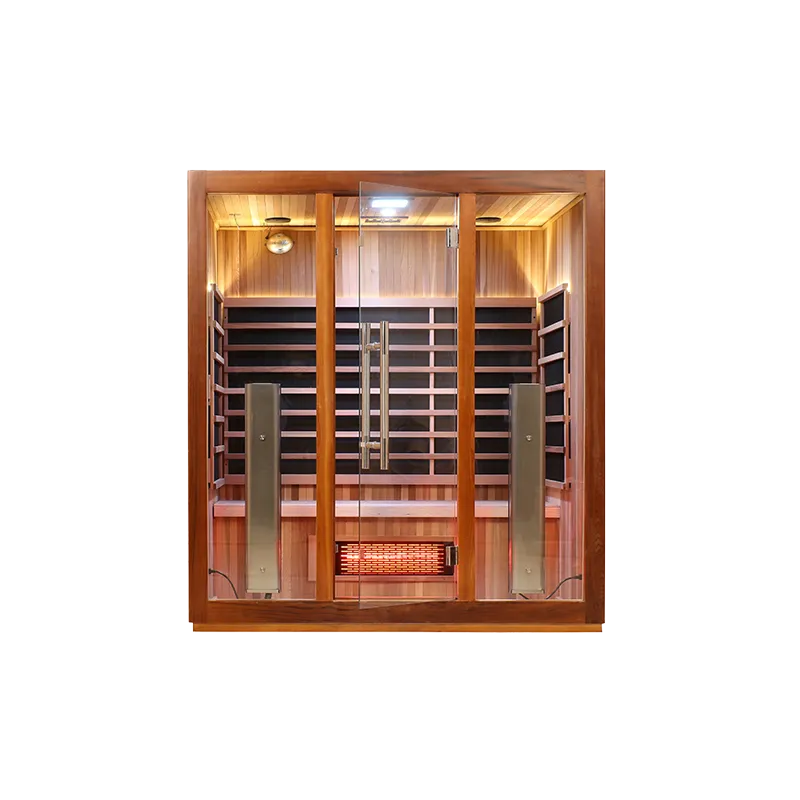
Infrared units typically run cooler, which can make them easier to control for kids and newbie adults alike. They also heat the body differently (direct tissue warming), which some families and facilities prefer for comfort. Major health sources note infrared saunas are being studied for multiple benefits — though larger studies are needed — and they tend to operate at milder temperatures compared with traditional saunas.
Smartmak’s solution for safer and versatile use
Many modern infrared sauna manufacturers — Smartmak among them — build units with precise digital thermostats, low EMF design, and safety-focused materials so family and facility operators can set child-friendly programs (e.g., max temp lockouts, short-session presets, child-safety door release). For wellness centers, hotels, or gyms, modular infrared units can create family zones that separate adult-only heat rooms from milder, family-friendly cabins. (If you want product details, check Smartmak product specs.)
Practical Tips for Introducing Kids to Sauna Use
Start slow and make it fun
- Trial run outside the heat.Explain what will happen. “We’ll sit for five minutes and then have a cool towel and juice.”
- Use a timer.Digital timers remove guesswork. Two minutes for the first session? Perfect. Gradually add time across visits.
- Play the “how do you feel?” game.Teach kids to use a simple scale: 1 = great, 5 = not good. If they say 3+, stop.
Teach sauna etiquette
- Sit on towels.
- No running. No jumping. (Hot benches are surprisingly hard.)
- Quiet voices; relax.
- Respect others’ space.
Hydration & cooldown routine (make it a ritual)
- 1–2 small sips before entering.
- After 3–5 minutes, out for a cool shower or rest.
- Reward with a fun cold drink and story time. Positive associations matter.
For facilities: build in safety features
- Child-safe door handles that open outward.
- Visible windows so staff can see in.
- Clear signage about age/temperature/time limits.
- First-aid kit and staff trained in heat-related illness management.
Conclusion
Kids can absolutely be part of the sauna story — but only if you treat it like a new sport: warm up, respect limits, hydrate, and keep an adult coach nearby.outdoor infrared sauna, like Smartmak’s family-focused units, make that easier by offering milder temps and programmable safety features. Think short sessions, moderate heat, and supervision — and you get a gentle, memorable family ritual rather than a risky experiment. Imagine a small hand in yours, the faint cedar smell, and everyone stepping out refreshed together. That’s the picture to aim for.
FAQ
How long should a child stay in a sauna?
Start with 2–5 minutes for younger kids and 5–10 minutes for older children. Short, repeated sessions are better than one long one. If they look uncomfortable — stop immediately.
What is the safest sauna temperature for children?
Aim lower than adult comfort levels. 50–60°C (122–140°F) is a cautious range for older kids; infants and toddlers should only be exposed briefly and under strict guidance if at all.
Can kids use an infrared sauna?
Yes — many families prefer infrared because it runs cooler and lacks an exposed hot stove. But the rules still apply: short time, hydration, watch for symptoms, and consult a pediatrician if your child has health conditions.
How can parents ensure kids stay hydrated in saunas?
Make hydration part of the ritual: a small cup before, small sips after, and a cool shower between rounds. Electrolytes if they’ve been sweating a lot, but usually water is enough.
Are there any health risks for kids using saunas too young?
Young children have immature temperature regulation and can dehydrate or overheat faster than adults. Burns from hot surfaces in traditional saunas are an additional risk. Use caution, short exposure, and adult supervision; when in doubt, check with your pediatrician.