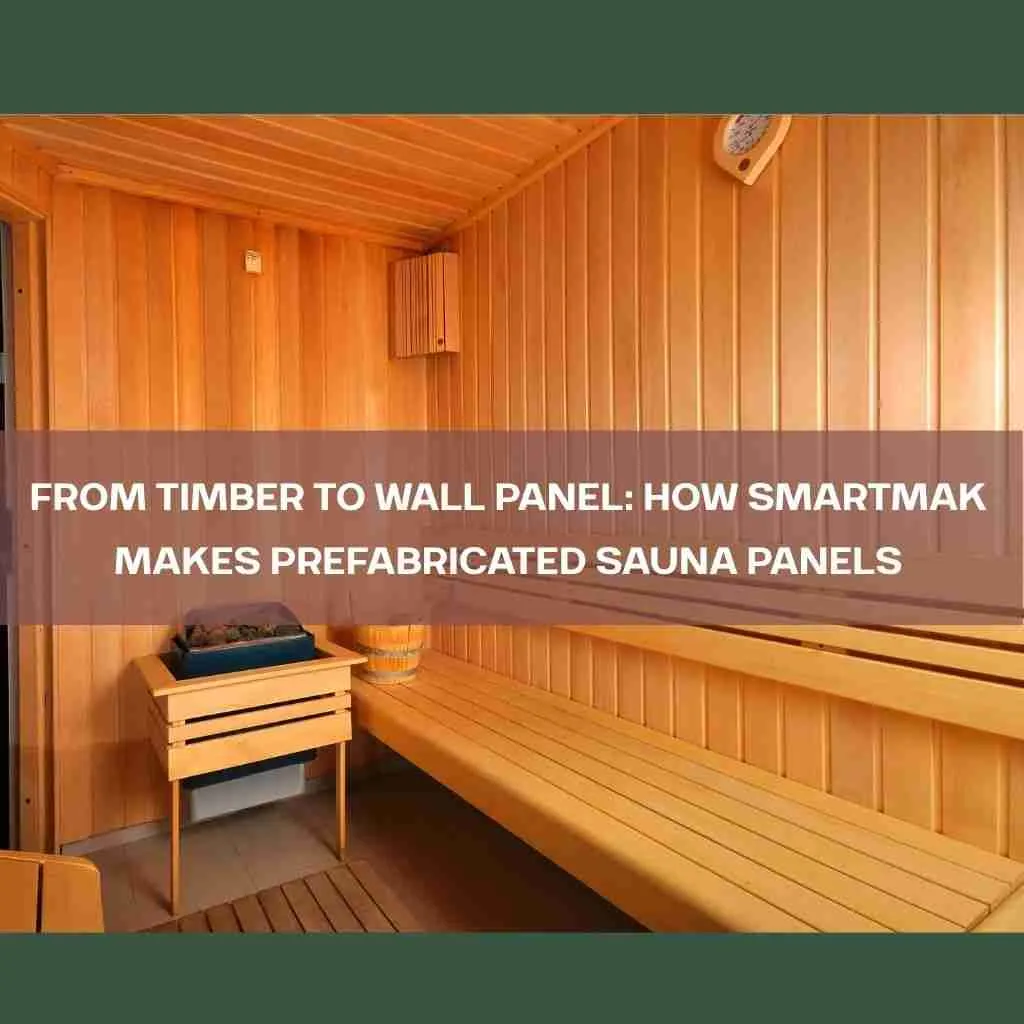
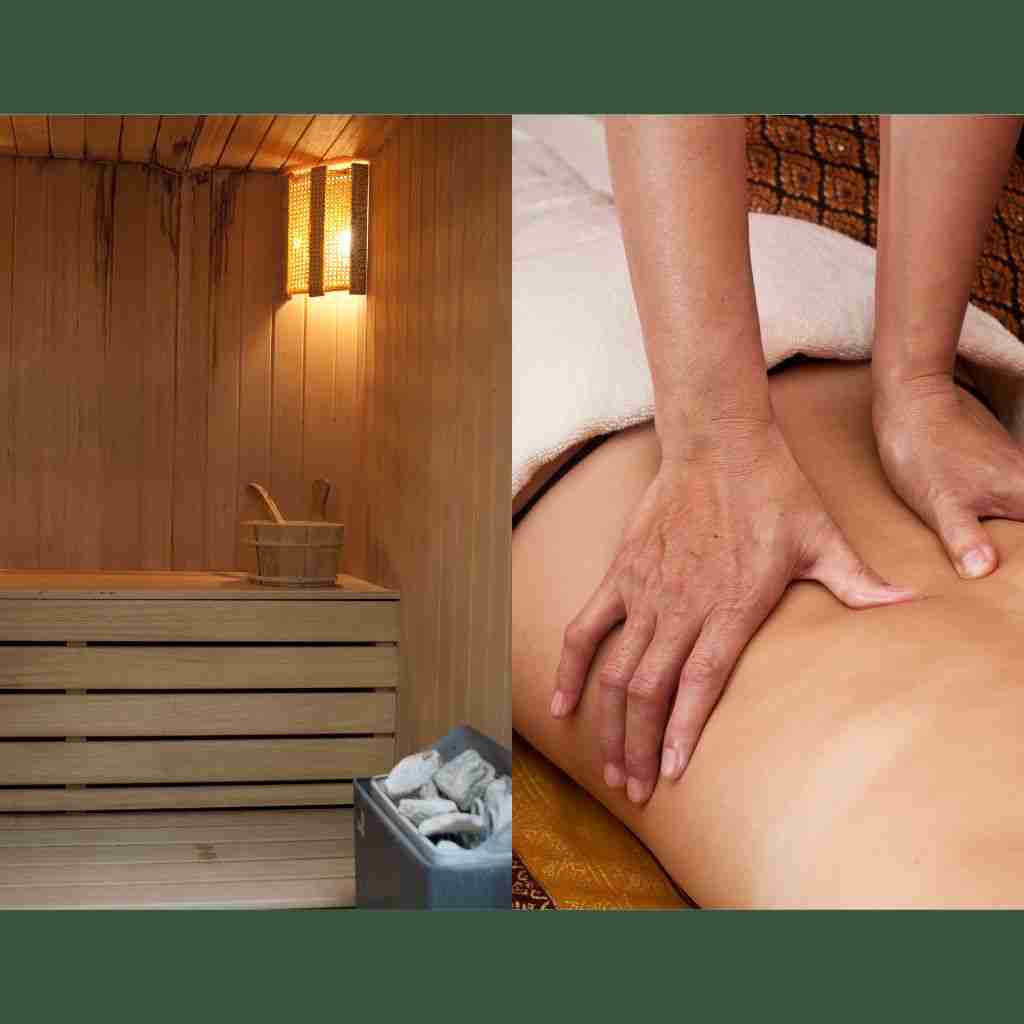
Saunas hold a traditional significance in Finland. There are more saunas than private cars in Finland —about 3 million saunas for 5.5 million people. Saunas are part of their city apartments, summer cottages, and even corporate offices. A sauna can help reduce the chances of Dementia, Alzheimer’s, and Cardiovascular diseases. The incredible benefits are making saunas a lifestyle priority rather than a luxury.

The applications of saunas expand from home use to commercial projects. Yet, the most common questions that homeowners and wellness facility operators have in 2025 are: How much does a sauna actually cost today? What is the difference between commercial-grade and home-use saunas? What are some trending additional features that convert saunas from a traditional therapy to a modern-day wellness retreat?
This article will analyze the factors that affect sauna pricing, like materials, features, and installation. It will also explain the types of saunas and their average price. By the end of the article, you will have the comprehensive knowledge to find a product that fits your price bracket and has all the features you require.
Key Factors That Influence Sauna Pricing in 2025
Prices can vary drastically depending on the sauna’s features and intended function. There are $300 portable units and $20,000+ custom commercial setup options. Some modern technological advancements, such as low-EMF infrared saunas from brands like Smarkmak, can help reduce energy costs by 20%. So let’s analyze some of these factors:
Sauna Type and Technology
- Traditional Steam:Traditional saunas use volcanic stones and electric heaters to distribute heat evenly. It can deliver 195°F steam through the process called löyly (pronounced roughly as “low-loo”).
- Infrared Sauna:Using infrared radiation, the heat penetrates deep into tissues, providing a gentler heating experience. Full-spectrum infrared can help create a more gentle 140°F session.
- Steam Saunas:They create a steamy atmosphere that can help with respiratory relief and maintain a stable temperature for longer, more comfortable sessions.
- Barrel Saunas:They consist of curved thermo-wood, typically aspen, alder, and spruce. Other options, such as pine, ash, and even more exclusive woods like magnolia or radiata pine, are also used in making barrel saunas, which can affect their price.
- Hybrid Technology:Combining infrared with steam features allows hybrid control for the user. They can help commercial users make their products versatile, like the Smartmak Relax 2 ($6,700), charging a 15% premium.
- Outdoor Pod:To avoid a closed-in feeling, outdoor pods feature panoramic glass and low-EMF heaters. They are weatherproof and remain operational year-round.
Materials and Craftsmanship
There is no price cap on aesthetic finishes, material quality, or premium craftsmanship. Using premium woods like hemlock, cedar, and spruce can wamp up the cost. A handcrafted construction can elevate prices by 25% for bespoke aesthetics. Adding heat-treated premium wood can resist warping and last 50 years, justifying a 20% price increase due to craftsmanship.
Using Red cedar’s natural oils can repel moisture and insects while providing a soothing scent in humid environments. Similarly, using Canadian hemlock-based interiors offers hypoallergenic features, making them ideal for allergy-prone customers in commercial settings. The use of premium woods (hemlock, cedar, spruce) also significantly impacts cost and longevity. Moreover, high-grade insulation and tempered glass additions can add considerably to the total investment.
Size and Capacity
Another factor that can influence price is the sauna’s size and capacity. For home use, some models support 1 to 2 people. For commercial units, the capacity can rise to 8+ persons. The larger units will require more power and customized ventilation systems to support the ample space. Moreover, commercial units will need to be more spacious to accommodate a similar number of seated people as home units, for privacy.
A larger sauna also means a higher power requirement. Home-use saunas with 1 to 2-person seating will draw 12A (110V). In comparison, a large commercial unit can consume up to 40A owing to the large heaters and space.
Additional Features
- Chromotherapy Lighting:These enable 7-color therapy for mood enhancement, which is a standard feature of most saunas in 2025.
- Bluetooth Audio System:For immersive sessions, therapeutic music can boost results at home or commercial settings.
- Oxygen Bars:For revitalization, adding oxygen bars can increase session times in wellness centers.
- WiFi Controls: With app-based control for preheating, lighting, and audio, users can collectively enhance control and satisfaction.
- Red Light Therapy: The therapeutic effects of red light include boosting collagen, reducing wrinkles and scars, and helping with conditions like acne and eczema. Moreover, pain management and muscle recovery are its highlights.
- Vented Skylight:To prevent condensation buildup, especially in outdoor units, the vented skylight provides the necessary airflow.
- Ergonomic Recliners:For luxury setups, a zero-gravity recliner that withstands humidity can combine comfort and therapy.
- Aromatherapy Kits:Integrating essential oils is a popular choice in detox commercial spas.
Average Sauna Price Ranges by Type
Portable Saunas: Convenient for Home Use
Having the convenience of carrying around a sauna for therapy can be ideal for personal use. They provide excellent space-saving for small apartments. These usually draw low power, making them suitable for any home power setup without requiring any upgrades to the circuitry. Here are some examples of portable saunas and their expected price bracket:
- Basic Tent-Style:As a generic entry-level kit with far-infrared mats heating to 130°F ($300-$500).
- Foldable:These are low-power, around 500W, and suitable for apartments. They come with digital timers and carry bags ($600- $800).
- Mid-Tier Blankets:For portable detox without permanent electrical installations, these blankets deliver deep heat penetration for $400-$700.
- Hybrid Infrared Blankets:Combining the soothing effects of infrared radiation with vibration can provide deep-tissue relief at $300-600.
- Advanced Portable Saunas:These feature smart features, such as sauna session tracking. Sharing data with health apps for smart home integrations ($600-800).
Infrared Saunas: Gentle Direct Body Heating
Using carbon or ceramic panels that emit infrared light waves provides a more gentle sauna experience. The temperature typically ranges from 120°F to 150°F, which is about 40 degrees lower than in traditional saunas. They have very low humidity without the need for steam. It helps for longer sessions. These are generally more affordable for home use than other options. Here are some of its types and prices:
- Small Cabins:For 1-2 persons, saunas like the Smartmak Relax 1 (71″ x 71″) use 3400W, offer full-spectrum heating to 140°F, and include recliners ($5,500). However, there are budget-friendly options within the $3,000 category.
- 2-Person Indoor:These are still compatible with 120V and feature low-EMF, making them safe for home use ($3,200).
- 4-Person Family Units:For larger families, with luxuries such as oxygen bars, these infrared saunas can cost around $4,400.
- Premium Hybrids:For couples who require a steamy, infrared experience, premium brands can also feature chromotherapy and cost around $6,700.
- Commercial Infrared Sauna:For large footprint and high volume, with features for easy expansion, commercial infrared saunas are best. They can support 6-8 people and feature high-wattage modular panels, typically costing $5,000 to $8,000.
- Luxury Infrared Sauna:For wellness-oriented households, 4-person infrared saunas are ideal, offering light therapy for skin and cardiovascular benefits. ($3,500-4,000)

Steam Saunas
These are also commonly called traditional saunas. These use volcanic rocks to heat the space for skin cleansing and muscle relaxation. These can range from a small setup costing around $3000 to a robust commercial setup costing $15000. Here are some examples of steam saunas and their expected price tags:
- Traditional 2-Person Unit:These may use a 4.5kW heater to produce 195°F steam. These typically use the löyly stones and come in sizes 59″ x 47″ ($3,900).
- Indoor Lounge Cabins:With humidity controls and venting options, these cabins can seat up to 4 persons and cost around $4,000-5,500.
- Commercial Steam Setups:For group spa sessions, these steam saunas feature multiple heaters and require an extensive powering setup. They can cost $10,000 to $15,000+.
Outdoor & Barrel Saunas
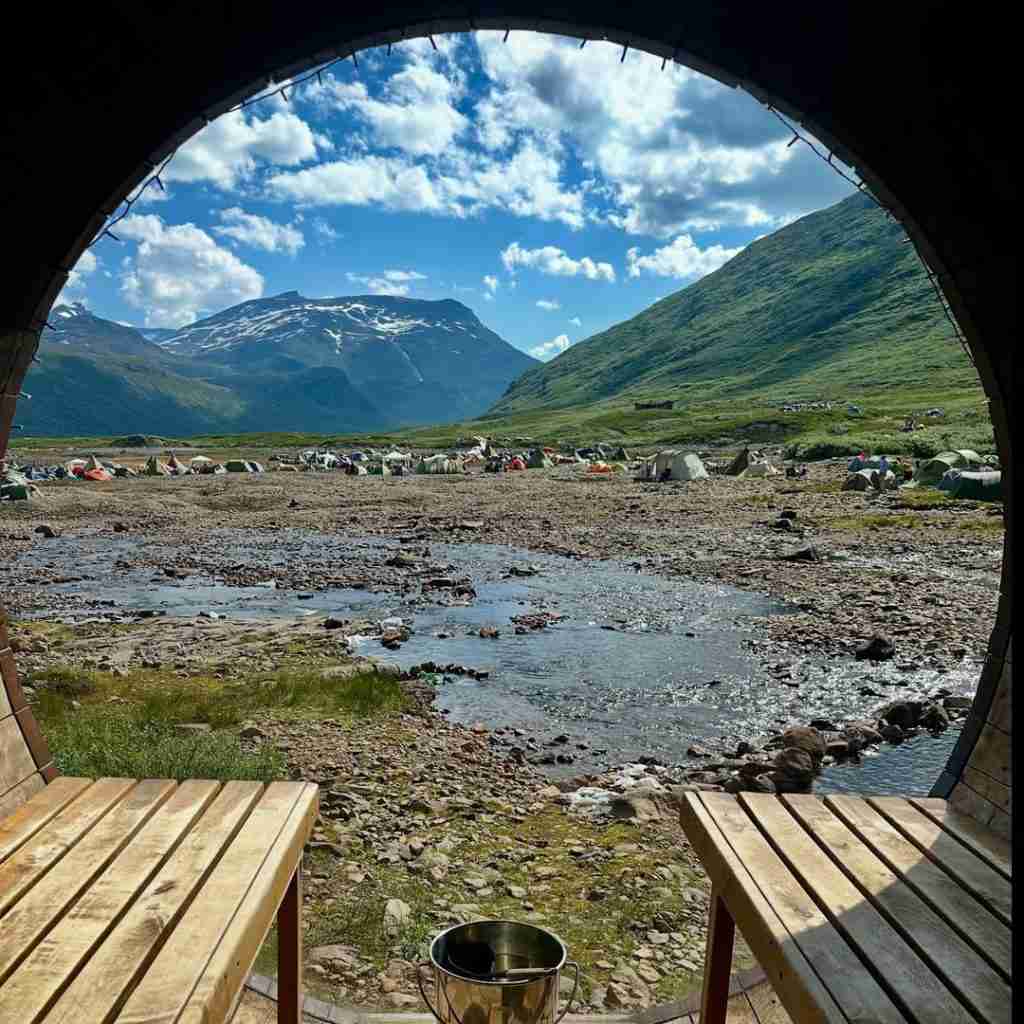
Imagine having the therapeutic experience with your favorite views. Outdoor and barrel saunas utilize the rustic appeal to make them aesthetically pleasing. These are specifically designed to withstand outdoor conditions, and some feature panoramic view glass. Here are some options for outdoor and barrel saunas:
- 2-4 Person Models: These are considered entry-level with a focus on DIY assembly for homeowners. These are typically mid-range $3,900 to $4,400.
- Luxury & Panoramic:For the high-end market, these saunas offer panoramic views through acrylic bubble-end walls. Some premium models can go up to $8,000, like the Smartmak Barrel 7, which has dimensions of 83 inches by 94 inches.
- Outdoor Infrared Sauna:With views excellent for a backdoor retreat, these saunas are ideal for claustrophobic individuals. E.g., Smartmak Relax 3 ($7,900).
- Resort & Commercial Cabins:For larger seating, typically supporting 6 to 8 persons, that come with a changing area and commercial-grade installation, can range from $9,000 to $20,000.

Installation and Operating Costs
Saunas require electricity for operation, and their consumption typically ranges from 500W for portable saunas to 4.4kW for commercial-grade saunas. Typically, installation costs for electrical, waterproofing, and maintenance can add 10–25% to the total project cost. For traditional saunas with outdoor features, 220V is required, which can cost $500-$1,200 to upgrade home panels. Outdoor units may also require setup costs, including site preparation and foundation building, which can add $300 to $800 for gravel. In the long run, infrared saunas offer the most significant savings due to lower power consumption.
Smartmak’s 2025 Perspective: Value Through Innovation and B2B Partnership
Quality Meets Scalability
The modern approach for wellness operators is to expand their businesses with modular commercial saunas gradually. For example, the Smartmak Relax Series with modular infrared panels allows scaling from 2-person to 8-person units. These units are packed flat with an easy-to-transport configuration, reducing Business-to-Business (B2B) shipping costs by up to 30%. Similarly, Smartmak Barrel 5 offers a lifespan of up to 50 years with durable thermo-wood.
Overall, Smartmak supports distributors and wellness operators with a complete line of infrared and barrel saunas engineered for efficiency and long-term reliability.
Balancing Cost and Performance
The value of a sauna is balancing the upfront cost with long-term performance. The sauna should have the efficiency and reliability to offer long-term operation. Smartmak’s infrared sauna models integrate smart energy control systems, lowering operational expenses. Their Relax 1 model, priced at $5,500, features AI thermostats that can deliver savings of up to 20% compared to traditional setups. The feature-rich option, like the Panoramic Barrel 5 ($7,500), adds luxury elements, such as scenic views, without compromising heat retention.
Overall, Smartmak balances cost with performance by offering long warranties (10+ Years) and premium energy-saving features to ensure long-term operational feasibility for spas and wellness centers.
Global Support and Service
It’s crucial to have comprehensive vendor support even across continents. Smartmak provides after-sales support through kits shipped worldwide. 24/7 app diagnostics for Relax series reduce downtime by 40% and offer free parts shipping to 50+ countries. Typically, their support team contacts you within 48 hours of receiving a query.
Moreover, Smartmaks B2B financing at 0% intro rates eases startups’ entry into the $500M franchise market. Case studies from hotel chains show 18-month ROI with Smartmak’s logistics, including duty-free exports. Smartmak’s worldwide network ensures cost transparency and after-sales support across six continents. Their network partnerships offer localized compliance, from US codes to Australian bushfire ratings.
Conclusion
There are saunas available for home use and commercial projects. However, their cost can vary drastically depending on the type of sauna and the incorporation of technological advancements. The cost of a sauna in 2025 can range from the affordable $ 3,000 infrared option to $15,000+ for commercial-grade barrel units. However, it’s essential to consider the hidden costs, long-term energy costs, maintenance, and ROI (return on investment).
Smartmak offers modular options like infrared and barrel saunas. These allow expansion from single-panel saunas to multi-user commercial-grade saunas. Using these features, distributors, spa owners, and wellness investors can balance cost, efficiency, and user experience — ensuring profitability and customer satisfaction in a growing wellness market.
FAQ
Q: How much does a home sauna cost in 2025?
A full-room home infrared sauna, like the Smartmak Refresh 1, can cost as little as $3,000. Similarly, a more affordable option, such as the Smartmak Far Infrared Sauna, costs $200. It does not require additional installation costs and offers portability.
Q: What’s the price difference between an infrared sauna and a steam sauna?
Infrared saunas are more affordable primarily due to their simple construction and lower upfront cost. In comparison, steam saunas require robust materials, heaters, and ventilation. Steam saunas can cost 2-3 times more than an infrared sauna. Infrared saunas can cost $1,500 – $6,900, whereas steam saunas can have a price tag between $4,000 – $15,000+.
Q: Are barrel saunas more expensive than indoor saunas?
Barrel saunas are generally more expensive than indoor saunas due to weather-resistant materials like cedar and curved designs for heat efficiency. Prices range from $3,900–$9,700 (e.g., Smartmak Barrel 1), while indoor models start at $1,500–$6,900 (e.g., Smartmak Refresh 1), a difference of $2,400–$3,000.
Q: How much does sauna installation typically cost?
Sauna installation typically costs $300–$2,500 (2025), covering labor ($45–$200/hr), wiring ($200–$1,200), venting ($200–$4,000), and foundation ($300–$800). Infrared is cheaper ($500–$1,000).
Q: How much electricity does a sauna use per month?
Sauna electricity use per month in 2025 depends on the type and usage. For infrared saunas (1,200–3,400W), expect $5–$15 with 3 weekly sessions at $0.10–$0.20 per hour. Traditional steam saunas (4,500–8kW) cost $15–$45 monthly at $0.30–$0.50 per hour. Daily use adds $20–$60. Rates and session length vary.