There’s no single correct answer to this question. How long does a sauna take to heat up? This is one of the most common questions asked by sauna owners, but it depends on many factors that can determine the duration of heating a sauna.
It will depend on the type of sauna you have, the size of the sauna room, the strength of the sauna heater, how the sauna is constructed, the outside temperature, and the desired heat in the sauna.
What is the meaning of heated up? The thermostat reading isn’t the only thing. If the benches, walls, stones and air around you are all warm, then your sauna is finally heated. If the thermostat indicates 80°C, but the temperature of the bench surface is still low, the sauna is not hot enough.
This article will cover the time that it typically takes for each type of sauna to get hot, what can make a sauna heat quickly or slowly, and some easy ways to make your sauna heat properly. If you are a buyer or distributor working on outdoor barrel sauna projects, we will also cover what you need to know about heater sizing for commercial builds.
How Long Does It Take for a Sauna to Heat Up?
The heating time depends on the type of sauna, electric, wood-fired, or infrared. Each system heats the space differently, so the time needed to reach the desired temperature can vary.
Traditional Electric Saunas
The typical home electric sauna warms up to full sauna temperature in 30-60 minutes. In an electric sauna, the stones are heated first, in order to create the heat needed to produce the steam. After the stones get hot, heat radiates to the air surrounding the heater. It then creeps down through the entire room, heating the benches and walls.
Not every electric sauna heats at the same speed. A few things make the difference:
- How strong the heater is compared to the size of the room
- How many stones the heater holds, since more stones take longer to heat but also hold heat better
- How the controls are set and where the temperature sensor sits
Wood-Burning Saunas
The duration of a wood-fired sauna is between 45 minutes and more than an hour, and can vary significantly depending on how the fire is controlled. You will be responsible for lighting and controlling the fire. The amount of heat received is determined by the type of fuel used, the amount of airflow, and the construction and maintenance of the fire.
A few things affect how long this takes:
- Whether your firewood is dry and cut to the right size
- How well the chimney draws air and supports the fire
- How many stones sit on the heater and how big the sauna room is
Infrared Saunas
An infrared sauna can feel warm and comfortable within approximately 10–15 minutes, but its heating process is different from that of a traditional sauna. Infrared panels are capable of directing heat directly toward your body and the objects around you in the same room, as opposed to heating the entire space. This distinction is useful for buyers comparing infrared sauna manufacturers and system specifications.
This allows an infrared cabin to feel warm and comfortable long before the air temperature is near the typical sauna temperature. There are really two things happening:
- The cabin itself warming up
- The infrared panels reaching their full, steady heat output
How to Know When the Sauna Is Ready
Don’t just trust the number on the control panel. Check more than that.
Touch the benches and walls. Even if the air temperature appears to be correct, they continue to feel cold; the room has not reached the proper temperature yet. Observe the results when you open the door for a very short time. If there is a quick drop in temperature and the sauna takes a long time to get back up to temperature, it might not be retaining the heat as well as it should.
It can also assist in the assessment of heat distribution within the room. You can try the temperature between the top and bottom bench, as heat rises and the top temperature is likely to be greater. Be careful of cold spots that are a long way from the heater or hot spots that are close to the heater.

What Determines How Long a Sauna Takes to Heat Up?
Several factors work together to decide your sauna’s heating speed. The heater alone is not the whole story, so it helps to look at the room, the materials, the weather, and the airflow as one system.
Heater Capacity and Room Volume
If it is not the same size as your sauna, then you’ll have heating issues. This involves measuring the width, length, and height of the room to determine the volume of the room.
Another consideration is materials that absorb or retain heat, such as glass, stone, or concrete. These surfaces need more heating power than simple wood walls.
If your heater is too small for the room, you will run into problems:
- Longer heating times than expected
- Trouble keeping the temperature steady once you reach it
- The heater working harder than it should, which wears it out faster
Sauna heater maker, recommends calculating heater power based on both room size and what the room is built from. Their guidance points out that glass and other surfaces that don’t hold heat well raise the total power needed.
Insulation, Sealing, and Construction Materials
What your sauna is built from changes how fast it heats and how well it holds that heat. Look closely at the insulation in the walls and ceiling. Check for a proper vapor barrier. Check for gaps around the door, windows, and where wall panels meet.
Different materials behave differently:
- Light wood walls heat up faster
- Large glass sections lose heat more quickly
- Outdoor saunas face bigger temperature swings between inside and outside
Outdoor Temperature and Weather Exposure
Outdoor saunas don’t heat the same way all year round. In cold winter weather, the heater has to work harder just to reach the starting point. Wind can pull heat out through any small gaps in the walls or door. Damp wood and high humidity can also slow things down.
Here’s what helps:
- Give the sauna extra time to warm up in colder months
- Check door seals and outer wall joints regularly
- Choose a heater sized correctly for your climate, rather than running an undersized one for longer
Ventilation and Air Circulation
Good ventilation keeps the air fresh, but poor placement can quietly ruin your heating performance. Fresh air helps heat move around the room properly, yet poor vent placement can create cold spots or throw off your temperature readings.
Watch out for these common issues:
- Fresh air blowing directly onto the temperature sensor
- Exhaust vents placed where heat escapes too fast
- Vents left in the wrong position or blocked
Vent placement and sensor placement need to work together. If airflow hits the sensor directly, it can give a false reading and cause the heater to run poorly.
Heater Condition and Sauna Stones
A slow-heating sauna is not always a design problem. Sometimes it’s the heater itself. Before blaming the room, check for damaged heating elements, blocked airflow around the unit, or, in wood-burning stoves, ash buildup and poor draft.
The stones matter too. Remove any that are cracked or too compacted together. Arrange them the way the heater manufacturer recommends, and make sure they aren’t blocking airflow through the unit.
How to Heat a Sauna Efficiently
Getting the timing right comes down to preparation, patience, and good habits. A few simple steps can shave time off your heating routine without cutting corners.
Before You Start Heating
A quick check before turning on the heater saves time later. Make sure the door is fully shut, the vents are in the right position, and nothing is blocking the heater. Set a reasonable target temperature instead of jumping straight to the highest setting, and let the heater and room warm up gradually.
Heating an Electric Sauna
Electric saunas heat best when you let them work steadily instead of rushing them. Turn on the heater using your timer or controller and confirm all the heating elements are working. Watch that the temperature rises steadily, then let the room settle. Avoid opening the door over and over, and give the benches and stones enough time to soak up the heat.
When you’re ready to add water, use only small amounts on stones made for sauna use. Never flood the heater with water.
Heating a Wood-Burning Sauna
A well-managed fire heats faster and safer than a rushed one. Start with dry firewood cut to the right size. Arrange it so it lights cleanly, and open the air controls as the stove maker instructs. Add fuel little by little and avoid overloading the fire, which can overheat the stove or chimney.
Once the sauna reaches your target temperature, reduce the airflow. Check that smoke is venting properly before anyone goes in.
Reduce Heating Time Without Sacrificing Safety
The best way to heat faster is to fix the system, not push the heater harder. Seal air leaks, fix insulation gaps, and keep the heater, stones, vents, and sensor clean and well maintained. If your heater is undersized, replace it with the right one.
Smart controls also help. Programmable timers work well for predictable opening hours, and remote controls, where local safety rules allow, can help hospitality centers, gyms, and wellness facilities preheat on a schedule.

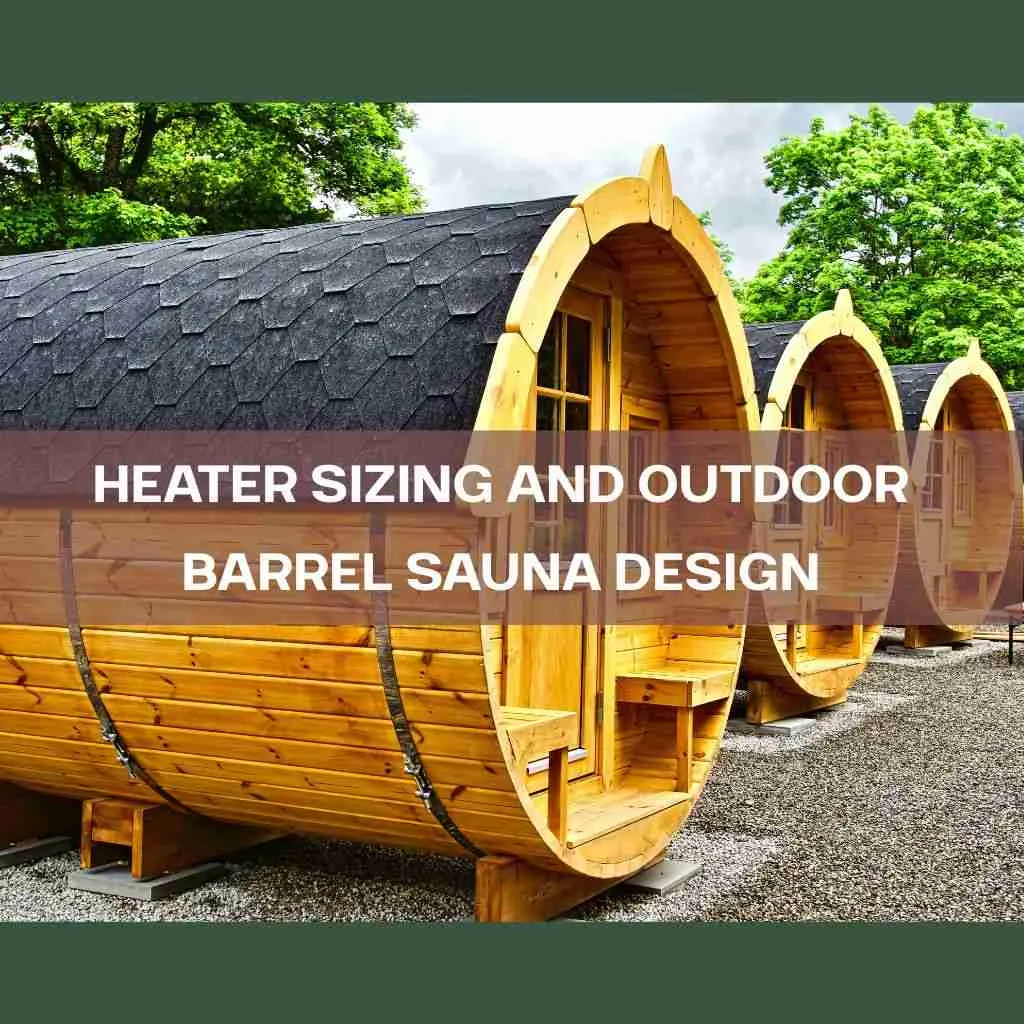
Heating Performance in Outdoor Barrel Saunas: A B2B Purchasing Perspective
For commercial buyers, heating performance is not just a comfort issue; it’s a business issue. Predictable heating affects customer satisfaction, service costs, and how confidently distributors can support their buyers.
Why Heating Configuration Matters to Commercial Buyers
The heater and the cabin should be treated as one system, not two separate parts. The heater needs to match the barrel’s inner volume, and it needs to suit the climate where it will be used. Window size, door design, wood thickness, and insulation all affect how much heating power is actually needed.
This matters for your customers too. Predictable heating times make for a better experience. Stable temperatures mean fewer complaints and fewer service calls. Clear instructions help your distributors support their own customers with confidence.
Key Specifications for Barrel Sauna Manufacturers and Suppliers
Knowing exactly what to ask for protects you from costly mismatches. Before ordering, ask your supplier for full heater details, including rated power, the room volume range it’s designed for, and voltage, phase, plug type, and other electrical needs. Also ask about certification and whether the heater fits the markets you sell into.
Look closely at the cabin build too. Check the timber species and panel thickness, the door and window sizes, and the layout of vents and sensor placement.
Finally, confirm the commercial support you’ll get. This includes access to spare heating elements and control parts, clear installation manuals and troubleshooting guides, and a solid warranty process with responsive after-sales support.
Smartmak Barrel Sauna Solutions for Wholesale Projects
Smartmak is one example of a manufacturer built specifically around this kind of commercial support. The company has around 20 years of experience manufacturing saunas, and works with distributors and end users across six continents, combining manufacturing, research and development, sales, and after-sales support under one roof.
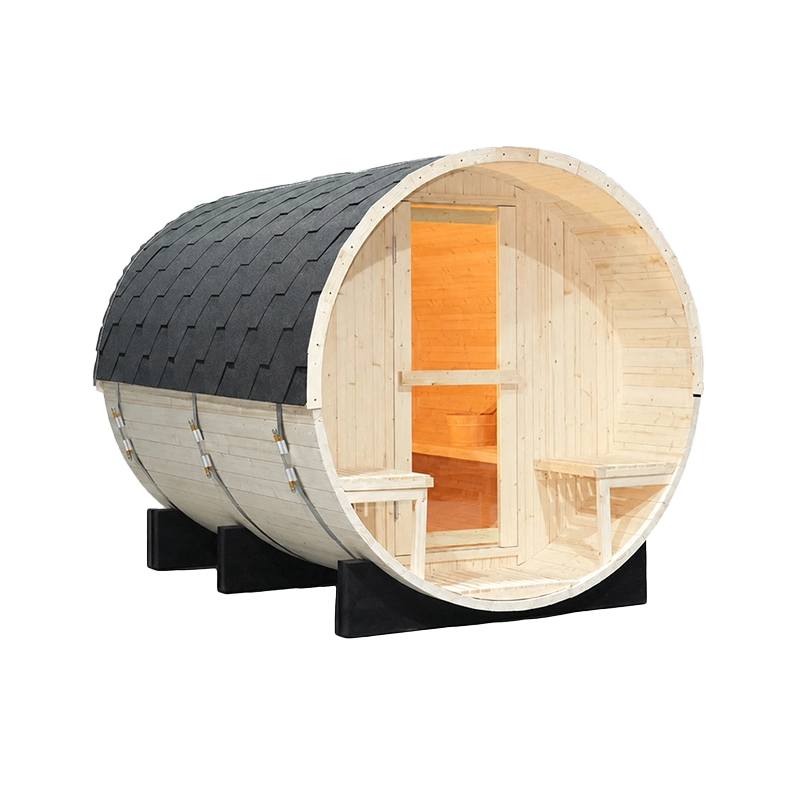
For outdoor barrel sauna projects specifically, Smartmak offers configurable cabin sizes to fit different group sizes, along with heater packages that include 6 kW or 9 kW stove options. Buyers can customize branding, dimensions, materials, controls, and configurations to fit their target market.
For B2B buyers, Smartmak offers factory-direct and turnkey supply, custom sampling and OEM support, and help with certification and configuration for international markets. This includes coordinating cabin volume, heater output, electrical standards, and local climate needs, all in one package.
Smartmak positions itself as a custom sauna manufacturer that handles barrel saunas, heater setup, customization, factory-direct supply, and support for commercial installation projects.
Questions Buyers Should Ask Before Ordering
The right questions upfront prevent expensive surprises later. Has the heater been sized correctly for the effective room volume, including glass and any uninsulated surfaces? Is the heater output right for the climate where the sauna will be used? Is the electrical setup, including voltage, frequency, and phase, compatible with your market?
It’s also worth asking what documentation comes with the order, such as wiring and installation diagrams, heater operating instructions, and maintenance or replacement parts information.
Conclusion
The answer to “How long does a sauna take to heat?” depends on more than just the heater. The type of sauna, room size, heater output, insulation quality, glazing, ventilation, outdoor conditions, and overall maintenance all affect how quickly the sauna reaches the desired temperature.
The homeowner’s best bet is to follow the instructions in the equipment manual and observe how the sauna is operating. To the commercial buyer, it is all about the cabin, the heater, the controls, the documentation, and the supplier support as a whole, not individually.
Distributors and buyers of wellness projects can ensure more predictable system performance and reduce installation issues by using an experienced barrel sauna manufacturer.
Planning a barrel sauna project? Talk to an experienced Smartmak manufacturer about heater sizing, cabin design, and ongoing support to ensure your sauna heats efficiently and reliably every time.
FAQ
How long does a sauna take to heat up?
Most saunas take between 30 minutes and an hour, depending on the type, size, and heater power.
How long does it take for an electric sauna to heat up?
A properly sized electric sauna usually takes 30 to 60 minutes to reach a comfortable temperature.
How long does a wood-burning sauna take to get hot?
Wood-burning saunas typically take 45 minutes to over an hour, depending on the firewood, fire management, and chimney draft.
Why is my sauna taking longer than usual to heat up?
This could be caused by an undersized heater, poor insulation, air leaks, blocked vents, damaged heating elements, or cold weather conditions.
What size heater do I need for my sauna?
Heater size should be based on your room’s volume, plus extra power for glass, stone, or other surfaces that need more heat. Check your heater manufacturer’s sizing guide for exact numbers.