Introduction: Why Sauna Use Raises Questions for People With AFib
Your watch buzzes. Your chest does that weird fish-flop thing. And you’re sitting in a box that’s literally trying to heat you up on purpose.
So yeah—people with atrial fibrillation (AFib) get twitchy about saunas. AFib can feel like palpitations, fatigue, dizziness, and shortness of breath, and it isn’t just “annoying.” It’s tied to real risks (blood clots, stroke, heart failure), which is why treatment plans often involve stroke-risk assessment, meds (including anticoagulants for many patients), and sometimes cardioversion or ablation—not vibes.
And still, passive heat therapy keeps getting popular because it feels like it’s doing something heart-healthy. The actual question is narrower and less sexy: can regular infrared sauna use support general cardiovascular health without poking an already-irritable rhythm into an episode?
This piece sticks to evidence. I’ll separate (1) general sauna/cardiovascular research from (2) studies that actually involve arrhythmias—and I’ll point out where people overclaim.
How Infrared Sauna Heat Affects the Cardiovascular System
The Body’s Immediate Response To Passive Heat
Passive heat isn’t magic. It’s physiology doing its job.
Blood vessels dilate. Heat pushes peripheral vasodilation—more blood to the skin, lower vascular resistance, and a post-session blood-pressure drop in many people. Nice… until it isn’t (more on hypotension later).
Heart rate rises. Your body is trying to dump heat, so cardiac output and heart rate go up. It can feel like exertion, but it’s not the same stimulus as training (no muscle work, no mechanical loading, different metabolic signaling).
Sweating ramps up. That’s the whole cooling system. The boring downside: fluid loss can mean dehydration and electrolyte shifts, which are famous for making people feel awful—and in some folks, can help set the stage for palpitations or lightheadedness.
Why Infrared Saunas Are Different From Traditional Saunas
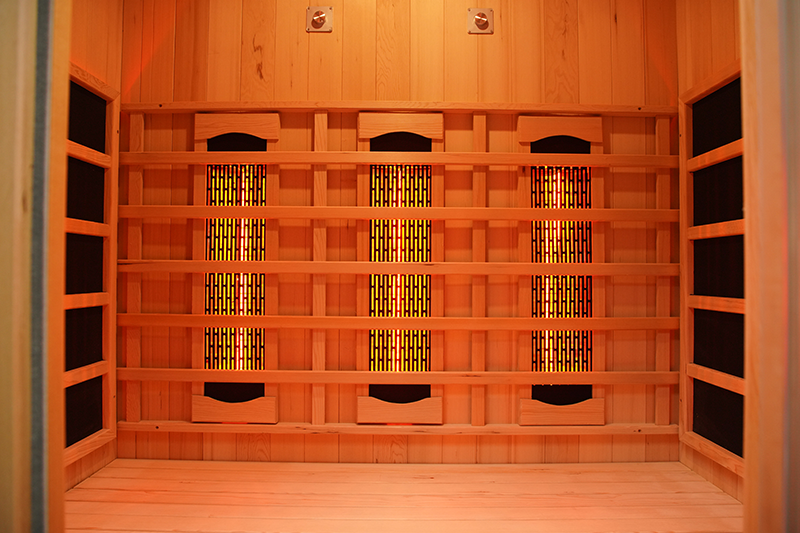
Infrared cabins typically run at lower air temperatures because the heaters warm you more directly rather than relying only on super-heated air. Many people tolerate that better.
But don’t do the lazy math of “lower temp = automatically safe.” Heat dose still comes from time + intensity + your personal situation (hydration, meds, blood pressure, how stable your AFib is, whether you’re the kind of person who faints when standing up too fast).
Infrared Heat Should Not Be Described As An Exercise Substitute
Some marketing tries to sell infrared sauna as “exercise without exercise.” That’s… convenient.
A randomized crossover trial in healthy women comparing infrared sauna vs exercise vs control found no significant differences in noninvasive measures of blood pressure, arterial stiffness, or heart-rate variability between interventions. Translation: it produced heat responses, but it didn’t reliably copy the cardiovascular markers people want to borrow from exercise.
So: infrared sauna can be a tool. Calling it cardio training is cosplay.

What the Research Really Says About Sauna and AFib
General Cardiovascular Findings Are Promising but Indirect
If you look at the best-known sauna data, it’s mostly Finnish traditional sauna habits tracked for years. And those studies are interesting.
A big one: 2315 middle-aged Finnish men followed long-term—more frequent sauna bathing was associated with lower risks of sudden cardiac death, fatal coronary heart disease, fatal cardiovascular disease, and all-cause mortality. Still observational, still association, still not proof of causation.
Hypertension: another prospective cohort (KIHD) looked at 1621 men without hypertension at baseline and found that compared with 1 session/week, 4–7 sessions/week was associated with a lower risk of incident hypertension (hazard ratio reported around 0.54 in adjusted models). Again: association, not a prescription.
Also worth knowing: later work includes men and women and still reports associations with cardiovascular mortality, but the “this proves sauna did it” leap remains unjustified.
The limitation that keeps getting ignored: you can’t automatically transfer “Finnish dry sauna culture” outcomes to “any infrared box, any protocol, any patient population.” Different heat, different people, different confounders.
AFib Is Not the Same as Ventricular Arrhythmia
Here’s where articles get sloppy.
AFib is an atrial rhythm problem. Ventricular arrhythmias are a different category with different risk profiles.
A frequently cited far-infrared sauna line of research (often discussed under “Waon therapy”) includes a study on chronic heart failure patients and looked at ventricular ectopy—premature ventricular contractions (PVCs)—after a two-week protocol (60°C far-infrared sauna 15 min + 30 min rest, repeated). That’s not “AFib treatment.”
So yes, those results can be a reason to study passive heat more seriously in cardiac populations. No, you don’t get to claim it prevents AFib, fixes AFib, or reduces stroke risk in AFib patients. Different arrhythmia, different evidence.
Can Sauna Reduce Heart Palpitations?
Palpitations are a symptom, not a diagnosis. People feel “fluttering” for lots of reasons—premature beats, anxiety, stimulants, thyroid issues, dehydration, electrolyte problems, and yes, AFib.
Heat can cut both ways:
- Relaxation may reduce stress-driven symptom awareness for some.
- Dehydration or a blood-pressure drop may make others feel worse, not better.
The American Heart Association’s guidance on palpitations is basically: don’t ignore changes from baseline, and get evaluated—especially if symptoms last minutes to hours or show up with dizziness, shortness of breath, chest pain, or fainting.
Can I Use a Sauna With Atrial Fibrillation? Safety Comes First
Questions To Discuss With A Cardiologist
If you have AFib and you’re thinking sauna, the generic internet answer is useless. The personal answer depends on whether your AFib is stable and what else is going on.
Things that actually matter:
- Is your AFib stable and rate-controlled?New symptoms, recent hospitalization, recent cardioversion/ablation changes the risk math.
- Are your medications heat-sensitive?Blood pressure meds, nitrates, beta blockers, diuretics—these can change how you tolerate heat and dehydration.
- Do you have other cardiac disease layered on top?Heart failure, unstable angina, severe valve disease, recent MI—these show up again and again as red-flag contexts for sauna use.
Individual medical clearance beats blog rules. Every time.
A Conservative Sauna Routine for Medically Cleared Users
If your clinician clears you and you insist on doing this like an adult:
- Start mild.Lower temp, shorter sessions. Prove tolerance before you chase “max heat.”
- Hydrate like you mean it.Water before/after—unless you’re on a clinician-directed fluid restriction. Don’t go in already dehydrated.
- Skip alcohol.Alcohol + sauna is a classic setup for hypotension, dehydration, and arrhythmia trouble in reviews of sauna risk.
- Cool down gradually.Standing up fast after heat exposure is where some people get hit with dizziness/syncope.
- Do not mess with AFib treatment.Anticoagulation, rhythm meds, rate control—keep taking them as prescribed. Sauna is not a substitute category in AFib guidelines.
Warning Signs That Mean The Session Should End
Stop the session if you get:
- a fast or increasingly irregular heartbeat that feels wrong
- chest pain/pressure
- severe shortness of breath
- dizziness, confusion, near-fainting
- unusual weakness
If symptoms continue after you get out—especially chest pain, fainting, or stroke symptoms—don’t “wait and see.” That’s urgent-care territory.
What Responsible Infrared Sauna Manufacturers Should Offer Wellness Businesses
Wellness businesses love the “heart health” angle. Manufacturers love it more. That’s exactly why buyers evaluating infrared sauna manufacturers should be picky.
Choosing An Infrared Sauna for Controlled, Repeatable Heat Exposure
For commercial settings, the boring features are the safety features:
- Adjustable temperature controlsso you can keep sessions conservative and consistent
- Even heater distributionto avoid hot spots that spike perceived intensity
- Built-in timersso staff aren’t eyeballing session length
- Accessible cabin design(easy entry, stable seating, safe glass, enough space) because not every customer is a 28-year-old athlete

B2B Considerations Beyond Marketing Claims
A responsible sauna supplier should have:
- clear safety docs + certificationsrelevant to the market (common examples: CE, ETL)
- manuals that explain real contraindicationsand maintenance, not just “drink water lol”
- no medical grandstanding: no “cures AFib,” no “prevents stroke,” no “replaces anticoagulants” nonsense
Smartmak as an Infrared Sauna Manufacturing Partner
If you’re sourcing units for distribution or projects, Smartmak positions itself as a custom sauna manufacturer offering OEM/ODM production, custom infrared sauna configurations, and documented certifications (they list items like CE and ETL in their materials), plus manuals/support docs for installation and after-sales.
Use that kind of partner the right way: to build controllable, repeatable heat experiences with solid documentation—not to dress up an infrared cabin as an AFib therapy device.
Conclusion: Sauna May Support Wellness, but It Is Not an AFib Treatment
Infrared sauna bathing can widen blood vessels, raise heart rate, and make you sweat—basic thermoregulation doing its thing.
Broader sauna research (mostly traditional Finnish sauna) links frequent use with better cardiovascular outcomes like lower hypertension risk and lower cardiovascular mortality, but those are associations and they’re not AFib-specific proof.
Direct evidence that infrared sauna prevents, treats, or improves atrial fibrillation is still thin. AFib care still centers on stroke-risk assessment, risk-factor work, symptom control, and procedures when needed—not heat sessions.
FAQ
Can an infrared sauna trigger an AFib episode?
It can, in the same way a bunch of stressors can—dehydration, a blood-pressure drop, overheating, alcohol use, or just pushing too hard on a day your body isn’t having it. The evidence isn’t clean enough to give a universal yes/no, which is exactly why stable-vs-unstable AFib status matters.
Does regular sauna bathing help reduce heart arrhythmias?
There’s research on far-infrared sauna protocols in chronic heart failure populations showing changes in ventricular ectopy (PVCs) and heart-rate variability after repeated sessions. That’s not the same as treating AFib. Interesting signal, wrong conclusion.
What sauna temperature is safest for someone with AFib?
No single number is “the AFib-safe temperature.” Clinical far-infrared “Waon therapy” studies in heart failure often used 60°C (140°F) for 15 minutes plus a warm rest, but that protocol was not designed as an AFib standard. If you’re cleared medically, starting lower than maximum is the sane move.
How long should a person with atrial fibrillation stay in an infrared sauna?
If you’re medically cleared: start short, keep it boring, and earn your way up. The best-known far-infrared cardiac protocols were brief (15 min) with a rest period, not marathon sweat sessions. If symptoms show up, you’re done for the day.
Can dehydration from sauna use make AFib worse?
Dehydration can make people feel palpitations, lightheadedness, and generally terrible, and evaluation for palpitations often includes looking at things like electrolytes and other triggers. So yes—dehydration is a plausible way to worsen symptoms or tolerance, even if it’s not “proven to cause AFib” in a clean, simple way.