Saunas are great for your body. They relax the muscles, reduce stress, and increase blood flow. Some are asking themselves, though, what the heat is doing to their hair.
The temperature in a sauna can go up to between 70°C and 100°C (158°F and 212°F). Such heat does not just remain on your skin. It reaches your hair, too. Therefore, the main question is: Does sauna damage your hair?
The answer is yes, but it depends on how you handle it. Sauna heat can dry out your hair and weaken its structure if you’re not careful. The upside is that with a few simple steps, you can still enjoy the sauna without damaging your hair and keep it healthy.
How Sauna Heat and Humidity Affect Hair
It is important to know what happens to your hair in a sauna so that you can take better care of it. Let us break it down simply.
High Temperatures and Hair Moisture Balance
The amount of water in your hair is approximately 12-15 percent. It is soft, flexible, and powerful, all of which are maintained by that moisture.
You sit in a sauna, and the heat draws the moisture out of your hair strands. In the long run, it leaves your hair dry and coarse, and it is more easily broken. Individuals who have colored or chemically treated hair suffer the loss of moisture even more.
Effects on the Hair Cuticle
The scaly layer of the hair is known as the cuticle. It is composed of small overlapping scales, such as roof tiles. When the heat rises above 60°C, these scales lift open.
This causes frizz, dullness, and breakage. According to a study published in the Annals of Dermatology (2011), high heat increases the porosity of the cuticle and weakens hair over time.
Differences Between Dry Saunas and Steam Environments
Both of these saunas have an impact on your hair, but they do it in different ways. The awareness allows you to better plan for your hair protection.
- Dry saunas are hotter, typically ranging between80°C and 100°C, and the humidity is very low. Dry air takes away moisture in hair.
- Steam roomstypically range between 40°C and 50°C with 100% humidity. While they add moisture to the hair, spending too much time inside can still weaken it.
Both alternatives open the hair cuticle when the exposure exceeds 15 to 20 minutes.
Practical Ways to Protect Hair During Sauna Sessions
Understanding heat is one thing, and learning how to handle it is what is of real significance. These measures are easy, practical, and simple to implement.
Covering the hair
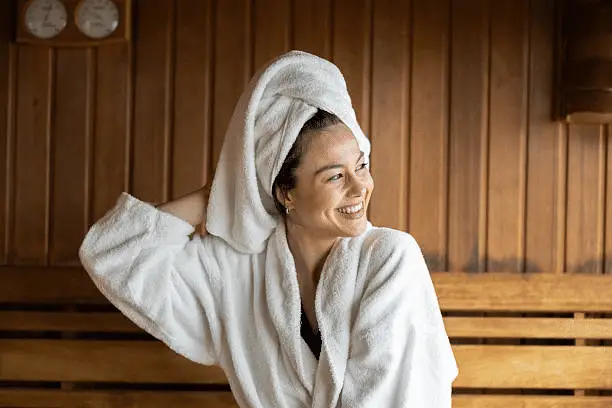
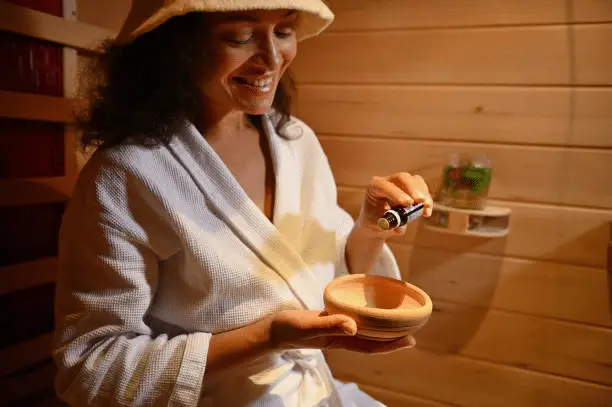
Covering your hair before getting into the sauna is one of the simplest methods of preserving your hair. A towel or a sauna hat will provide some kind of protection between your hair and the direct heat.
This helps prevent moisture loss and keeps your hair from drying out. This is a basic technique that many individuals can use to detect that their hair becomes a lot softer and less frizzy.
Applying protective hair products
Wearing protective items before entering the sauna can help a lot. Natural oils like coconut oil and argan oil help retain moisture and create a protective layer around hair strands.
Conditioners or leave-in conditioners are also quite useful as they help to keep the hair moist when it comes in contact with the heat. The products are a protective barrier and decrease the risks of drying up and destruction.
Limiting exposure time
It is also very important to control the duration you spend in the sauna. Excessive time in a hot climate causes loss of moisture on your hair and scalp.
It is safer and more effective in shorter sessions. Complete rest in between sessions is important to cool your hair and body and ensure moisture and stress are not applied to your hair.
Hair Care Practices Before and After Sauna Use
What you do before and after a sauna matters just as much as what you do inside. These habits protect your hair from the outside in.
Preparing Hair Before Entering the Sauna
Getting your hair ready before a session takes only a few minutes and can save it from a lot of damage.
- Wet your hair lightly before going in. Wet hair retains more moisture when compared to dry hair in hot conditions.
- Avoid heavy sprays, gels, or dry shampoos. Heat and sweat can trap these products in your hair, leaving buildup on your scalp.
- Wash your hair before the session to cleanse the scalp of dirt, oil, or product buildup, which may block the scalp pores.
Post-Sauna Hair Care Routine
The moment immediately after leaving the sauna is, in fact, one of the crucial times for your hair. The initial few minutes are important.
- Rinse with cool water first. It assists in sealing the hair cuticles and keeps the moisture sealed in, leaving your hair less coarse and more insulated.
- Use a moisturizing conditioner that contains nutrients such as shea butter, keratin, or panthenol to restore moisture within the strand.
- Blow-drying should not be done right after your session. Your hair is already exposed to high temperatures and therefore, it is better to leave it to dry naturally. A scalp massage can be used during this period to enhance blood circulation and healthy hair roots.
Protecting the Scalp
Your scalp is the base of all hair growth, and heat reaches it just as much as it reaches your strands.
- A well-hydrated scalp grows hair at the follicle level, and it becomes stronger and thicker.
- Use a light scalp oil such as jojoba to soothe heat-related irritation after your session.
- Sauna heat is known to increase blood flow to the head. The massage at this period is gentle and will allow nutrients to reach the roots of the hair.
Sauna Design and User Comfort in Wellness Facilities
The design of the sauna itself plays a bigger role in hair health than many people realize. A poorly designed sauna can create hot spots, uneven heat, and poor airflow, which makes conditions harsher on hair and skin.
Why Sauna Environments Influence User Comfort
A well-designed sauna does more than just heat up, it carefully controls how heat moves and how air circulates within the space.
- Proper ventilation prevents the accumulation of hot air in a single location and helps it dry up.
- The uniform heat distribution in the sauna makes sure that no section of the sauna is excessively hot, which makes the experience more cohesive and more pleasant.
- The right airflow will make the temperature feel more natural and less harsh on your skin and even your hair.
Smartmak Sauna Design Approach
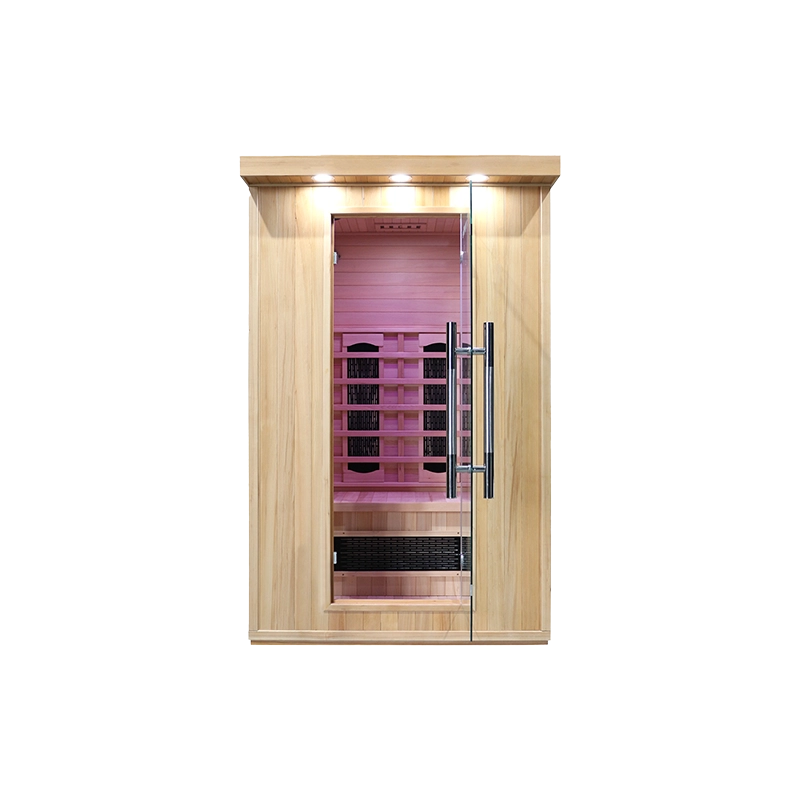
This is where a professionally engineered custom sauna from Smartmak makes all the difference. Their systems are built with stable temperature management, proper ventilation, and uniform heat distribution as non-negotiable engineering priorities.
Their units use carefully selected materials that support consistent heat delivery throughout every session. The design reduces unnecessary temperature spikes that stress hair and skin. Proper insulation and airflow keep the environment steady from start to finish. For wellness facilities that want to offer a high-quality experience, the engineering behind the sauna equipment makes a real difference to how users feel during and after their sessions.
Value for Distributors and Wellness Operators
For spa owners, gym operators, and wellness center managers, partnering with a professional sauna manufacturer like Smartmak is a strategic decision that directly impacts client experience and business reputation.
- Safe and dependable sauna systems provide clients with a safe and repeatable environment.
- The quality of its build will be durable, resulting in reduced downtime, fewer repairs, and extended life in high-use conditions.
- Clients feel more convinced when they realise that their skin is good and their hair is not broken after going through the sessions, and they refer other people to the facility.
Conclusion
Your sauna habit doesn’t have to damage your hair—it truly doesn’t. With the right care, you can enjoy the heat without compromise.
With a well-constructed sauna such as that of Smartmak, it becomes easy to preserve your hair by ensuring that there is a consistent temperature and airflow. With the environment in the sauna perfected, your hair does not need to fight to get better. You will be able to spend time in your sauna and maintain your hair–you will need a little effort to do so.
FAQs
Does the sauna dry out your hair?
Yes, it can. The heat opens your hair cuticle, and moisture escapes fast. Covering your hair and using a natural oil before going in helps a lot.
Can sauna heat damage hair follicles?
Not usually. Normal sauna use is fine for healthy follicles. But going in daily without any protection or aftercare can slowly cause problems over time.
Should you cover your hair in a sauna?
Yes, always. A wool sauna hat or a damp towel works great. It blocks direct heat and keeps your hair from drying out during the session.
Can sauna sessions cause hair breakage?
Yes, if you skip protection every time. Repeated heat exposure weakens the hair strand from the inside. Short sessions and good aftercare reduce the risk of breakage significantly.
What products protect hair in a sauna?
Coconut oil, argan oil, and leave-in conditioners work best. Look for keratin or shea butter on the label. These seal the hair and lock moisture in well.