Introduction
Did you know that there is no legal definition of low EMF for infrared saunas? The difference between different brands that quote low EMF is staggering. Some may set the safety threshold of 3.0 mG, while premium-grade infrared saunas produce levels as low as 0.1 mG. That is 30 times lower than the value that the WHO considers safe for humans. To ensure that the body’s electrical rhythms liek heart rate variability, remain undisturbed during deep relaxation.
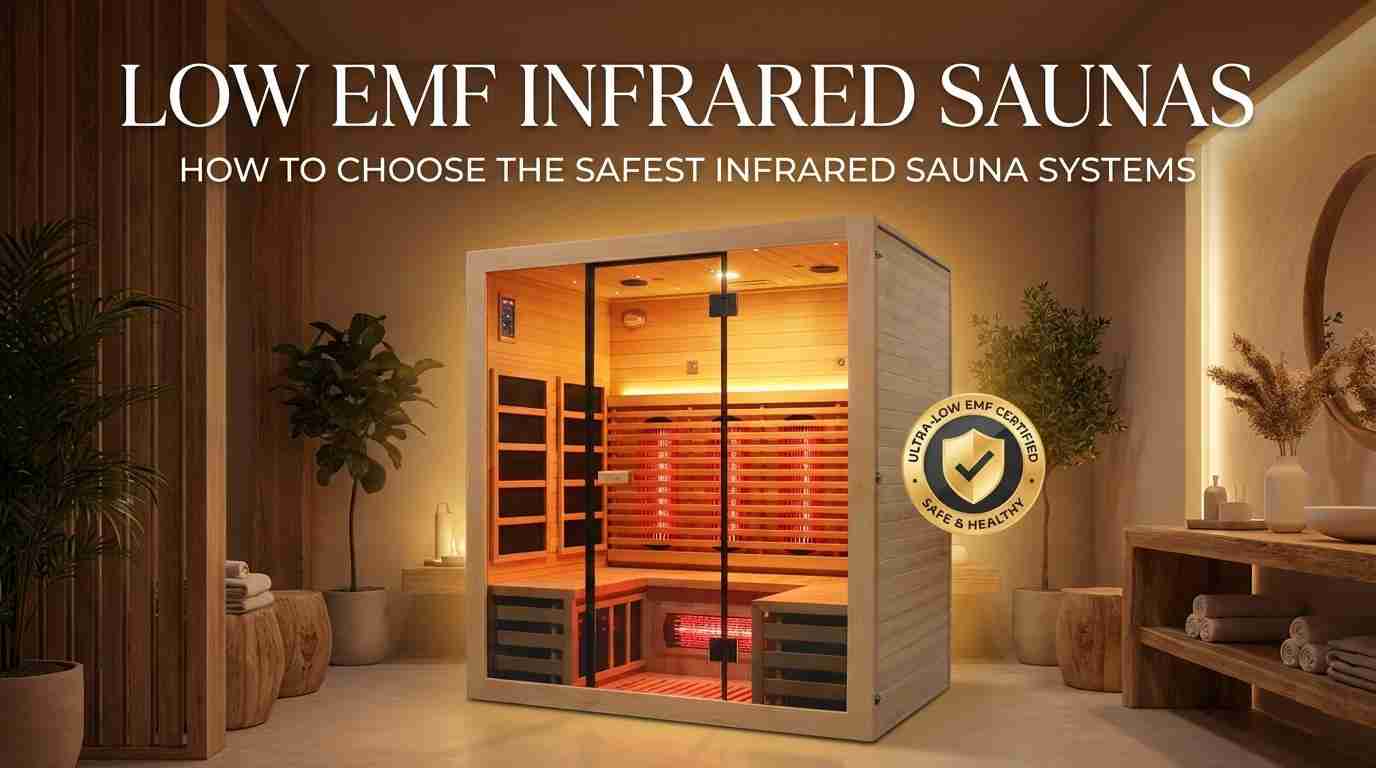
You want the experience to be soothing rather than disturbing. This article is designed to provide you with in depth understanding of EMF, covering the role of carbon panels, electrical layout, material, and more in producing EMF. Finally, we will provide a guide to evaluating the best low EMF infrared saunas and aspects to consider before placing an order.
What Does “Low EMF” Mean in an Infrared Sauna?
When it comes to getting an infrared sauna, users often get confused by the safety terms that are commonly used in the market. Although the health benefits offered by the infrared sauna are clear, it’s important to know the associated safety factors. It’s important to understand electrical safety and the working mechanisms behind these machines. Let’s get started with some important key terms and facts about electromagnetic fields. It will help ensure that you don’t fall for marketing traps and make the right choice for your Infrared Sauna needs.
Understanding EMF in Heating Systems
To understand how safe your infrared sauna is, it’s important to consider how the source works. The basic working principle infrared sauna involves utilizing the concept of Electromagnetic Fields (EMF), which is a magnetic field that is produced by electric wires when an electric current is passed through them, producing an electromagnetic field around them. To produce IR (Infrared waves) in a sauna, an electric current is passed, which creates resistance, producing IR radiations and EMF as byproducts. However, this EMF is not useful, but can be harmful and cause major safety concerns. To move further, it’s important to understand the major key differences associated with the two types of radiation.
- Background EMF:The low-level radiation present in our daily environment from the earth and general household wiring.
- Appliance-Generated EMF:The specific fields created by the sauna’s operation.
In terms of sauna, the word “Low EMF” refers to the low EMF generated as a by-product by saunas to such low levels that are considered negligible or suitable for prolonged exposure to humans without posing any health risks. This is often standardized by the Swedish standard of below 3.0 milligauss (mG).
Why EMF Levels Vary Between Infrared Saunas
The build and the architecture of saunas are different, which is the main reason behind the fluctuation of EMF levels based on heater types, power distribution, control system, and grounding.
- Heater Type: In infrared saunas, the type of heaters can be a defining factor for EMF levels. Traditional ceramic or metal rod heaters can generate high EMF when compared to modern carbon panels, due to their high surface temperature and the flow of highly concentrated current through a coiled wire.
- Power Distribution: If the wire carries high-voltage and doesn’t contain shielding, the user is exposed to higher EMF, regardless of the fact that what type of heater being used.
- Control System and Grounding: A proper grounding is necessary as it minimizes stray voltage, which is also one of the reasons for electric fields. Without a proper grounding, achieving a low-EMF status can be difficult even when the magnetic fields are low.
Common Misconceptions About Low EMF Marketing
When it comes to the market, the term low EMF is usually considered as zero exposure, which is not always true. The term low EMF is highly subjective, and a manufacturer or a brand may just claim it even though the emissions are high. To verify the claims, ask the manufacturer for a third-party lab report and use a specific measurement standard to ensure the claim is valid.
Another area where users also get confused is the distinction between the different types of exposure. These types of exposure include:
- EMF (Electromagnetic Fields): These are the magnetic fields generated by the current.
- ELF (Extremely Low Frequency): These are the electric field frequencies caused by the voltage.
- RF (Radio Frequency): These are related to communication devices like wifi or Bluetooth.
A sauna system that is considered safe takes into consideration all of these factors, while some of manufacturer may target or emphasize only a single factor, ignoring others in their marketing campaign.

How Low EMF Infrared Saunas Are Engineered
Having a reduced EMF sauna may look easy, but it requires having knowledge of complex electrical engineering and design principles that help to reduce EMF while also delivering high-performance heating. To get a true low EMF sauna, the design choices made by the manufacturer should prioritize user safety at the hardware level.
Role of Carbon Panel Heating Technology
To guarantee low EMF, the heating system plays a crucial role. This is where carbon panel heating technology comes in, offering reduced EMF levels in modern saunas. Unlike traditional options that include ceramic tubes or metal rods, which act as a point source for intense heat, generating high amounts of EMF, making it hard to achieve a genuine Low EMF title.
Due to carbon panels offering a comparatively larger surface area, the engineering advantages that reduce EMF are mentioned below:
- Lower Electrical Intensity: They require lower operational surface temperatures to ensure the same amount of cabin heat as the traditional options.
- Diffuse Emission: The current load, which is responsible for higher EMF levels, is spread out widely across the conductive carbon matrix rather than a coiled wire.
- Reduced Localization: This design drastically reduces the localized electromagnetic output that typically spikes near the user’s body in older sauna models.
Electrical Layout and System Integration
The heater does play a crucial role in ensuring lower EMF levels, but with it, the wiring across the entire cabin also matters a lot. In low EMF saunas, the wires, high-voltage relays, and power supplies that are also responsible for generating EMF are separated from the seating area and are housed in the roof or floor, far from users’ surroundings.
To further reduce EMF, engineers utilize some techniques mentioned below that help in reducing EMF levels:
- Shielding: Wires are wrapped around conductive materials to reduce or block fields.
- Cancellation Technology: Running the currents in opposite directions produces a phase-cancellation affect reducing affects of EMF.
- Robust Grounding: With grounding, engineers ensure that the electricity stays in the circuit, not radiating in the surroundings, which can cause high EMF levels.
Importance of Material and Cabin Structure
One of the most overlooked factors when it comes to reducing the overall EMF levels in the sauna is its physical construction, contributing to its overall electrical efficiency. The woods’ thickness and the type, like Canadian Hemlock or Red Cedar plays a crucial role in ensuring that the heat remains in the cabin for longer periods, eliminating the requirements for excessive power output. This ensures that heaters don’t run at full capacity, keeping the desired temperature without excessive current flowing through walls, reducing overall EMF levels in infrared saunas.
Evaluating the Best Low EMF Infrared Saunas for Real-World Use
The initial theory or the design of the sauna should be able to meet the real-world applications for its users. A design that is made to be compact for a single person’s use may be best for Low EMF levels, but if it is scaled up, the same Low EMF tag will not be maintained. This is where the requirements for understanding the system’s design, heat distributions, and the management of power load across different emitters define its safety and performance under daily operations. With a proper understanding of these systems, you can ensure that the system remains safe regardless of its size or capacity.
Why Capacity and System Scale Matter
When the system is scaled up from the original size and capacity, managing EMF levels becomes exponentially difficult. In such large cabins or high-capacity saunas, they require highly stable and distributed heating to ensure no cold spots are left.
To ensure low EMF levels in high-capacity infrared saunas, simply adding more heaters and not caring about power distribution can cause an extreme rise in EMF levels. A sauna that is well-designed and engineered will ensure power is evenly distributed in multiple small and separate zones, not concentrated on one big circuit, keeping the EMF levels low near each person while efficiently heating a larger space.
Integrated System Example: High-Capacity Far Infrared Sauna Design
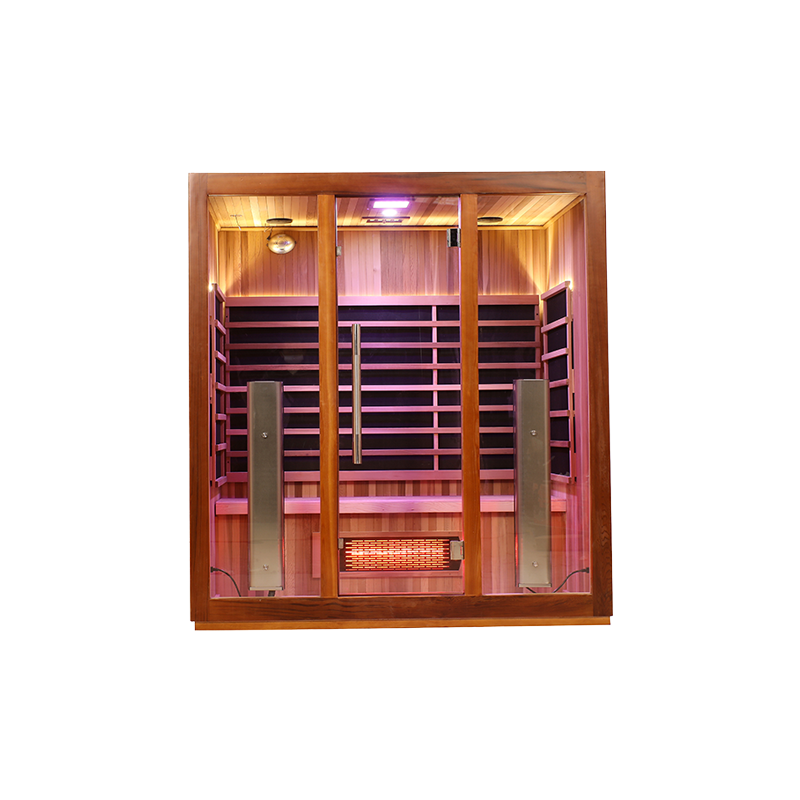
You can consider a high-capacity infrared sauna that can handle 4–6 people utilizing a carbon panel heating. To ensure low EMF levels in such high capacity design, the heater layout, cabin volume, and control electronics should work as a unified system rather than a collection of parts.
To ensure efficient heating, a balanced panel distribution is highly crucial. By strategically placing large carbon panels on the rear, side, and calf areas, the system ensures:
- Consistent Heat Coverage:No need to overdrive any single heater.
- Lower Peak Electrical Load:Power is shared efficiently across the grid.
- Controlled EMF Exposure:This ensures that every user, whether the one sitting in the corner, is just as protected as the one sitting in the center. It is achieved bue to the load being distributed in the circuit.
B2B Value of System-Level Low EMF Design
If you are a business owner with gyms, spas, or wellness centers, and are looking forward to installing an Infrared sauna, it’s crucial to ensure that you get a system that features low EMF designs. One of the primary benefits offered by these saunas is predictable performance across multiple units, ensuring safety is a core part of the design, and every unit of the floor will perform accordingly.
This reliability simplifies operations in several ways:
- Easier Compliance:Meets strict safety standards for commercial wellness spaces.
- Reduced Liability:Lowers the risk associated with electromagnetic exposure in the workplace.
- Fewer Technical Issues:High-quality engineering leads to fewer component failures, reducing technical complaints and after-sales issues.
Buyer Considerations Beyond the “Low EMF” Label
To get started with ensuring a low EMF level, the first thing you should search for in your infrared sauna is a low EMF label or a sticker. This is just the starting point, not the conclusion. Below, we have mentioned some of the considerations, like methodology, component durability, and manufacturer credibility, that a buyer should look out for before he pays to ensure the equipment he is getting is not only safe but is capable of lasting a lifetime.
Measurement Transparency and Testing Methods
Just a “Low EMF” Label is useless without having proper buyer data. If you are a buyer, look out for manufacturers who have verifiable EMF data from reputable third-party testing agencies. If you get those reports, look for:
- Point of Measure: Verify that measurements were taken at the heater surface and at the seated position.
- Consistency:Check that EMF levels remain low across all operating temperatures, not just when the heater is idle.
Long-Term Safety and Maintenance Implications
If you are paying for an infrared sauna that has a low EMF label, it should not be safe for a shorter period, but the consistency in safety should continue with repeated heating cycles and usage. If the components installed are cheap, they may degrade over time, causing peaks in EMF signatures, compromising the safety of their users. Ensure that the components installed age well and make sure that your sauna remains safe to use after 5 to 10 years of usage.
Choosing Suppliers With Engineering-Driven Designs
Finally, the last and most important part of getting a Low EMF infrared sauna is choosing the right sauna manufacturer. It’s always better to look for a manufacturer with its own integrated research and development department. Having a supplier that ensures its own engineering department makes it more capable of adapting and improving shielding techniques much faster than those suppliers who assemble parts off the shelf. This ensures distributors, project buyers, and business owners get supplies that come with the technology that is latest and safest technology for consumer use.
Conclusion
Finding premium-grade low EMF infrared saunas means that you are operating at a 30x lower value than WHO recommended EMF levels. These are typically 0.1mG EMF. Using infrared saunas that feature carbon panels, concealed electrical engineering, larger seating capacity, and high-end structural material for heat retention is ideal. Consider third-party lab reports showing EMF levels at the seated position during active heating, not just idle, for maximum safety.
If you are looking for a truly safe full spectrum infrared sauna—engineered with ultra-low EMF carbon panels, robust shielding, and third-party verified performance—then consider Smartmak’s premium systems.Visit the website to explore all their options.
FAQ
Are low EMF infrared saunas actually safer?
If an infrared sauna is rated as low EMF, it is considered safe. Although the effects of long exposure to high-intensity EMF are still being studied, it’s better to minimize exposure to remove any risks for health issues and safety in the body. With a low EMF sauna, the body’s exposure to unnecessary man-made magnetic fields is minimized, allowing for a much purer detoxification experience.
How much EMF is normal in an infrared sauna?
Standard saunas that aren’t rated as Low EMF can emit upwards of 10–30 milligauss (mG). However, with a true rating of Low EMF infrared sauna will register below 3 mG. Some ultra-low EMF models often test below 1 mG at the seated position.
What is the safest infrared sauna type for home use?
Infrared saunas that utilize large carbon panels are generally considered the safest for usage in homes. With the carbon technology, at much lower surface temperatures, the heat distribution is much more even. This ensures reduced EMF compared to traditional ceramic or rod-based heaters.
Can multi-person infrared saunas still be low EMF?
Yes, but it requires great engineering. For a 4-6 person sauna, use distributed wiring and shielding to ensure that increasing the number of heaters doesn’t affect the overall EMF levels for the users.
How can I verify a manufacturer’s low EMF claims?
Sometimes, a low EMF label isn’t enough. Request third-party lab reports, and a manufacturer that offers a true low EMF label will provide you with documentation showing EMF readings at various distances. You can also verify EMF levels manually using a handheld EMF meter upon installation.