Most people walk into a sauna and never give the bucket in the corner a second thought. It is just sitting there. But that bucket and the ladle next to it are what actually produce the steam, and if they are the wrong size or the wrong material, the session feels off in ways that are hard to explain.
Pouring water over hot stones is the whole experience. Too much water at once, and the stones cool down fast. A ladle that is too short, and suddenly your hand is dangerously close to a heater running at 200 degrees. These are small things that add up quickly during a session and even more quickly over months of regular use.
This is what to look for before buying.
The Role of Sauna Buckets and Ladles in the Sauna Experience
It is easy to treat these as background equipment. Once you see what they actually do to the quality of a session, that changes.
Creating Steam Through Water Application
Water hits the stones, evaporates immediately, and that steam is what fills the room. Finns have a word for it, löyly, and have taken it seriously for a very long time. A slow pour gives you smooth, even steam that spreads through the room gradually.
Too much water at once and the stones cool unevenly, and the steam that comes out feels harsh and uncomfortable. The ladle is the only thing standing between you and that result, so a poorly made one is more of a problem than it looks.
Enhancing the Traditional Sauna Ritual
There is a rhythm that develops in a sauna over time. Heat up, rest, pour, breathe, repeat. Most regular users fall into it naturally without thinking about it. The ladle becomes part of that without you really noticing.
It is the same way someone who makes coffee by hand pays attention to how they pour. The tool connects you to what you are doing, and that is probably why sauna culture has stayed alive across so many different parts of the world for so long.
Maintaining Safe Steam Generation
A ladle that is too short puts your hand uncomfortably close to a very hot heater. A bucket that sits unevenly near an open heater is a burn risk that most people do not think about until something goes wrong.
A cracked wooden bucket leaks, and that water on a sauna floor becomes a slip hazard fast. These are not dramatic problems, but they come up regularly when the accessories are cheap or mismatched, and they interrupt the session every time.
Materials Used in Sauna Buckets and Ladles
Material choice is where most buyers get confused. Here is what actually holds up in a sauna environment and what does not.
Wooden Sauna Buckets
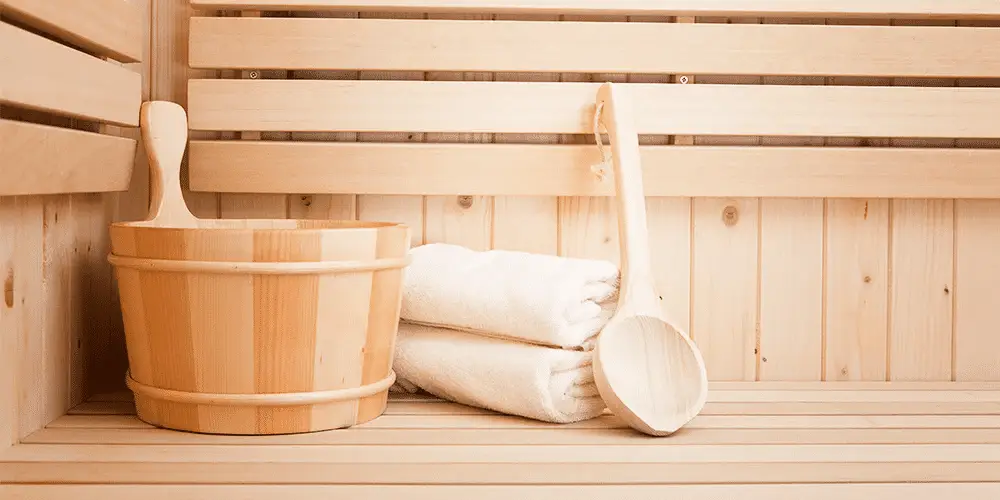
Wood has been used for sauna buckets for centuries, and that is not just tradition for the sake of it. Cedar, aspen, pine, and Nordic spruce handle heat and humidity well.
Wood stays cool to the touch even when the room is very hot. Cedar and aspen resist moisture and mold better than most other options. The look fits a traditional sauna naturally.
Why wood works:
- Stays cool to the touch in high temperatures
- Handles temperature changes without cracking easily
- Cedar and aspen resist moisture and mold well
- Fits the aesthetic of a traditional sauna
The downside is maintenance. Wooden buckets need occasional oiling and proper drying between uses. Skip that regularly, and they crack or develop mold faster than expected.
Metal-Lined Sauna Buckets
Metal-lined buckets have a wooden exterior with a stainless steel or copper liner inside. That combination handles heavy daily use better than pure wood and needs less ongoing attention. They look traditional but perform better under the kind of pressure a commercial sauna puts on equipment.
Feature | Wooden Bucket | Metal-Lined Bucket |
Aesthetics | Traditional, warm | Modern or traditional |
Heat to touch | Stays cool | Can warm slightly |
Durability | Good with maintenance | Excellent long-term |
Leak resistance | Moderate | High |
Price range | Lower to mid | Mid to higher |
Best for | Home saunas | Commercial use |
Ladle Materials and Construction
The ladle gets handled more than anything else in a sauna, so build quality shows up here quickly. Wooden handles are standard because wood does not transfer heat to your hand the way metal does. When your hand is wet from steam, and you are reaching toward a hot heater, that matters a lot.
Ladle bowl options:
- Full wood construction, lightweight, and traditional
- Wooden handle with a copper bowl, looks good, and handles heat well
- Wooden handle with a stainless steel bowl, durable and easy to clean
The joint between the handle and the bowl is where cheap ladles fail first. A quality ladle has a secure mechanical connection that survives repeated soaking and drying without coming loose.

Key Factors to Consider When Choosing Sauna Buckets and Ladles
Knowing the materials is useful, but matching the right product to your actual situation is what the decision really comes down to.
1. Capacity and Size of the Bucket
The bucket size should match how the sauna is actually used day to day.
For home saunas: A 4 to 5-liter bucket covers most personal setups. Sessions are shorter, and refilling between rounds is not much of an issue.
For commercial saunas: A 7 to 10 liter bucket makes more practical sense. Fewer interruptions for refilling mean a smoother experience for guests, especially when the sauna is busy.
A bucket that is too heavy creates problems for older guests. A bucket that is too small means someone leaves the room mid-session to refill it, and that kills the atmosphere immediately.
2. Ladle Length and Ergonomics
Ladle length sounds like a minor detail until you are standing in a hot sauna with your hand too close to the stones and realize the handle is not long enough.
Ladle Length | Best Use Case |
30 to 35 cm | Small home saunas with accessible stones |
40 to 45 cm | Standard home and residential saunas |
50 cm and above | Commercial saunas, larger heaters, deeper stone beds |
A longer handle keeps your hand at a safe distance and gives better control over pour speed. Balance matters too. A handle-heavy ladle makes slow, precise pouring harder than it needs to be.
3. Durability in High Heat and Humidity
Sauna accessories live in a tough environment. Constant heat, moisture, and repeated soaking and drying cycles expose weak materials and poor construction to fast deterioration.
What to look for:
- No visible gaps between slats on wooden buckets
- Metal bands that are rust-resistant and firmly attached
- Handles that are mechanically joined rather than just glued
- Wood that has been properly kiln-dried before construction
Cheap buckets show problems within months. A well-built bucket maintained properly lasts for years without issues.

Integrating Accessories into Professional Sauna Systems
Home buyers have room to be flexible. Commercial operators are making decisions that play out across hundreds of sessions, and that change what matters.
Why Sauna Accessories Matter in Commercial Environments
Guests in a spa or resort are paying for the sauna experience, and they notice details even when they cannot name exactly what is bothering them. A cracked ladle handle, a bucket that wobbles near the heater, a session where the steam felt thin because the tools were mismatched, all of that affects how people remember the visit.
Repeat business comes from sessions that feel consistent and reliable, and accessories are part of that, whether operators think of them that way or not.
Sauna Design Considerations in Smartmak Sauna Systems
Smartmak custom sauna systems are engineered for precision and harmony. Heaters, stones, and accessories are selected and coordinated to provide consistent, well-balanced steam throughout each session. By aligning heater output, stone bed depth, room size, and accessory specifications, every component functions together to optimize performance and comfort.
Strategically positioned accessories enhance safety and ease of use, reducing the chance of errors and allowing users to enjoy a seamless sauna experience without needing to adjust or monitor the setup.
Value for Distributors and Wellness Facility Operators
For distributors and wellness facility operators, partnering with a professional sauna manufacturer like Smartmak means more than just sourcing equipment. It means investing in a system where even the smallest details—like the durability of a ladle or the capacity of a bucket—are engineered to enhance guest satisfaction and reduce long-term replacement costs.
Key benefits of investing in quality sauna accessories:
- Guests notice and respond to quality even in the details they cannot name
- Durable construction reduces replacement frequency over time
- Consistent steam quality supports positive reviews and return visits
- Well-designed tools give staff more confidence during daily operations
- Professional-grade accessories reflect on the overall reputation of the facility
Operators who treat accessories as part of the sauna system from the beginning see better numbers on both guest satisfaction and long-term maintenance costs compared to those who treat them as an afterthought.
Conclusion
The bucket and ladle are the simplest things in a sauna, but they affect the experience more than most people give them credit for. Wrong material, and it warps or leaks within a season. Wrong size, and someone is leaving the room mid-session to refill. The wrong ladle length and users are closer to the heater than they should be.
For a home setup, find something that fits the space and feels right in your hand. For a commercial environment, treat these the same way you would treat the heater selection. Guests who use the sauna regularly will feel the difference even if the subject never comes up.
FAQ
What is a sauna bucket used for?
It contains water, which is sprayed upon the hot rock to create steam. It is placed close to the heater during the session, and it is used multiple times to adjust the room temperature and humidity.
Why do saunas use a ladle and bucket?
The ladle allows pouring in small and controlled amounts. Pouring off a bucket leaves almost no control and will tend to cool the stones too quickly, forming weak steam and damaging the stone bed in the long run.
Are wooden sauna buckets better than metal ones?
Wooden buckets are colder to the touch and appear more classic. Buckets that are lined with metal are more durable during intensive use and require less maintenance. In a business scenario, a metal-lined would be a wiser long-term solution. Home use either works; what is more important to you.
How much water should you pour on sauna stones?
The standard is one ladle at a time with about 150 200 ml each. pour, and wait until the steam is up, and then determine whether to add any more. Excess water simultaneously freezes the stones rapidly, and weaker steam is produced.
How long should a sauna ladle be?
For a home sauna, 40 to 45 cm covers most situations comfortably. For a larger commercial sauna with a deeper stone bed or taller heater, 50 cm or more gives better reach and keeps your hand further from the heat.
Meta Title:
Sauna Buckets and Ladles: How to Select the Right One for Your Sauna