A home sauna is an investment in your health, your recovery, and your daily routine. But without consistent upkeep, that investment starts working against you. Sweat, moisture, and heat create optimal conditions for bacteria, mold, and odors to build up inside the cabin. Over time, neglected wood gets stains, benches degrade, and the sauna experience goes from relaxing to unpleasant.
The good news is that keeping a home sauna clean and hygienic does not require heavy effort or expensive products. It requires the right routine. The answer to how to clean sauna wood properly usually comes down to a few consistent habits done at the right intervals.
This guide covers daily habits, weekly routines, deep cleaning methods, and preventative care that protects your sauna’s wood, heater, and overall performance for years. Whether you have a traditional Finnish sauna or an infrared cabin, the principles are largely the same. So, keep reading.
Why Sauna Maintenance Matters for Home Owners
Most people clean their sauna when something looks or smells off. By that point, the problem has already set in. Regular maintenance is not about aesthetics only, it is also about hygiene, material longevity, and getting consistent performance from your sauna every single time you use it.
Hygiene and User Health
Sweat and moisture builds up on benches, floors, and walls during every sauna session. If this is left unaddressed, those damp surfaces become a breeding ground for bacteria, and odors follow shortly after. Heat alone does not neutralize this rather it makes conditions worse when moisture is sitting on untreated wood.
Preventing Odor Buildup
Organic residue from sweat does not just sit on the surface. It seeps into the wood grain over repeated sessions. Once that happens, the smell becomes very difficult to eliminate. Cleaning regularly, before residue has a chance to penetrate, is what keeps the environment fresh and comfortable over the long term.
Improving Air Quality
Clean surfaces inside a sauna allow the air to circulate freely around the cabin. When dirt builds up on the walls, benches, and floor, it restricts airflow and makes the air heavy and stale. A sauna that is kept clean feels better to sit in because the air is lighter and cleaner, which makes every moment spent there more enjoyable.
Protecting Sauna Materials
Sauna interiors are built from natural wood, and natural wood is sensitive to neglect. Sweat residue, standing moisture, and improper cleaning all lead to staining, surface cracking, and discoloration over time. Consistent maintenance keeps the interior looking and performing the way it was built to.
Preserving Wood Surfaces
The way you clean matters just as much as how often you clean. Soft techniques with gentle items keep the original feel and color of sauna wood. Strong chemicals, rough cleaning pads, or too much water get into and weaken the wood’s build, creating harm that is hard and expensive to fix.
Preventing Moisture Damage
Humidity inside a sauna needs to stay balanced. Too much moisture with inadequate ventilation creates the exact conditions mold and mildew need to develop. Controlling humidity through proper ventilation and drying routines after each session is one of the most effective ways to protect the entire sauna structure long term.
Routine Sauna Cleaning Practices

After Each Sauna Session
Once the session ends, wipe down benches, backrests, and any surfaces that collected sweat using a clean dry or lightly damp cloth. This takes two minutes and prevents residue from setting into the wood. Do not leave the sauna closed and humid immediately after use, prop the door open and let the interior breathe before shutting it down.
Ventilation and Airflow
Open the door, vents, or any air intake points after every session. Moving air is what actually dries the interior out. A sauna that stays closed and damp for hours after use will develop mold far faster than one that is simply aired out consistently. Ten to fifteen minutes of open ventilation after each use makes a measurable difference over time.
Weekly and Monthly Cleaning Routines
Once a week, give the benches and floor a light scrub with a soft brush. Dust, dead skin, and debris collect in corners and along bench edges and do not come off with wiping alone. Monthly, do a more thorough pass, i.e. get into the gaps between bench boards, clean the floor drain if there is one, and check the walls near the floor where moisture tends to collect.
Safe Cleaning Materials
Mild soap diluted in warm water is sufficient for almost all routine sauna cleaning. A small amount goes a long way. Avoid bleach, ammonia-based products, or any abrasive scrubbing pads. These strip the wood surface and leave behind chemical residue that releases unpleasant fumes once the sauna heats up.
Deep Cleaning and Seasonal Care
Two to four times a year, do a full deep clean. This means scrubbing all wooden surfaces more thoroughly, addressing any visible staining, and inspecting the entire interior for early signs of wear. If stains on the wood are stubborn, a solution of baking soda and water applied with a soft brush works without damaging the grain.
Heater and Stone Inspection
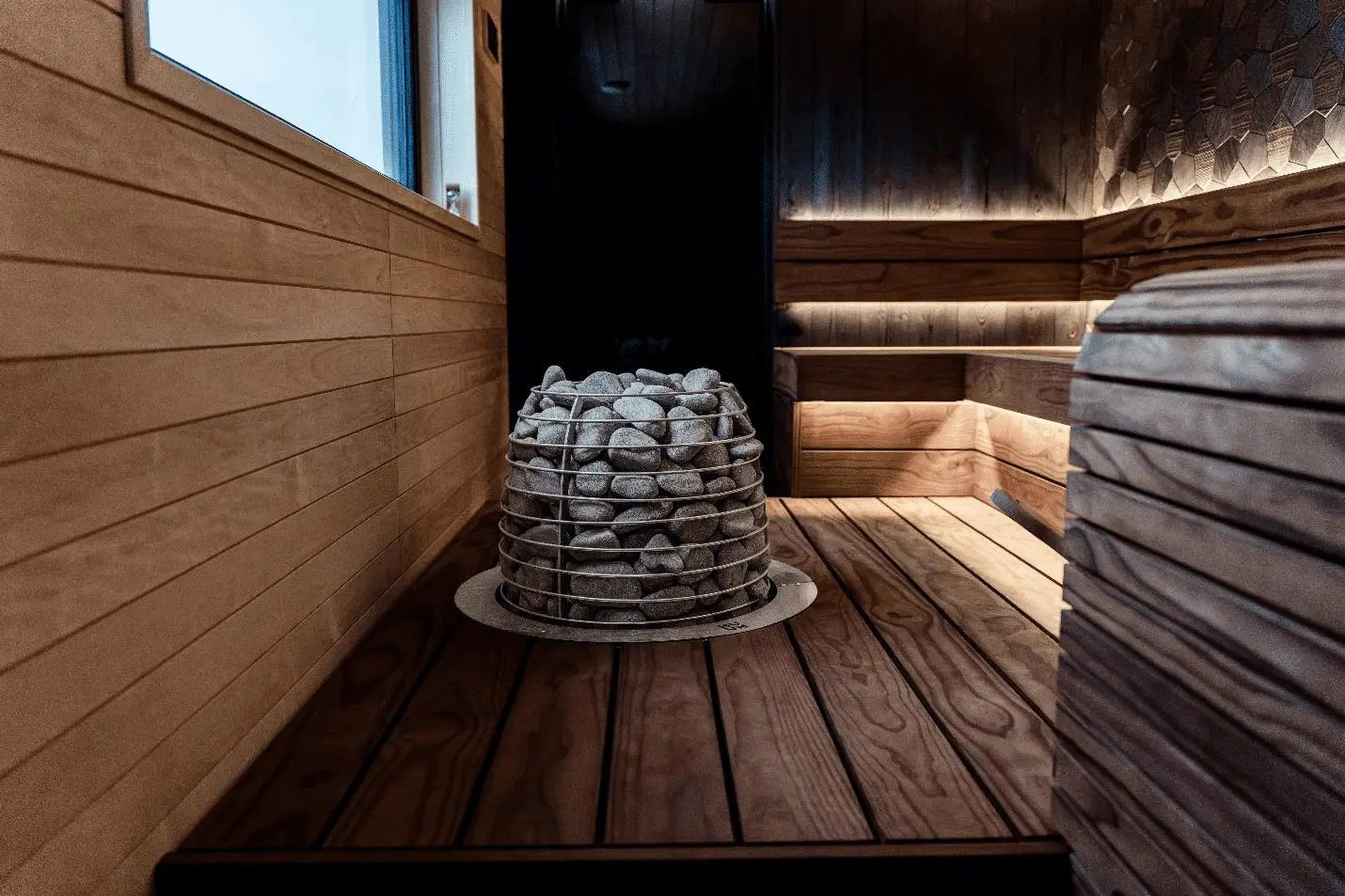
The heater and stones are functional components, and they need attention too. Check the stones every few months for cracks, white mineral buildup, or crumbling edges. If the stones are not in proper condition, they are not useful for equal heat distribution. Clear any dust or debris from around the heater unit and make sure nothing is obstructing it. A clean heater runs more efficiently and has a longer service life.
Preventative Maintenance for Long-Term Sauna Performance
Monitoring Humidity and Temperature
A hygrometer inside the sauna gives you an actual reading of humidity levels rather than guessing by feel. Most traditional saunas operate best between 10 and 20 percent relative humidity. Running the sauna at consistently correct temperatures also matters as extreme heat fluctuations put stress on wood joints and cause them to expand and contract unevenly over time.
Proper Ventilation System Function
Check that your ventilation system is physically working, not just open. Blocked intake vents, clogged outlets, or a faulty ventilation mechanism means air is not actually moving through the cabin even when it appears to be. Remember to clean vent covers periodically and ensure airflow is coming in low and exiting high, which is the correct circulation pattern for a sauna.
Replacing Worn Components
Bench boards take the most wear of any component in the sauna. When they start to splinter, warp, or develop deep staining that cleaning cannot address, replacement is the right call rather than working around them. The same applies to sauna stones after extended use and accessories like ladles, buckets, and thermometers. Worn equipment affects both safety and the overall experience.
Surface Sanding and Restoration
When bench surfaces become rough, gray, or uneven from repeated use, light sanding brings them back. Use fine-grit sandpaper and always sand along the wood grain, never across it. After sanding, wipe away all dust before the next session. This method cleans the surface, removing the top layer where most of the residue is found. As a result, it significantly extends the usable life of the material, eliminating the need for complete replacement.
Professional Sauna Design and Maintenance Considerations
Why Quality Sauna Construction Simplifies Maintenance
The way a sauna is built determines how much work needs to be done on it over the years. Saunas built with properly dried, heat-rated wood and tight-fitting joinery are much less prone to warping, gapping, or surface defects that increase maintenance. Thoughtful design also means bench layouts, vent placements, and drainage points are positioned in ways that make routine cleaning straightforward rather than awkward.
Smartmak Sauna Manufacturing Expertise
Smartmak builds sauna systems with material selection and long-term performance as the starting point. The woods used are chosen specifically for heat tolerance and structural stability, and the construction process accounts for how the sauna will behave through thousands of heating cycles. Airflow engineering is built into the design so that ventilation works as intended without the owner needing to compensate for poor circulation through extra maintenance effort.
Value for Distributors and Commercial buyers
For businesses investing in wholesale sauna installations—such as wellness chains, hotels, and large fitness centers—maintenance downtime translates directly into lost revenue. Smartmak’s robust build quality minimizes service interruptions by delivering systems engineered to withstand high-frequency use. For distributors and project developers, adhering to consistent manufacturing standards means less issues with installation later on. It also builds better, enduring client relationships, all thanks to dependable product performance.
Conclusion
Sauna maintenance comes down to consistency over complexity. The routines covered in this guide, wiping surfaces after use, aerating the cabin, scrubbing weekly, inspecting components seasonally, do not demand much time individually. What they prevent collectively is significant: bacterial buildup, wood deterioration, heater inefficiency, and costly repairs.
Ventilation, surface cleaning, and periodic inspections handle most problems before they start. The remaining variable is the sauna itself. A well-engineered system with the right materials and smart design reduces how much intervention is needed in the first place, which is worth factoring in whether you are buying for personal use or outfitting a commercial facility.
A clean sauna performs better, lasts longer, and delivers a noticeably better experience every session.
FAQ
How often should a sauna be cleaned?
Wipe down surfaces after every session and ventilate immediately after use. Do a light scrub weekly and a thorough deep clean every three to four months.
What products are safe for cleaning sauna wood?
Mild soap diluted in warm water works for most cleaning. Baking soda paste handles stubborn stains. Avoid bleach, ammonia, or any solvent-based cleaners entirely.
Can you use vinegar to clean a sauna?
Diluted white vinegar works as an occasional disinfectant on wood surfaces. Do not use it frequently as repeated acid exposure dries out the wood grain over time.
How do you remove sweat stains from sauna benches?
Apply a paste of baking soda and water onto the stain directly. Keep it aside and let it sit for some minutes, and then scrub very gently with a soft brush along the grain. Rinse lightly and you are done.
Do sauna stones need maintenance or replacement?
Flip and rearrange stones every few months to ensure even heat distribution. Properly check each stone to see which ones show visible cracking, crumbling, or heavy mineral deposits and replace those with new ones.