Introduction
The alert, refreshed feeling some people report after moving from sauna heat to a cool shower has a physiological basis, but the intensity and response vary widely from person to person. The feeling is caused by the release of a chemical called norepinephrine. Norepinephrine is both a hormone and a neurotransmitter involved in the body’s response to stress and temperature change, but this article should not promise a fixed percentage increase from one sauna-to-shower routine. How long any post-exposure effect lasts depends on the individual and the exact heat and cooling conditions, so a multi-hour effect should not be stated as a universal outcome.

If you are interested in knowing whether showering after a sauna is a habit you should adapt, then you are at the right place. This article analyzes physiological impacts of the heat from sauna, and its impact on the body when combined with a shower. It will explain how sauna and post-sauna showering affect cooling, comfort, hygiene, and alertness, while separating practical guidance from stronger health claims.
Physiological Reset After Sauna Heat Exposure
Core Temperature Regulation
While using the sauna the body is unable to transfer heat to the environment. The environment is hotter than our body. Body temperature can rise during sauna use, with the degree of change depending on the sauna conditions, session length, and the individual. The rise in body heat leads to vasodilation and sweating.
When the rapid transition from hot to cold is made through cold plunge or shower the result is rapid cooling of blood or vasoconstriction. Cold water causes rapid changes in skin blood flow and cardiovascular responses, so it should not be described as automatically stabilizing blood pressure or reducing strain on the heart. Cold shock also improves the ability of the blood to dilate and constrict efficiently. This article should not claim that a post-sauna cold shower reliably triggers mitochondrial biogenesis or a meaningful increase in cellular energy production without direct evidence for that specific protocol.
Note: People with heart conditions should follow individualized medical advice about rapid temperature changes; a gentler cooling approach may be more appropriate for some users.
Circulatory Response Optimization
Moving from hot to cold means we are cycling between vasodilation caused by sauna and vasoconstriction as a result of cold showers. The hot-to-cool transition changes blood-vessel tone and skin blood flow, but it should not be described as a literal pump moving waste through the body. Avoid describing the transition as “flushing out” metabolic waste; the more defensible points are cooling, comfort, and the user’s subjective sense of refreshment. Repeated contrast exposure has been studied in different contexts, but this article should not promise that regular use will make blood vessels more flexible or responsive for every user.
Unique studies have shown that the thermal stress from sauna can increase plasma volume and stimulate production of more red blood cells. With regular cycling the body becomes efficient in transporting oxygen to muscles. Sauna use has been studied alongside exercise in some athletic settings, but a post-sauna shower should not be presented as a direct way to increase VO₂ max.
Nervous System Recalibration
When the body is exposed to heat in a sauna the body moves into a fight or flight state. The hormetic stress triggers the Sympathetic Nervous System (SNS). The heart rate rises and the brain releases norepinephrine which boosts focus and alertness. Controlled heat exposure activates the autonomic nervous system, but that response should not be summarized as “strengthening” the nervous system.
When we move to a cold state through a shower after a sauna the nervous system shifts to Parasympathetic Nervous System (PSNS) which is the rest and digest state of the body. A sudden temperature change can alter autonomic responses, but this article should not promise a specific vagal, heart-rate, or cortisol effect from one post-sauna shower. Here are some more nervous system associated body responses to the hot and cold state:
- Alpha Brain Waves:Studies show that the brain enters into the flow state resulting in calm, wakeful relaxation, helping the brain recover from cognitive fatigue.
- Modulating the Default Mode Network:DMN is the background noise of the brain which is partly responsible for mind-wandering, self-criticism, and worrying about the future. It temporarily quiets down during the heat to cold cycle.
- Slow-Wave Sleep:After the cortisol levels and temperature drop the body spends more time in deep sleep which allows the body to rid itself of metabolic waste.
- Neuroplasticity:Thermal stress has been studied in relation to multiple signaling pathways, but this article should not claim that a sauna-to-shower routine reliably increases BDNF. It helps in repairing damaged neurons and growing new ones. It is vital for learning and memory.
Skin, Sweat, and Hygiene Considerations
Sweat Residue, Skin Comfort, and Hygiene
Sweat is primarily water and electrolytes, with smaller amounts of other compounds; post-sauna showering is best explained as a hygiene and comfort step rather than a toxin-removal treatment. Allowing sweat to dry on the skin may feel sticky or irritating for some people, but this should not be framed as the body reabsorbing toxins through the skin.
The skin has a protective layer called the acid mantle which has pH of 4.5 to 5.5. The alkaline sweat can switch the pH levels leaving skin prone to breakouts or infections. Moreover the removal of free radicals, salts and minerals restores the skin’s osmotic balance preventing dryness and aging.
Pore Behavior Post-Sauna
The heating of the body and vasodilation causes the body to push oil and dirt to the surface, which normal washing cannot remove. It also weakens the biological glue that holds the dead skins together, creating a gentle exfoliation.
Showering immediately after the sauna is key. A post-sauna shower can rinse away sweat, sebum, and product residue; there is no need to describe these materials as “purged toxins.” It’s vital for individuals prone to acne. Cycling to a cold state seals the skin barrier and improves moisture retention of the skin. Moreover, the rapid transition activates fibroblasts. These are cells that produce collagen and elastin.
Here is the summary in a table:
Phase | State of Pores | Biological Action | Skin Goal |
Sauna | Dilated | Deep sweat pushes debris out. | Rinsing Sweat and Surface Residue |
Transition | Open and Vulnerable | Rinsing removes residues. | Clog Prevention |
Cold Rinse | Constricted/Tightened | Tissue contraction and barrier sealing. | Protection and Toning |
Post-Session | Recovered | Increased collagen synthesis via HSPs. | Anti-Aging and Firmness |
Hygiene Standards In Shared Or Commercial Settings
In the case of shared saunas, there are chances of cross-contamination. Due to high humidity, the sauna material is an ideal breeding ground for bacteria and fungi that adhere to moist wooden benches and tile floors. Here are the
- Operational Integrity:The sweat after breaking down by bacteria causes a strong, unpleasant odor. Showering after a sauna prevents carryover of sweat to common areas. It also improves the life of equipment that is prone to damage by the corrosive human sweat.
- Liability and Audits:Ensuring that the floor plan forces users to pass through showers reduces liability claims. It also prevents community-wide skin conditions, which can lead to costly legal disputes.
- Promote Personal Hygiene:Informing users through the use of visual aids at wellness facilities can also improve their acceptance rate by users. It should highlight that showering after a sauna washes off the pathogens from the skin before they can colonize and start their negative effects.
Shower Temperature Strategies and Timing
Warm Vs. Cool Showers
The shower after a hot sauna can be cold, hot, or warm. The selection of temperature has a varying impact on the user:
- Warm Showers:If your goal is stress relief and sleep, then consider a warm shower. Warm water ensures that the body’s relaxation response is continued. The heart rate remains low, and the muscle supply. It tells the brain that the threat is over. Warm showers are ideal in the evening when drifting off to sleep is vital, rather than being alert.
- Cool Showers:Typically, 10 to 15°C is meant to enhance performance and biological resilience. Cool water can feel stimulating and refreshing, but this article should not promise a specific increase in dopamine or beta-endorphins. The feeling of euphoria after a cold shower is often reported by athletes. Cold water does not literally squeeze inflammation or metabolic waste out of muscles; keep this section focused on temperature, sensation, and tolerance.
Feature | Warm Shower | Cool Shower |
Primary Goal | Deep Relaxation and Sleep | Alertness and Athletic Recovery |
Nervous System | Parasympathetic | Sympathetic |
Subjective Effect | Lowers Cortisol | More Alerting for Some Users |
Muscle Effect | Soothes and Softens | Reduces Inflammation/DOMS |
Best Time | Evening / Post-Work | Morning / Post-Workout |
Timing The Shower Correctly
Showering After 5-10 Minutes Post-Sauna
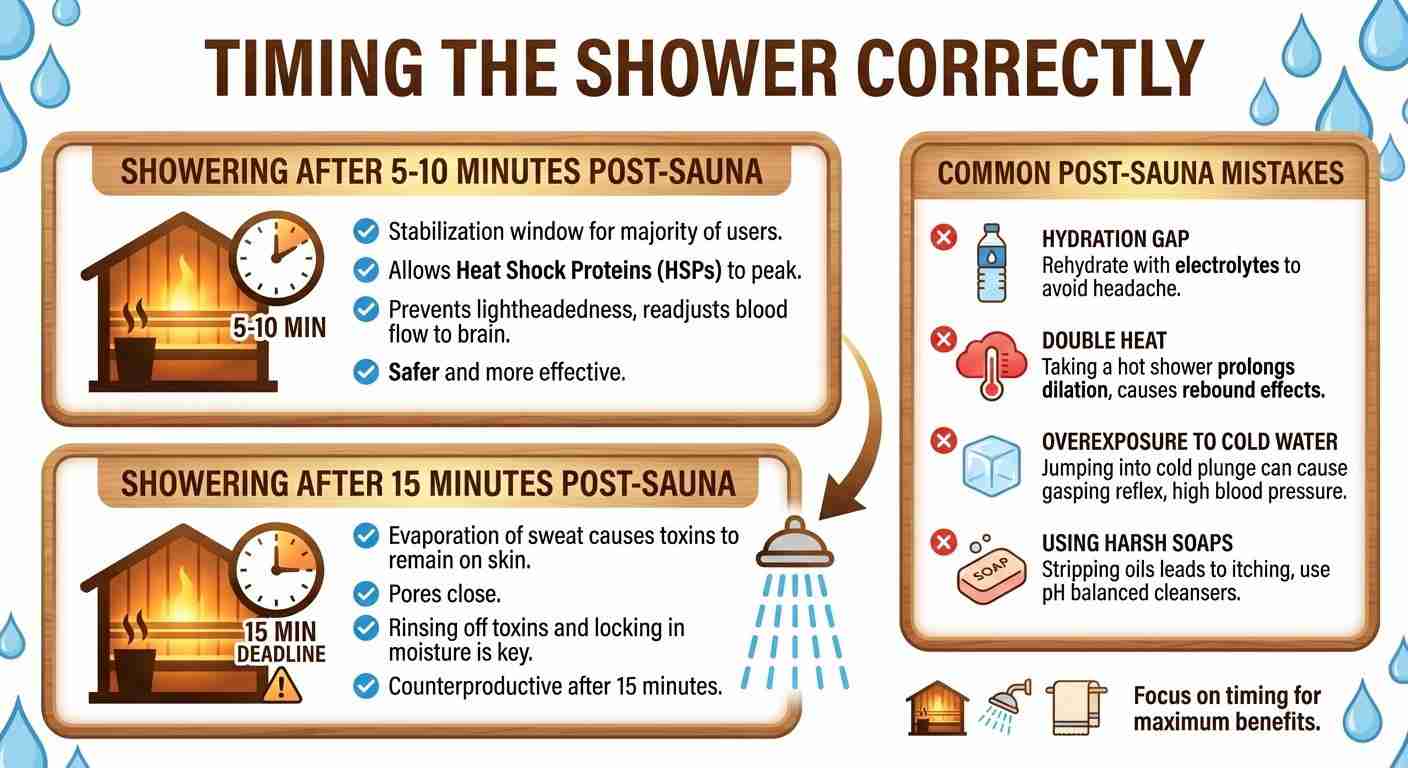
There is no single post-sauna waiting window that is proven to be safest or most effective for every user. While you may feel like jumping into a cold shower immediately after a sauna, it is recommended to wait for at least 5 minutes. The window allows heat shock proteins (HSPs) to reach their peak post-sauna. Bathing immediately after sauna may reduce their beneficial response. Allowing 5 minutes for the body allows the readjustment of blood flow to the brain, preventing lightheadedness.
Showering After 15 Minutes Post-Sauna
There is no evidence-based universal 15-minute deadline for showering after a sauna. Showering after 15 minutes is counterproductive. As time passes, the body starts to cool down. The evaporation of sweat can cause the toxins to remain on the skin and the pores to close. Rinsing off the toxins and locking in the moisture is key within the 15-minute timespan after a sauna.
Common Post-Sauna Mistakes
- Hydration Gap:After sauna, rehydrate with electrolytes. Otherwise, the sauna headache might kick in.
- Double Heat:Taking a hot shower after a sauna causes blood vessels to dilate for too long. It may cause rebound effects and cause continued sweating an hour after the session.
- Overexposure to Cold Water:Jumping into a cold plunge 1 to 2 minutes after sauna can cause a gasping reflex and massive blood pressure spike. Do not ignore signs like shivering or pins and needles.
- Using Harsh Soaps:Stripping away the oil from the skin completely can lead to sauna itching. It’s better to use pH-balanced cleansers during the initial rinse.
Integrated Sauna–Shower Experience Design
Why Post-Sauna Shower Access Should Be Planned At The System Level
For a commercial sauna project, the post-sauna shower should be planned as part of the wet-area layout rather than treated as an isolated add-on. The design should consider slip-resistant walking surfaces, drainage, waterproofing, splash control, cleaning access, and ventilation so guests can move safely from the hot zone to a cooler transition area and then to the shower.
It is important to have a facility that is designed to follow the body’s physiological needs. The sequence is heat zone → cool zone → rinsing zone.
The user should not have to switch between these zones; otherwise, the benefits of the shower after a sauna are lost. Particularly disjoint layouts expose the body to uncontrolled drafts. Modern saunas that utilize smart design incorporate environmental signalling to assist the user with timing of 5-10 minutes after sauna use. Lightning changes can be from amber to blue, signaling movement from sauna to shower.
Another ideal scenario is placing the showers directly adjacent to the cooling lounge. The user naturally moves to the cooling lounge from the sauna and then to the shower room. All three rooms are interconnected and adjacent to each other for ideal spatial flow.
Outdoor Sauna With Porch As A Transition Buffer
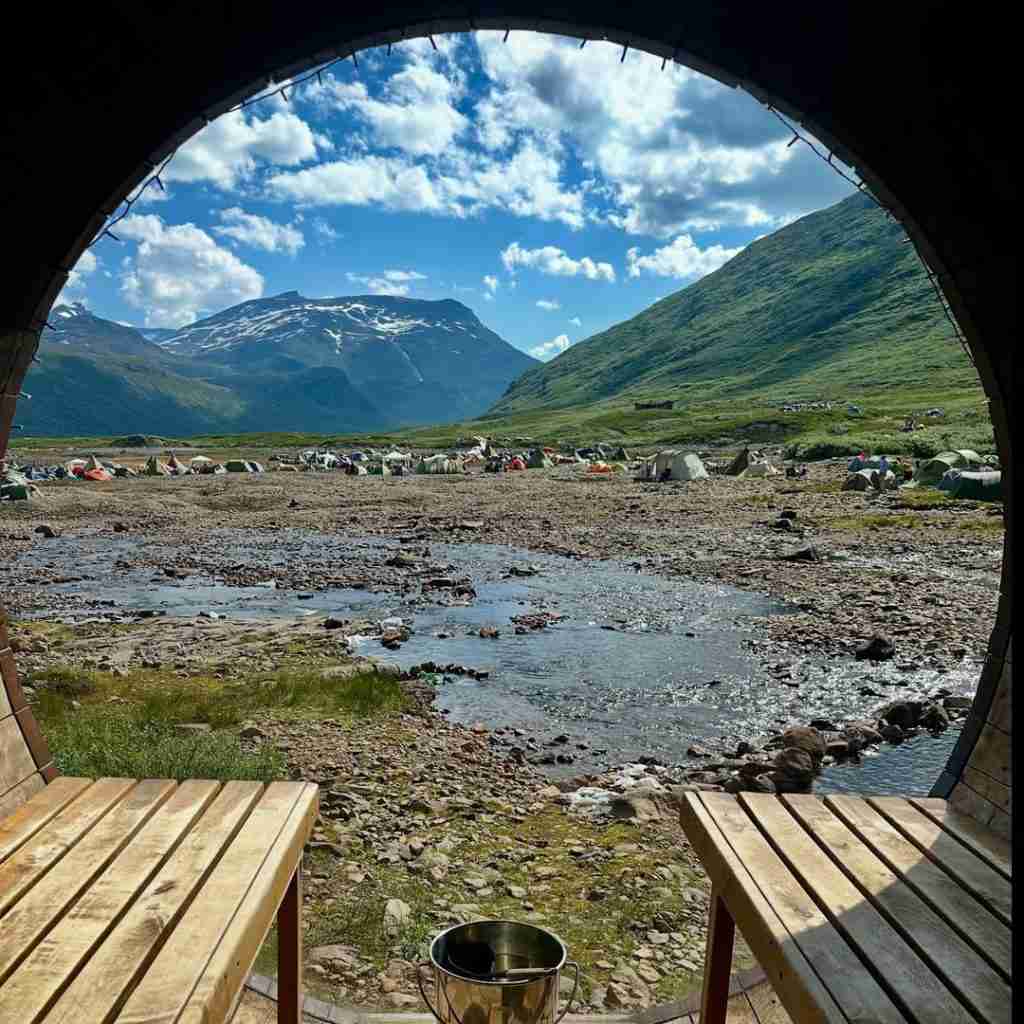
For many users, a barrel sauna outdoor with an integrated porch provides the ideal transition buffer between the intense heat of the sauna and the cold shower. This outdoor buffer zone extends parasympathetic recalibration through natural airflow and sunlight exposure. It utilizes natural airflow to stabilize the heart rate and provides a mood-boosting Vitamin D window.
For outdoor installations, the transition area also needs to account for rainwater drainage, weather exposure, winter icing risk, lighting, and the route to the shower.
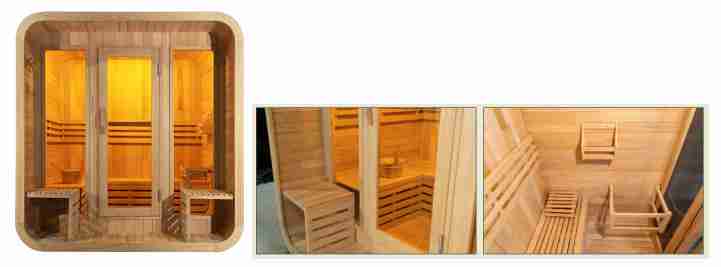
An ideal example is the Smartmak 6-Person Redwood Outdoors Traditional Dry Steam Sauna Room With Porch. It comes with the porch seats that remain close to the sauna to prevent rapid cooling while ensuring exposure to the sun and light air. Placing a shower adjacent to the integrated outdoor sauna creates an all-around approach to maximize benefits from sauna usage.
Value For B2B Buyers And Wellness Operators
For B2B buyers and wellness operators, utilizing the integrated sauna and shower setup results in operational efficiency and reduces risk. Through ensuring that the layout naturally flows in a way that the user ensures hygiene, resulting in significantly lower liability and insurance costs. It also helps reduce maintenance costs and burden.
For B2B buyers, operational value is easier to support with measurable design factors such as cleaning time, drainage access, guest circulation, maintenance access, and the separation of dry and wet zones.
From a revenue perspective, a well-designed sauna, cooling, and shower sequence may improve the guest experience, but Smartmak should not publish a fixed retention uplift unless it is supported by verified operating data. Health-conscious clientele appreciate facilities that incorporate science-backed elements into their wellness facility. It results in higher word-of-mouth marketing. This scalable model ensures consistent service standards across resorts, spas, or fitness chains, turning wellness from a simple amenity into a high-ROI core offering.
Conclusion
Showering after a sauna completes the health cycle and maximizes the benefits of sauna use. Everything from 200 to 300% norepinephrine spike, cellular repair, nervous system balance, and toxin removal are all vital benefit of shower after a sauna. However, careful execution of the sequence, moving from the heat zone to the cool zone to the rinsing zone, is vital. Allowing a minimum of 5 min and a maximum of 15 minutes to cool down in environmental air reduces risk and ensures benefits.
If you are looking for a high-end product suitable for integrated flows and transition porches, then consider the Smartmak lineup of saunas. Visit the Smartmak website to explore all the options.
FAQ
Q: Is it better to take a cold or warm shower after sauna use?
Depends on the result expectation. Having a cold shower for energy, euphoric experience, and a circulation boost. Consider warm for gentle relaxation, typically in the evening when your goal is resting and deep sleep.
Q: Can skipping a post-sauna shower cause skin problems?
Yes, the sweat carries toxins, urea, and heavy metals. Skipping showers can cause residue reabsorption, clog dilated pores, and disrupt the skin’s acidic pH, leading to irritation, breakouts, or sauna itch.
Q: Is a cold shower after a sauna safe for everyone?
Yes, but consult a doctor if you have heart conditions, pregnancy, or low tolerance. Gradually build the habit.
Q: Do professional spas require showers after sauna use?
Professional spas will require shower hygiene, preventing contamination and ensuring user safety. It is a way to protect you and yourself and you from legal troubles.
Q: Can showering after a sauna improve muscle recovery?
A cool shower may feel refreshing after heat exposure, but it should not be described as flushing lactic acid or reliably reducing inflammation.