These days many homeowners are turning their ordinary bathrooms, basement corner and even unused large closets into their own personal wellness spots in the house. Honestly, it does make sense. We know that life is busy. Stress seems to follow us everywhere and not everyone of us have the time to visit a spa every week.
So, instead of driving for steam session or sauna (which may be far across), why not bring that experience home.
In fact the biggest trends in the steam sauna industry right now is the steam shower sauna combo. However, what you need to know upfront is that a steam and sauna combo is not really “one product.” It is a few different things put together, depending on how you set it up. It could be a steam shower sitting right next to a dry or infrared sauna. It could be a sauna hooked up next to a shower and a cooling spot. Or it could be a full wellness suite with separate rooms for each kind of heat.
All of these are part of the same wellness routine. They just require different construction methods, ventilation and supplies. So in this article we tell you about how to pick the right infrared steam sauna combination for your space, how to make the different zones work together and what homeowners, designers, developers and distributors should think about before buying any sauna related equipment.

Understanding Steam Shower Sauna Combo Configurations
Before you make the decision and start the residential steam sauna installation, you must know that there is no one way to build a shower sauna combo.
The three most popular steam sauna setups homeowners opt for include the following:
An Integrated Steam Shower and Sauna Zone
Many homeowners rank this as the ideal setup for homes with enough available space. It includes putting a steam shower and a sauna close to each other. However, they are still two separate rooms. Instead of trying to combine everything into one enclosure, the steam shower and sauna are built side by side.
They are close enough that moving between them feels natural. Still each room maintains its own environment. The idea is not to mix wet steam air with the dry heat of a sauna room. That would result in mold and wood damage down the road. You should keep them physically apart. Some people connect them with a shared space like an entrance, a changing area, a bench or a small relaxation nook. This way it still feels like one experience.
Where This Configuration Works Best
This layout is especially popular in:
- Large primary bathrooms
- Basement wellness rooms
- Home gyms
- Recovery rooms
- Luxury residential renovations.

A Steam Shower Sauna Combo Around an Existing Bathroom
Convert Shower into Steam Environment
Well, not everyone has an empty room waiting to become a spa. In such cases you can turn your existing bathrooms into a comfortable wellness spot without completely rebuilding the house.
This is the most practical approach for residential steam sauna setups. It usually involves enclosing the shower so it can hold steam effectively. You need some waterproofing, adding a steam generator and installing seating. You also have to make sure the ceiling, drainage and controls are designed for continuous moisture.
At the same time, the shower should still function as your everyday shower. This gives you two uses from one space.
Install a Compact Sauna Nearby
There is also a second part to it. Instead of forcing a large traditional sauna into the same room, many homeowners install a compact infrared sauna nearby.
It could fit against an unused wall, inside a dressing room or in an adjoining utility area. If this space or your home’s electrical panel is tight, a compact infrared sauna is usually the easier fit. It draws less power than a traditional heater. This kind of layout proves that you do not require a luxury mansion to enjoy home wellness. Sometimes, making better use of the space you already have is enough.

A Dedicated Sauna and Steam Room Combo
Creating a Complete Thermal Wellness Suite
This is the full steam sauna setup. It has a heating zone, a washing zone, a cooling zone and a resting zone. It is mapped out with a clear path between each one. The goal is simple. Nobody should have to cross a dry hallway while dripping wet. It could lead you to slips and a soggy hallway rug.
Instead of treating the sauna and steam shower as two separate products, the entire room is planned around how people naturally move through the space.
You begin with a shower. Then you move into either the steam room or the sauna. Then cool down afterward, relax for a while, hydrate and then decide whether to enjoy another heat session or not.
Designing this clear sequence makes the entire experience feel calmer and more comfortable.
Suitable Residential and Commercial-Style Projects
This type of wellness suite is becoming increasingly popular in:
- Custom-built homes
- High-end villas
- Residential clubhouses
- Boutique hotels
- Private fitness studios
- Home recovery centers
This residential steam sauna setup requires a larger investment upfront. But it does build a space that supports regular use for years.

Designing the Wellness Experience Around User Routines
Before buying equipment or knocking down walls, you must ask yourself one simple question: How am I actually going to use this sauna or wellness place?
When you design the home steam sauna around real habits of occupants, it keeps your space from becoming an expensive clothes rack. That is why it is always better to design your steam shower sauna combo around your daily routine rather than around the equipment itself.
Step 1: Decide How the Steam Shower Sauna Combo Will be Used
Every homeowner has different routines and requirements. You need to find out what are yours.
Daily Relaxation
If your goal is simply to unwind after a long day, keep everything easy to reach. It can be like a quick 15-minute de-stress session before bed.
You should look for the following in your home steam sauna setup:
- Simple digital controls
- Fast-heating equipment
- Nearby towel storage
- Comfortable seating
- Easy-to-clean finishes.
Fitness Recovery
Many homeowners, who are exercise enthusiasts, now place their steam shower and sauna close to a home gym or swimming pool. That way, the transition is easy and simple.
You Workout. Get a quick rinse. Then, steam or sauna. Cool down, hydrate and relax.
This simple flow makes recovery part of your workout. You can also add a quick rinse shower between heat sessions and leave room for water bottles and towels.
Shared Family Use
If multiple people in your house will use the steam sauna, you should remember that some family members love high humidity while others prefer mild infrared heat.
Independent controls lets different users enjoy the space without changing someone else’s preferred settings. You should plan enough seating for everyone and let each system run on its own.
Create a Comfortable Heat-to-Cool Journey
A good wellness routine should follow a simple flow: Cleanse – Heat – Cool – Rest.
You should not randomly place equipment wherever it fits. Rather you must build a simple drive through the room.
Prepare and Cleanse
- Start with a quick rinse shower to wash off oils and dirt.
- Step into the steam shower or dry sauna for 10 to 20 minutes.
- Step out, take a cool rinse and sit in a comfortable resting area. This will let your heart rate settle.
- Always put non-slip tile or slatted wooden duckboards on the floor between the steam shower door and the resting area to prevent slips.
- You should keep robes, towels, slippers, and drinking water nearby. That way you will not walk around the house looking for them afterward.
Heat and Recover
You should utilize the steam shower and sauna as separate experiences. Do not treat them as interchangeable. A steam shower surrounds your body with warm, humid air that many people find soothing for the skin and respiratory comfort. A traditional sauna provides dry heat that encourages heavy sweating and creates a very different feeling.
Allow users to select one environment or alternate between them. Add a comfortable cooling and resting area outside the heated rooms.
Design your space so you have that choice every time.
Balance Privacy, Comfort, and Accessibility
Privacy: If your bathroom opens up toward a bedroom or shared area, use frosted or textured glass for the steam shower doors.
Accessibility: Keep step-over thresholds low. Add solid, built-in benches or stable fold-down seats so you can sit back and relax safely
Coordinating the Technical Systems
Now let’s talk about the systems hidden behind the walls. This part is where a lot of DIY-style projects go sideways. Hence it deserves real attention.
Control Moisture Before Choosing Finishes
Many people spend weeks choosing tile colors and wood finishes. Very few spend the same amount of time thinking about moisture. That should be the other way around.
Steam Shower Requirements
A steam shower creates an environment that is almost completely filled with warm moisture. To keep that moisture contained, the enclosure should be planned as a complete system.
That means considering:
- Vapor barriers
- Waterproof surfaces
- Proper ceiling design
- Quality door seals
- Reliable drainage
- Post-session ventilation
These elements work together to protect the surrounding structure and help the enclosure dry properly after each use. The outline emphasizes treating these components as one integrated moisture-control system.
Sauna Room Requirements
A sauna has very different needs. It does not trap moisture. It relies on materials that tolerate repeated heating and cooling. Here, natural wood remains popular. This is because it stays comfortable to the touch even at high temperatures.
Ventilation is equally important. Good airflow helps maintain a pleasant environment. It also protects both the sauna and the surrounding room over time. This is why combining steam and dry heat inside a single enclosure usually is not recommended.
Plan Electrical and Plumbing Early
Electrical Power:
Steam generators and traditional sauna heaters require dedicated 240-volt electrical lines. This is similar to an electric clothes dryer or oven. You should always hire a licensed electrician to review your main circuit panel before buying your gear.
Plumbing and Water Drainage:
Your steam generator needs a cold water supply line. It also requires a steam outlet line leading into the shower and a drain line for auto-flushing leftover water.
Generator Location:
Put your steam generator in a nearby dry closet, vanity cabinet or heated attic. It should be within 20 to 30 feet of the shower.
Keeping Controls Independent
Make sure to always install separate controls for your steam generator and your sauna heater.
This is because you should be able to run just the steam shower on a humid morning or just the dry sauna on a cold evening.
Centralized Smart-Home Integration
Consider integrating lighting, music, ventilation, and heating into one control system. Also make sure the compatibility between all connected devices before purchasing. Try to retain manual controls for everyday operation and maintenance.
Choosing a Home Steam Sauna Supplier for Residential Projects
Now you have planned the layout and figured out the plumbing. You have decided where everything will go. Now you need to start comparing suppliers. Most people compare prices before they compare companies. But the thing is that the cheapest quote may not be the best.
Evaluate the Supplier Beyond the Product Price
Selection of the right supplier is very important. You should look beyond the initial price. This will ensure you will receive quality products and reliable support later. Things to look out for in a steam sauna supplier are as follow:
Product and Manufacturing Capabilities
- Review the supplier’s experience with residential sauna projects.
- Check the available sizes, configurations, materials, and control options.
- See whether the supplier can handle custom orders or future project needs.
Support for Distributors and Project Buyers
- Request installation guides, technical documents, packaging details, and lead times.
- Understand the process for after-sales service and replacement parts.
- Check the consistent product specifications for multi-unit or repeat projects.
Match the Product to the Project
When a Steam Sauna Makes More Sense
If your wellness room is connected directly to a bathroom and you enjoy humid heat, a home steam solution may be the better fit.
Steam showers also work well where space is limited. This is because they can often serve as your everyday shower as well.
When a Separate Sauna Cabin Is Better
If you have more available floor space and enjoy dry heat then a dedicated sauna cabin gives you greater flexibility.
It also keeps the wet and dry environments separate, which simplifies moisture management and helps each system perform as intended.
Smartmak as a Steam Sauna Manufacturing Partner
Smartmak has around 20 years of experience in sauna manufacturing. It serves customers across multiple continents. The company’s business combines product development, manufacturing, sales and after-sales service. It supports both distributors and residential buyers.
For residential projects, Smartmak offers several product categories. They fit great into a wellness suite. Their products include including:
- Traditional indoor saunas
- Outdoor saunas
- Infrared saunas
- Steam-related wellness products
- Recovery accessories
For distributors and developers, Smartmak also supports larger project requirements with product documentation, customization options and broader product collections. This makes it most suitable for residential developments as well as retail distribution.
Before placing a larger order, B2B clients should ask questions like:
- Which configurations are best for residential installation?
- Can finishes or dimensions be customized?
- What technical documents are included?
- How are warranty claims handled?
- How are replacement components supplied?
Clear answers to these questions help reduce surprises later in the project.
Planning for Easy Maintenance
Nobody wants to work extra. Every home owner wants a wellness center that is easy to maintain.
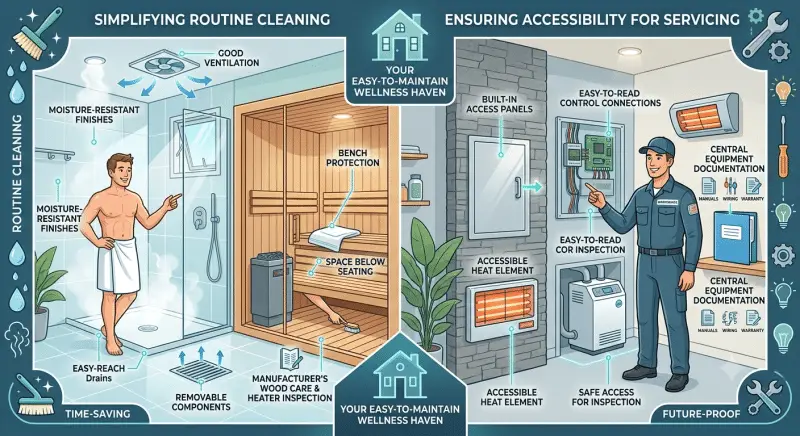
Make Routine Cleaning Simple
Steam showers create moisture. Saunas create heat. Both need regular care. However, neither should feel difficult to maintain.
For the steam area, consider:
- Easy-to-reach drains
- Smooth, moisture-resistant finishes
- Good ventilation after each session
- Components that can be removed for cleaning
For the sauna, it is important to:
- Protect wooden benches from unnecessary water exposure.
- Leave enough room to clean beneath seating.
- Follow the manufacturer’s recommendations for caring for the wood and inspecting the heater.
Leave Space for Future Servicing
Here is something many homeowners never think about.
Some day the equipment will probably need some servicing. It might be a control panel. A heating element. A steam generator.
If those components are hidden behind permanently finished walls, a small repair can become an expensive renovation. Hence, you should leave some access for inspections and future maintenance.
Also keep manuals, wiring information and equipment documentation together in a safe place.
Understand the Total Project Cost
When planning a steam shower sauna combo, it is easy just to focus on the price of the equipment.
In reality, that is just one part of the spending. A complete project often includes:
- Sauna equipment
- Steam generator
- Waterproofing
- Vapor barriers
- Plumbing work
- Electrical upgrades
- Ventilation
- Lighting
- Interior finishes
- Installation labor
Building a complete steam shower and sauna setup usually breaks down into two main costs:
- Upfront Costs:
Equipment purchase (steam generator, sauna cabin, glass enclosures), waterproofing materials, high-grade tiles, and labor fees for plumbers and electricians.
- Ongoing Costs:
A slight increase in your monthly power and water bills (usually just a few dollars a month depending on how often you use it) and occasional descaling products for the steam generator.
Category | Cost Range |
Prefab Steam Shower Kit | $2,800 – $7,800 |
Custom Steam Shower Build | $4,000 – $15,000 |
Compact Infrared / Cabin Sauna | $1,500 – $6,000 |
Electrical & Plumbing Labor | $1,500 – $4,500 |
Typical Total Project Range | $5,800 – $25,000+ |
Conclusion
At the end of the day, a good steam shower sauna combo comes down to more than putting two heat products in the same room and hoping for the best. It’s about keeping wet and dry environments separate, building a layout that makes sense for how people move through it, coordinating the electrical, plumbing, drainage, and ventilation properly, and choosing a supplier who backs their product with real documentation and support.
Get the planning right early on, and a bathroom, a home gym, or even a forgotten spare room can turn into a space your family actually uses, week after week, for years.
FAQ
Does a steam shower sauna combo require special ventilation?
Yes. The steam side needs post-session ventilation so the enclosure can dry out and avoid mold, while the sauna side needs airflow suited to its heater. They shouldn’t share the same ventilation path.
What electrical and plumbing work is needed for installation?
Most sauna heaters need a dedicated 240-volt circuit, sometimes 20 amps for a small infrared model, up to 50 or 60 amps for a larger traditional heater. Steam generators need their own water line, drainage, and a spot where they can be serviced later. A licensed electrician and plumber should handle both.
How much does it cost to build a home sauna and steam room combo?
Individually, a sauna and a steam shower typically run $3,000 to $10,000 installed, though costs shift with size, materials, and how custom the build is. A combined suite with both, plus premium finishes, goes well beyond that.
Should you use the sauna or steam shower first?
There’s no single right answer, it’s personal preference. Many people start with a regular rinse, then move into whichever heat they prefer, or alternate between both, followed by a cooldown.
How do you aclean and maintain a steam shower sauna combo?
Wipe down and ventilate the steam shower after each use, and keep the drain clear. For the sauna, protect the wood benches from standing water, clean regularly, and follow the manufacturer’s schedule for checking the heater and wood treatment.