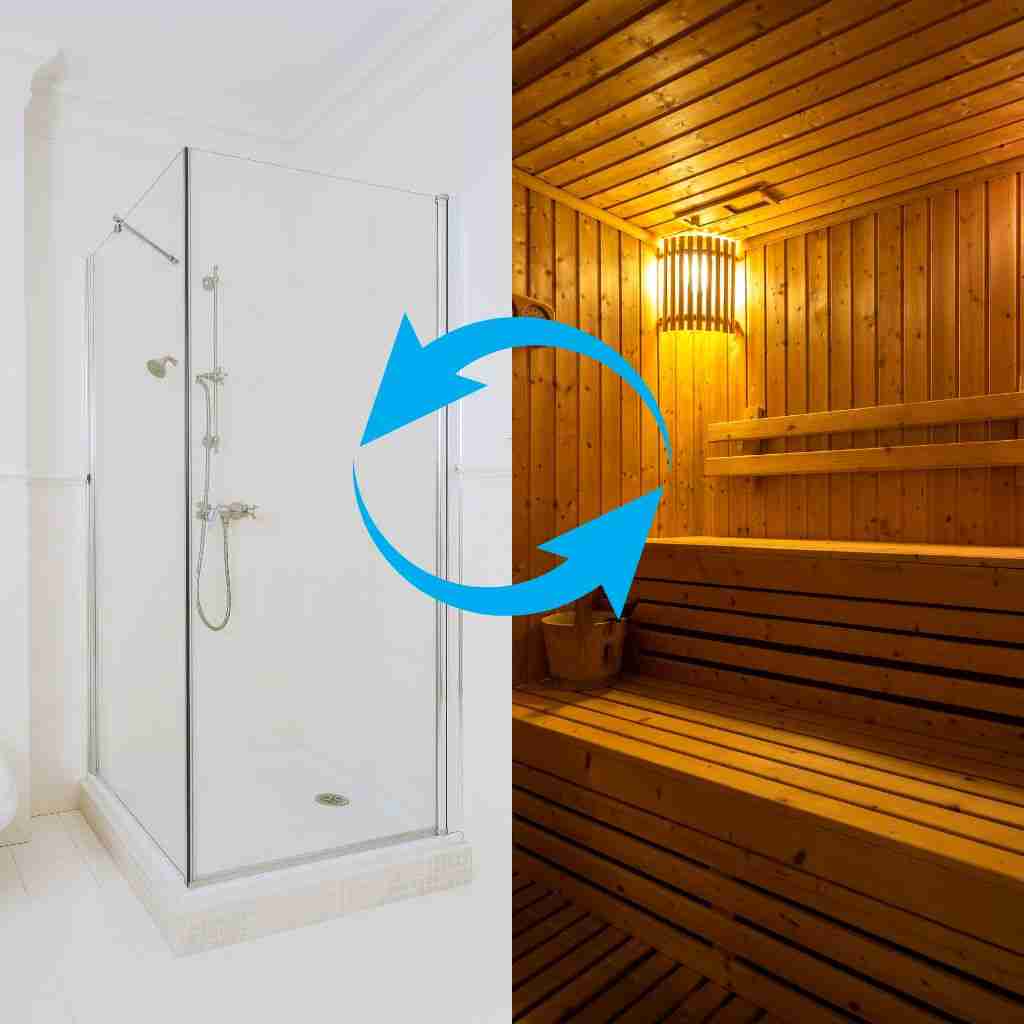
Combining a shower and sauna unlocks the potential of biohacking the body to a non-strenuous “vascular workout”. Users can transition from the hot sauna to a cold shower, creating a contrast-therapy effect. Health-conscious personnel know this fact. More than 70% of luxury home buyers prefer wellness features (NAHB Economics & Housing Policy, 2024). The once thought-isolated portion of a fitness gym is now becoming an integral part of luxury homes.

Sauna and shower not only save space but also enhance relaxation, recovery, and hygiene in a single routine. The seamless transition between relaxation and refreshment can reimagine the bathrooms as a holistic healing hub. Homes that incorporate wellness features have a 10-15% increase in resale value.
This article is the one-stop information on a sauna and shower combo. We will describe the combination in detail, help you prepare the space for fitting, explain the water supply system, and mention some wellness routines ideal for fully utilizing the sauna and shower combo. Let’s begin the serene journey of health, relaxation, and hygiene.
Understanding the Sauna & Shower Combo Concept
What is a Sauna-Shower Combo?
These are enclosures with either a single integrated unit or two connected zones within the same space. In a two-zone design, a glass partition or sliding door allows movement between the sections. The integrated design combines deep-tissue heating from infrared light with traditional heating/cooling from the rainfall showers. Premium designs will incorporate digital control panels for temperature, lighting, and audio.
Benefits of Integrating Sauna and Shower Systems
Having an integrated sauna and shower system installed at home or in a commercial space can provide immense benefits. Homeowners can use them daily to reel in the healthy benefits, while business owners can attract a larger customer base through advertising these benefits:
Benefits for Everyone
- Blood Circulation through Heat-Cool Contrast (45% Improvement)
- Detoxification through Sweat and Shower
- Muscle Recovery Through Infrared Heat and Water Jet
- Mental Clarity Through Endorphin Release (15–20 min cycles)
- Hygienic Experience
Benefits for Home Owners
- Space Saving through Combined Shower and Sauna
- Energy Efficiency through Combined HVAC
- Increase in Home Resale Value
- Monthly Savings on Gym Fees
Ideal Users and Environments
Wellness spaces are equally beneficial for homeowners, spa operators, and hospitality developers. These are excellent multifunctional relaxation spaces that can be ideal post-workout spaces for fitness enthusiasts. Having such a facility near a gym is perfect for maintaining hygiene after a hard workout. Boutique hotels, remote workers, couples in urban condos, and seniors can all benefit financially and improve their overall health and well-being. These are also ideal for the B2B category for corporate wellness rooms and rehabilitation centers.
Design & Space Planning for Optimal Flow
Determining Space Requirements
The installation of a sauna and shower combo requires careful planning at the initial stages of civil work. If the installation is going to be inside a bathroom, then it should have dimensions to support its structure. The space requirement depends on the sauna-shower combo.
Typically, 4 square feet is required for single-person comfort, allowing 60cm clearance for movement. For two people, the setup will need to be 6 square feet, incorporating double benches. The height needs to be 7 feet for optimized heat distribution and energy savings. Here are some tips to consider when determining space requirements:
- For Compact Design: 4-6 square feet
- For Open-Plan Concept: 10-12 square feet
- Ventilation Intakes at 20cm Height for 6-8 Air Changes Hourly
- Ventilation at 150-200 CFM to Clear Humidity
- 30cm Clearance for Electrical Maintenance
- Door Radius of 80cm for Safety
- Separate Drains for Sauna and Shower to Avoid Clogging
- Non-slip tiles with >0.6 friction coefficient
- Sealing Rated for 200°C to Prevent Leaks
Layout Ideas for Different Settings
Whether in a home or a commercial space, designers can use different layouts to create a serene experience. Combining aesthetics with wellness is convenient with a sauna and shower combo. Here are some ideas for various applications:
- Apartment Corners: For space efficiency in apartments, a sauna and shower combination measuring 6x6ft can fit comfortably in a corner.
- Resort Open Plans: Use a glass-based sauna shower combo measuring 10x13ft. It gives a panoramic view and vacation aesthetics.
- Minimalist Designs: For a cleaner, minimalist look, consider a sauna-and-shower combo that accommodates a single person. Utilize light-toned wood like Aspen or Hemlock.
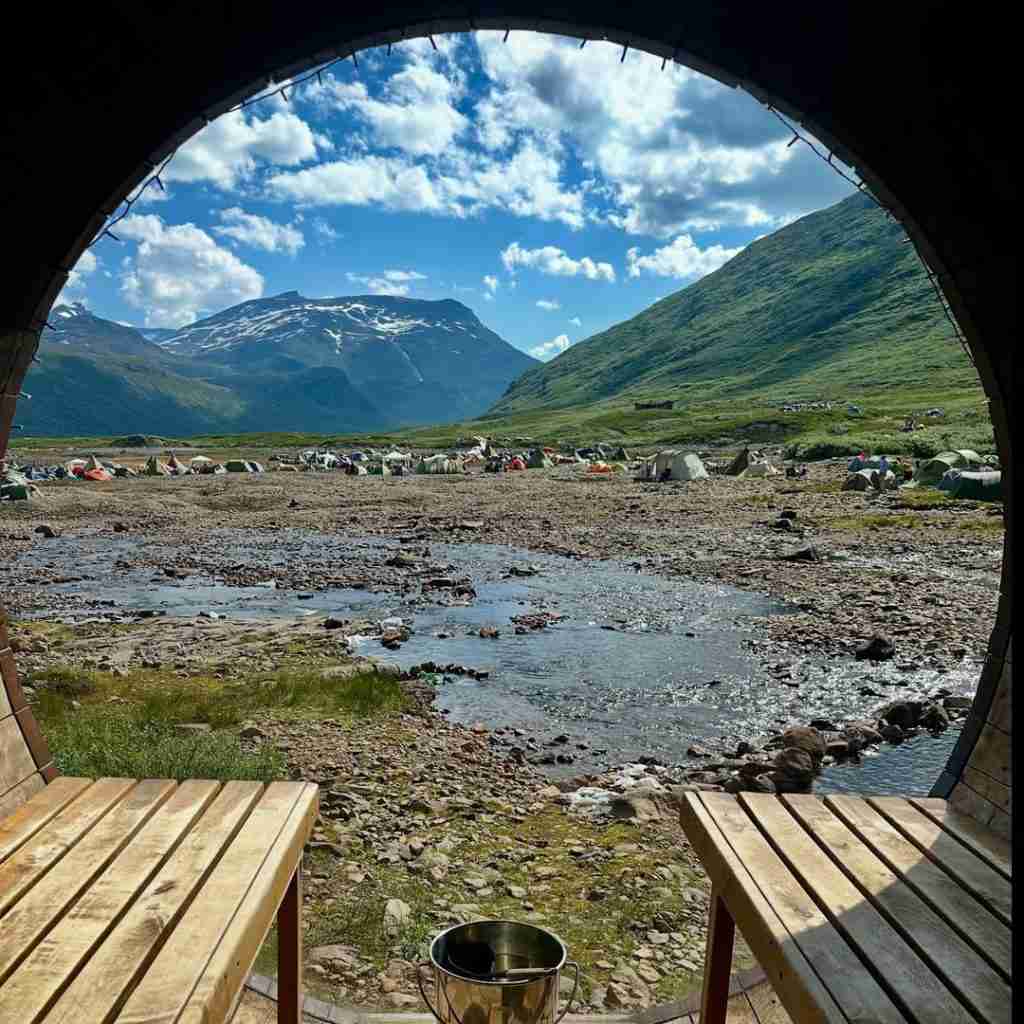
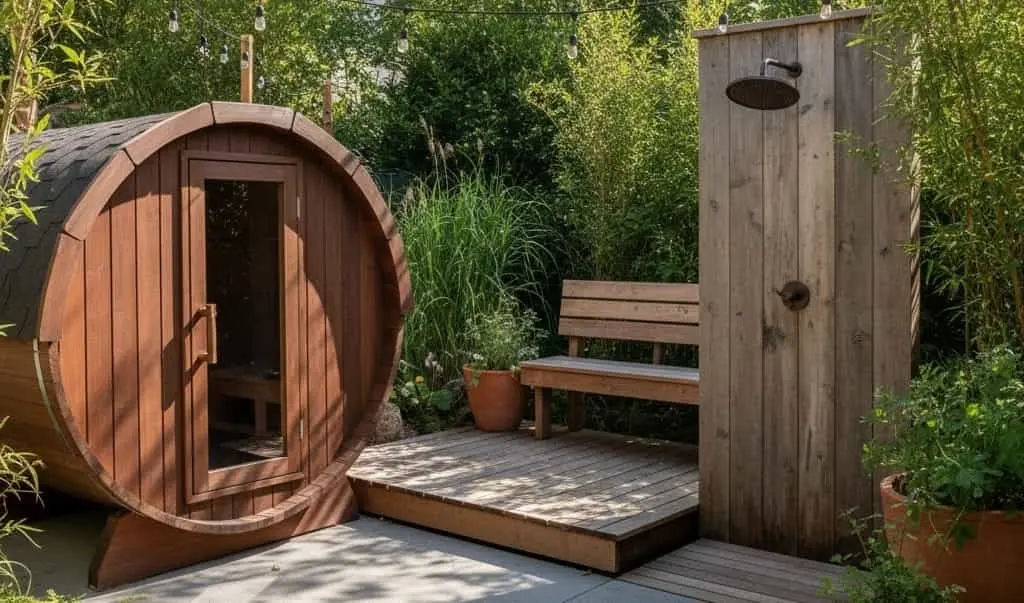
- Outdoor Patios: These are usually barrel- or cabin-type designs built separately, such as the Smartmak barrel series. The shower is a separate unit that integrates with the sauna via a small wooden transitional area between the two.
- Gym Adjacent Layouts: In high-traffic areas, robustness is key. Consider the 10x15ft layout, which features multiple shower heads and a multi-tier bench setup for a sauna. Consider placing a cool-off bench outside the sauna.
- Luxury Homes: Dedicate an area for all the wellness facilities, including the shower, sauna, and a cold plunge tub. Use ample space —12x18ft —to soothe the body and create a mindful experience within the comfort of home.
Tip: To reduce plumbing complexity and material cost, consider installing the unit adjacent to the basement. Overall, the price will be reduced by 25%.
Material and Finish Considerations
For saunas and showers, the materials used can vary. It can recreate beautiful contrast, and designers can use it to their advantage. Heat-resistant wood is needed for saunas, while non-slip, moisture-resistant tiles are essential for shower zones. Here are some material considerations that wellness spaces should consider:
Material/Element | Key Property / Feature | Specific Metric / Lifespan |
Sealing | Prevents water leakage and steam escape | Silicone seals cure in 24 hours, preventing leaks for 5 years |
Cedar (Interiors) | Resists moisture; minimal upkeep | Lasts 10-15 years |
Hemlock (Benches) | Provides durability at high temperatures | Withstands temperatures up to 90 °C |
Porcelain Tiles | Offers slip resistance | Rated 0.5-0.7 (Slip Resistance) |
Tempered Glass | Partitions withstand high humidity | Withstands 100% humidity without fogging |
Exteriors (Outdoor) | Maintains color in outdoor setups | UV-protected, lasts for 7-10 years |
Antimicrobial Coatings | Reduces bacteria on surfaces | Reduces bacteria by 99% |
Finishes | Minimizes glare in lit environments | Matte finishes |
Eco-materials | Used for sustainability | Recycled 20-30% content |
Custom Veneers | Allows matching to home decor | Available in 8-10 shades |
Heat & Water Systems: The Technology Behind the Experience
There are tons of technologies to choose from in a sauna and shower combo. Some use infrared, while others use traditional steam to create a calming wellness space. Let’s analyze these technologies and their effect in this section:
Heating Technologies in Sauna-Shower Combos
Infrared Technology
Infrared light penetrates 3-4mm into the tissue for more profound relaxation. These setups typically require 120V and can reach 55-65 °C in 10minutes. If you use carbon fiber emitters, they can last 10,000 hours while providing 95% coverage of the human body. For higher heat, use ceramic emitters that can withstand 70 to 158°F with dry heat.
Traditional Heating
Compared to infrared, traditional saunas require more power —around 6kW — to produce a temperature range of 80 °C to 100 °C. At the same time, their warm-up time can be 30 to 45 minutes. They would also require a specialized high-voltage supply rated at 240V. They also need volcanic stones for the (löyly) effect.
Steam
For the steam rooms, you only need 3 to 4 liters of water to create a 99% relative humidity environment. The steam heating element will require 1.5kW of power to reach optimal temperatures of 43 °C.
Hybrid
These can combine the benefits of steam with infrared technology for maximum results. The respiratory benefits of steam and deep heat penetration from infrared technology can be easily combined in a hybrid sauna and shower combo.
Plumbing and Water Setup
Utilizing larger pipe sizes can help deliver faster heating and cooling cycles. Typically, a ¾ inch pipe can support a 15-20L/min flow rate. These are essential for the sauna-and-shower combo, which features multiple jets and rainfall heads. Moreover, for a cold plunge, the same line can deliver 20 °C water within 5 sec. Everything from standard slope (1:48) and use of foam insulation on hot water pipes can reduce energy consumption in modern sauna and shower combos.
Controls and Safety
In modern-day saunas and showers, safety features are built in. Some sensors shut off at 110 °C or at a low flow of water around 2 l/min. Both of these features keep the user safe and protect the heating elements or equipment from damage. Similarly, there are maximum operating temperature limits of 115 °C and an automatic end-of-session after 60 minutes for energy conservation.
The Smartmak Advantage in Modern Installations
Smartmak infrared offers 30% energy savings with precision temperature control. Their products are designed to integrate into wellness spaces seamlessly. One key highlight of their lineup is modular components that can be assembled in 2-4 hrs for B2B efficiency. The custom dimensions fit irregular spaces up to 10 sq m. Here are some of their key features:
- Infrared precision maintains ±2°C variance.
- Low consumption at 1.5-3kW suits urban installations.
- Distributor support includes diagrams for 50% faster builds.
- High-end experience with integrated jets and lighting.
- Durable for 10,000+ hours of commercial use.
- Eco-design reduces carbon footprint by 20%.
- Compatible with shower layouts using standard 120V outlets.
Wellness Routines: How to Use a Sauna-Shower Combo Effectively
Pre-sauna Preparation
Hydrating is the first step in pre-sauna preparation. You will have lots of fluids, so drink about 300-500ml of fluids 10-20 minutes before the session. Perform a 2-3 minute light stretching routine to prepare the muscles for the relaxing effect. Set the sauna and shower combo temperature to 60-80 °C via controls. Ensure the ventilation is working and check the humidity is below 50% before starting.
Warning: Do not take jewelry into an infrared sauna, as it can lead to skin burns.
Sauna-to-Shower Sequence
After having a healthy session of 10-40minutes, transition to the shower section of the combo, take a cold shower of 1-2 minutes, then move back to the sauna for reheating. Alternate between these sections for 3 cycles to boost circulation. Cool gradually to avoid shock, and monitor your heart rate to keep it under 120 bpm. Cycling will help enhance detoxification and immune function and reduce muscle fatigue.
Tip: Hydrate between phases
Incorporating Aromatherapy and Steam Therapy
For a complete sensory experience, consider adding aromatherapy and stem therapy. Use 3-5 drops of oils in steam (hybrid design) for relaxation. Use infusers for 10 minutes cyclically. Use lavender to reduce anxiety by 20% and Eucalyptus to clear the airways.
Safety, Maintenance & Installation Best Practices
Electrical and Plumbing Safety
For maximum safety, keep the circuits for heaters and showers separate. A typical 6kW heater on 240V uses 30A circuits. Use a 15A circuit for showers. Ensure that all the metal parts are properly grounded. Ensure all the electrical outlets are waterproof with a minimum ingress protection rating of IP65.
Cleaning and Upkeep
To ensure a pleasant wellness experience for customers or home users, keep the sauna and shower combo clean. The mafest method is using a 1:10 vinegar solution and pH-neutral cleaners weekly. Air dry 15 minutes post. Moreover, replace the air filters every 3 months and check for drain blocks monthly. Ensure that everything —clean wood panels, drains, and glass surfaces —is regularly cleaned.
Tip: Sanitize jets with 1:50 bleach to avoid bacterial buildup in a high-humidity environment.
Professional Installation for B2B clients
Purchasing a high-end full spectrum infrared sauna and shower combo is only the beginning—what follows is the critical need for comprehensive professional installation. Smartmak delivers end-to-end support for B2B clients, including detailed installation diagrams that enable a rapid two-day setup. Our comprehensive wiring guidelines help prevent 95% of common errors, mitigating safety risks and operational issues. Backed by responsive after-sales service with 24–48 hour response times, we guide you through every phase of installation. From adhering to compliance codes to training your operators, Smartmak ensures a seamless, standards-driven process—so your full spectrum infrared sauna systems are installed right, and perform flawlessly from day one.
Conclusion
Wellness spaces need a combination of sauna and shower to boost space efficiency. These can occupy only 4 m² of space and provide 20% savings compared to separate systems. Their appeal for luxury buyers is 70% higher than that of regular saunas. The combination combines hygiene with the wellness routines of the sauna. These promote a daily healthy routine and are suitable for a variety of environments.
However, their installation requires careful planning. Selecting the proper sauna and shower combo, with the right technology and reliable manufacturing, is key. Smartmak provides advanced infrared sauna systems and professional-grade support for installation and design, wellness professionals and homeowners can build seamless, elegant, and durable integrated spa spaces — redefining relaxation for the modern world. Visit their website to explore tons of products that are definitely going to turn heads!
FAQ
- Can you install a sauna and shower in the same room?
Yes, a sauna and shower can share a room via an integrated combo unit. A 4 m² footprint with glass partition, separate drains, and 200 CFM ventilation keeps zones distinct. Dual circuits (30 A heater, 15 A shower) and IP65 fixtures ensure safety, while modular assembly finishes in 48 hours.
- How much space do I need for a sauna-shower combo?
A single-user sauna-shower combo needs 4 m² (2 m × 2 m) with 60 cm clearance; a two-person sauna requires 5 m²—ceiling height: 2.1–2.3 m. Add 80 cm to the door radius, or use sliders. Floor supports 250 kg/m²; keep 1.5 m from water to electrical per code.
- Is it safe to shower immediately after a sauna session?
Yes, showering right after a sauna is not only safe but recommended for contrast therapy. Wait 1–2 minutes to cool slightly, then use 15–20 °C water for 1–2 minutes to constrict blood vessels, boost circulation by 45 %, and rinse sweat. Hydrate with 300 ml of water first. Limit sessions to 15–20 minutes.
- What materials are best for a sauna-shower combination setup?
Cedar or hemlock for sauna walls resist 100 °C and 99 % bacteria. Aspen benches stay cool at 90 °C. Porcelain R11 tiles slope 1:50. 8 mm tempered glass partitions handle 200 °C shock. 315 °C silicone seals last 7 years. Three hundred sixteen stainless fixtures and 50 mm rockwool insulation cut energy loss by 25 %.
- Do I need exceptional plumbing or electrical systems for a combo unit?
Yes, combo units need dedicated systems: 120V/15–20A for infrared heaters or 240V/30–60A for traditional heaters with GFCI protection. Plumbing requires ¾-inch lines, thermostatic valves, and 1:50 sloped drains. Ventilation at 150–200 CFM clears steam in 5–10 minutes; backflow prevention and professional wiring ensure safety and efficiency.