Introduction
Did you know that a 30-minute session in a sauna can increase your heart rate by 100 beats per minute? It can burn 300 calories and improve your artery health for better overall well-being. Saunas offer incredible benefits, but to utilize their true potential, you need the ideal sauna temperature.

There are many ways temperatures are maintained in saunas, which also define a sauna’s type and design. There are three main sauna styles: traditional sauna, infrared sauna, and steam sauna. The sauna style also influences its ideal operating temperature. It is a key factor that impacts the comfort, safety, and overall well-being of the user.
This guide will delve into the basics of sauna temperature for various styles, explore how temperature changes provide immense benefits to users, and outline steps users can take to find the optimal sauna temperature for maximum effectiveness. We will cover all the aspects that can impact sauna temperature, like culture, health, and lifestyle, to help you choose the right temperature for your needs.
Sauna Temperature Basics
Selecting the right temperature is crucial for enjoying sessions without strain. For understanding, we can refer to a study by Podstawski et al. (2024), published in Frontiers in Public Health, titled “Influence of extreme thermal stress…” This study was conducted on a group of randomly selected females who were exposed to 20-minute sessions in a traditional sauna at a temperature of 120 °C. It caused fainting in 14% of the participants. However, when the temperature was changed to 80 °C, it improved their mood and energy.
Temperature alone can transform a relaxing atmosphere into a risky one with just one parameter. To reap the benefits of a sauna setting, the right temperature can lead to immense health benefits. Let’s find the perfect temperature for different sauna styles:
● Traditional Sauna Temperature Ranges
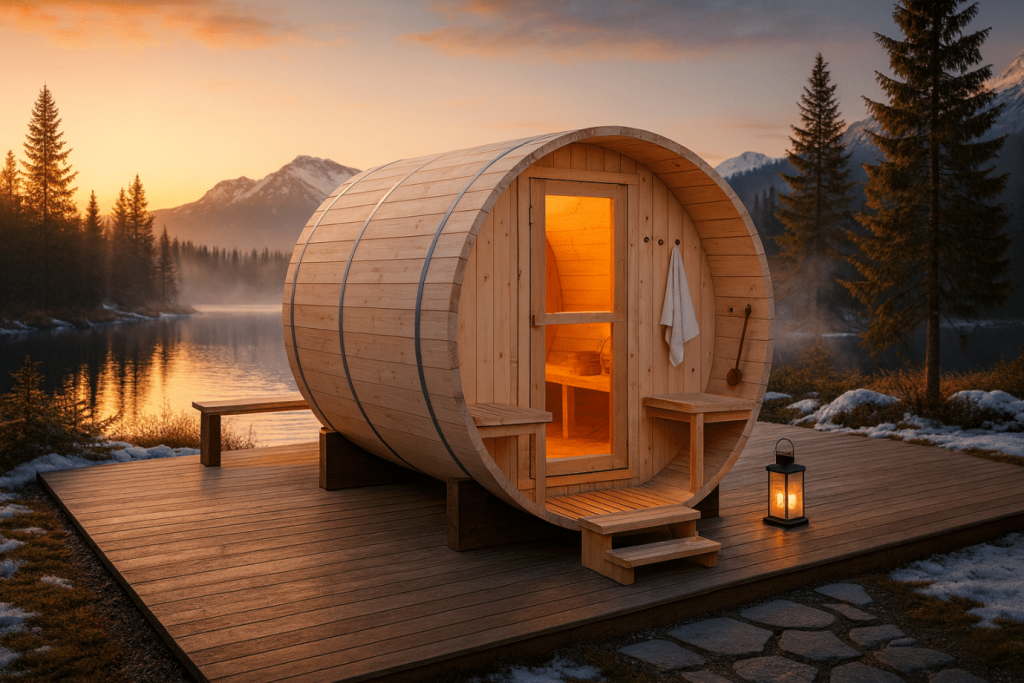
Traditional saunas utilize dry heat to create a warm environment that induces sweating. These are often referred to as Finnish-style with wood-fired or electric heaters and hot stones.
Recommended Range: 150°F–195°F (65°C–90°C)
Studies have shown that most sauna users can tolerate a temperature range of 80–90°C. It can help detoxify the body and promote relaxation. For frequent users, enjoying the heat wave produced from pouring water on stones for a brief humidity spike (löyly) can also elevate the experience.
● Infrared Sauna Temperature Ranges

Increasing the body’s heat directly is different than other types of saunas. The heat, instead of traveling through the air, comes directly from the infrared emitters. Think of it like the sun, but without its harmful rays. The heat travels directly inside the body and gently warms the muscles deeply.
Recommended Range: 110°F–140°F (43°C–60°C)
The temperature range is ideal for moderate humidity. Due to the infrared sauna’s working mechanism, the temperature feels less intense, allowing for longer sessions, typically 20-45 minutes. The range is safe for longer sessions without the risk of dehydration. It’s usually effective for chronic conditions, such as arthritis.
● Steam Sauna Ranges

The steam sauna creates a high humidity and misty environment that works at a lower temperature than other sauna types. Steam has incredible benefits beyond improving cardiovascular health.
Recommended Range: 110°F–120°F (43°C–50°C)
10- to 15-minute sessions at these settings can help revitalize the skin and improve breathing. Maintaining a 100% humidity level is crucial for low-temperature operation, as humidity plays a key role in intensifying the sensation of heat.
How Temperature Shapes Health Benefits
Selecting the right temperature for the right sauna type is key. It can result in immense health benefits, which can also vary depending on the kind of suna. Some increase heart rate while others focus on detoxification. Here is a compilation of the benefits that can vary just by changing the temperature:
● Sweating and Detoxification
The risk of having heavy metals in the body is high. Releasing toxins before they absorb into the bones and teeth is key to detoxification. Using a sauna 4 to 5 times a week significantly reduces toxins from the body. However, it’s essential to have intense sweat sessions for effective detoxification.
Infrared saunas that operate at 110–140°F/43–60°C are ideal for triggering sweat at milder temperatures. It is much comfortable than other types. Custom infrared saunas strike a balance between elegance and efficiency, offering a lower heat level that is accessible for sensitive users while ensuring proper detoxification.
● Cardiovascular and Circulation
Sauna provides incredible benefits for the heart. There is extensive research to support the idea that saunas can improve circulation, which is comparable to the effects of light to moderate exercise. For instance, a 2018 study by Laukkanen et al. in the Journal of Human Hypertension highlights how a 30-minute session at 73°C resulted in a notable reduction in carotid-femoral pulse wave velocity (from 9.8 to 8.6 m/s), indicating a decrease in arterial stiffness. It also caused a reduction in the drop in systolic blood pressure (from 137 to 130 mmHg) and diastolic blood pressure (from 82 to 75 mmHg).
Staying within the temperature range of your chosen sauna type can result in improved cardiovascular health. It’s like a workout for your arteries, as it enhances circulation through vasodilation and reduces arterial stiffness.
● Relaxation and Recovery
Use of a sauna results in the release of stress-relieving hormones. The calm and meditative environment is like therapy for the mind and body. The heat from the steam sauna can hydrate the skin and clear the airways. It reduces cortisol and eases muscle tension, resulting in better sleep. Pairing with cold therapy enhances the effects of the sauna like a cold plunge.
The 2001 comprehensive review, ‘Benefits and Risks of Sauna Bathing,’ published in the American Journal of Medicine, discovers that sauna exposure activates the sympathetic nervous system, leading to brief increases in norepinephrine and epinephrine, followed by a rebound relaxation phase.
● Safety Considerations
While the temperatures in a sauna can induce sweating, reduce arterial stiffness, relax the muscles, and release the happy hormones, excessive temperatures can have an adverse effect. There is always a risk of overheating, which can lead to vomiting or dizziness, as highlighted in multiple studies. Moreover, excessive sweating can lead to dehydration.
Finding the perfect balance and pushing your comfort zone’s temperature limit is key to having the therapeutic effects. However, it’s equally critical to monitor health conditions and stop when your body starts behaving abnormally. Always slowly increase your temperature. Lower operating temperature when you feel any of the following:
- Throbbing Headache
- Rapid or Irregular Heartbeat (Palpitations)
- Excessive Lightheadedness or Dizziness
- Confusion or Difficulty Concentrating
- Cessation of Sweating
- Muscle Cramps
- Burning Sensation on the Skin
Finding the Right Temperature for Different Users
Every user may feel that the right temperature that suits their comfort varies. The ideal temperature range depends on the user’s level of experience. Here are some guidelines that can help users from different levels find their comfort zone:
● Beginners
For beginners with little to no experience in saunas, they can start with a normal temperature. Start from 43°C for the steam and infrared sauna, whereas 65°C is fine for traditional dry saunas. After spending some time at this level, the user can slowly increase the temperature and test going slightly beyond their comfort zone. Increasing the temperature is key to starting to feel the benefits of the sauna.
● Experienced Users
If you are from Finland, you likely have experience with saunas. For some users, it’s part of their culture. For them, using a higher temperature can lead to more profound benefits. However, ensuring adherence to safety is crucial for well-being. Particularly experienced users pour water on stones in barrel saunas that provide short bursts of heat reaching 85–90°C. Veterans time them with a 5-10 minute interval. It’s called the Löyly Technique and is only possible with traditional saunas.
Experienced users take a cold plunge (10–11°C) after exposure to 80°C heat to reset their bodies.
● Targeted Goals
A sauna is not just about pushing your body to new limits and testing your tolerance for high temperatures. Different uses can have varying goals while taking a session in a sauna. Therefore, the required temperature will also change.
- Relaxation → Consistent Moderate Temperature
- Athletic Recovery → Higher Temperature + Cold Therapy
- Detoxification → Higher Temperature with Focus on Sweating
- Cardiovascular Health → Higher Temperature with Focus on Increasing Heartbeat
Conclusion
Finding the perfect temperature for a sauna requires experience and knowledge of sauna types. The maximum temperature for therapeutic effects can range from 90 °C to 50 °C, depending on the type of sauna. A traditional sauna can have a different impact on the body, while the same effect from an infrared or steam sauna can be achieved at lower temperatures. Therefore, it’s safe to say that there is no universal “best sauna temperature”. The user needs to find their tolerance range and test their limits to take the benefits. Always practice and consider safety when using saunas.
FAQ
Q: What is the best sauna temperature for beginners?
The ideal temperature for beginners is 50°C, and they can gradually increase the temperature according to their tolerance level. However, it’s essential to remain vigilant about safety.
Q: What temperature is best for an infrared sauna?
The best temperature for an infrared sauna is 110°F–140°F (43°C–60°C). It is the range suitable for therapeutic effects. However, experienced users can surpass these limits, taking into account their individual tolerance levels.
Q: How hot should a sauna be for cardiovascular benefits?
150–180°F (65–82°C) for traditional saunas and 120–150°F (49–66°C) in infrared saunas. A 2018 study concluded that a temperature of 73°C reduced arterial stiffness, whereas an increase in temperature to 80 °C increased heart rate to 100–150 bpm, mimicking the effects of exercise.
Q: Can lower sauna temperatures still promote detoxification?
Yes, lower sauna temperatures, typically those in infrared and steam saunas, can promote detoxification. A temperature range of 43°C–50°C is sufficient to induce sweating and skin hydration simultaneously.
Q: What is the maximum safe sauna temperature?
The maximum safe sauna temperature can vary person to person. However, generally, a temperature of 90°C for the traditional sauna, 60°C for the infrared sauna, and 50°C for the steam sauna is sufficient to obtain the benefits. However, experienced users can go beyond these ranges based on their tolerance.