Cold water immersion is a common recovery method in athletes, fitness centers and with wellness professionals. Both ice baths and cold plunges may help in reduction of perceived muscle soreness. They also support short-term recovery after intense exercise.
However, recovery outcomes depend on several factors. This includes the water temperature, immersion duration, training goals, timing of the cold water therapy and regularity. While traditional ice baths and modern cold plunge systems provide similar forms of cold exposure, the cold plunge systems offer greater temperature control, repeatability and convenience for individuals and commercial wellness facilities.
Here is a compilation of what science reveals about ice baths and cold plunges for muscle recovery and other wellness benefits.

Why Athletes and Researchers Are Interested in Cold Water Recovery
When you walk into most professional sports facilities today you will find some form of cold water therapy equipment and service.
Elite athletes use it. Recovery centers promote it. Wellness resorts are building entire recovery zones around it. But there is something many people do not realize. Cold water recovery is not a new discovery.
Athletes have been using cold water immersion for decades. They use it help manage post-exercise soreness and prepare for upcoming training sessions. However, today, there is a large number of scientific researches going on regarding this topic. These studies can help people understand what cold exposure actually does and where its benefits may have limits.
Research suggests cold water immersion can be beneficial in specific situations. Like when the recovery time between training sessions or competitions is limited. However, factors like temperature, timing and training goals all play an important role in determining effectiveness.
Let’s look at what the science actually says.
The Science Behind Cold Water Exposure and Muscle Recovery
To understand we must know what happens inside the body when you step into cold water.
What Happens to the Body During Cold Water Immersion?
Physiological Response to Cold Exposure
To maintain a stable internal temperature, the human body needs to work. When exposed to cold water, several physiological responses immediately occur .
- Blood Vessel Constriction
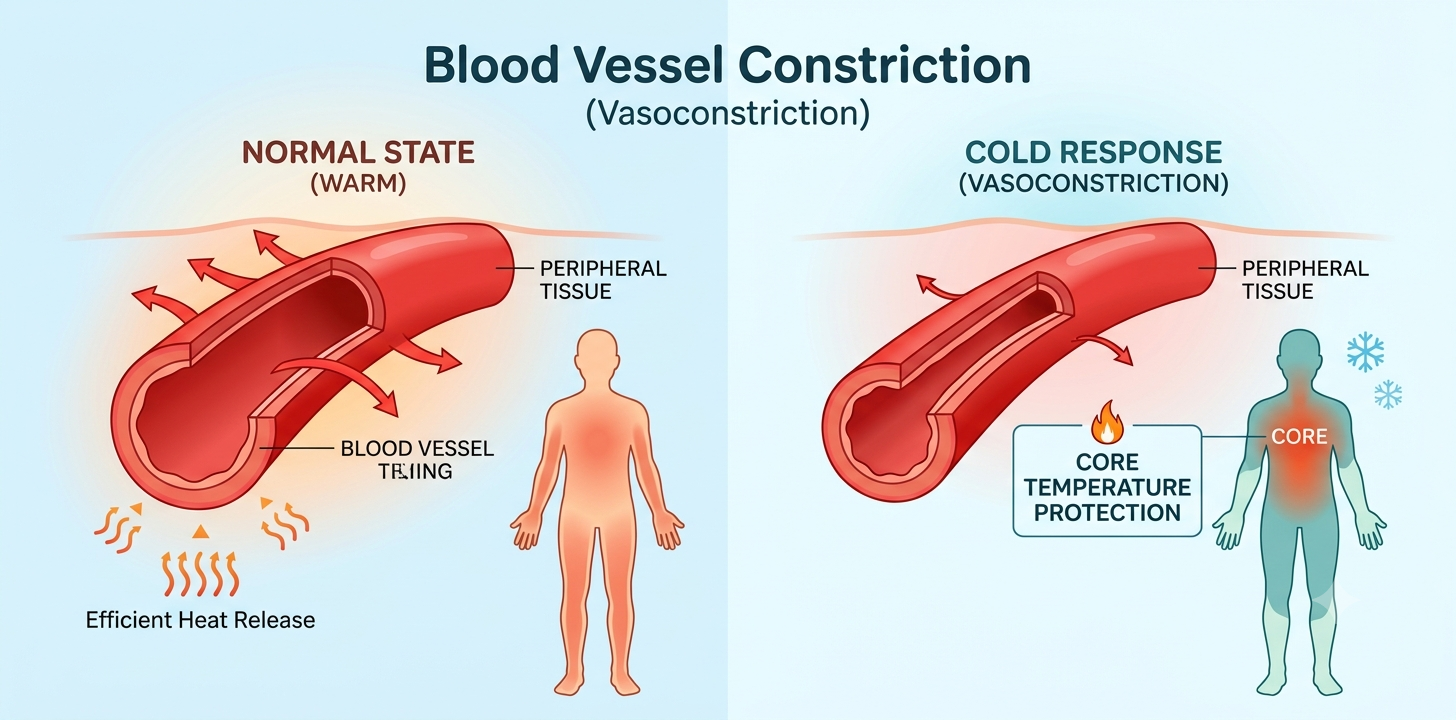
One of the first responses that happens is called vasoconstriction. This simply means that blood vessels near the surface of the skin temporarily narrow down. The body has a goal is to conserve heat. It needs to protect its core temperature.
According to the National Center for Biotechnology Information, cold exposure reduces blood flow to peripheral tissues. This is part of the body’s normal thermoregulatory response. This is one reason cold water immersion has been used after intense exercise.
- Nervous System Activation
Have you ever noticed how alert you feel when stepping into cold water? That is not your imagination. Cold exposure activates the sympathetic nervous system. This is responsible for the response of the body called fight or flight.
Research published in International Journal of Circumpolar Health found that cold water exposure can increase alertness. It excites physiological responses associated with stress adaptation.
Many users report feeling energized, focused and mentally refreshed after a cold plunge session.

Post-Exposure Rewarming
The effects of the cold water therapy does not stop when you get out of the water. As the body warms back up, the circulation gradually returns to normal.
- Return of Circulation
Blood flow increases as tissues rewarm. This helps in restoration of normal physiological function.
- Recovery Perception
It is good know that many recovery benefits reported by athletes encompass how they feel. A growing body of research suggests that cold water immersion may improve perceptions of recovery, readiness, and fatigue management after strenuous exercise.
Why Recovery Research Continues to Evolve
Have you ever searched for studies on cold therapy? You will probably notice one thing. Not every study reaches the same conclusion. This is because recovery research is incredibly complex. Here is how.
- Differences in Study Designs
Research studies vary significantly in:
- Water temperatures
- Session durations
- Exercise types
- Participant fitness levels
- Recovery timelines
For example, one study may use water at 50°F (10°C) for 10 minutes, while another uses 59°F (15°C) for 15 minutes.
Naturally, outcomes can be different.
- Individual Response Variability
Different athletes and individuals react to recovery methods in dissimilar ways. Top athletes, recreational gym goers, endurance runners and power athletes may all have different experiences and outcomes.
Researchers continue studying how different factors like age, fitness level, training intensity and recovery goals influence outcomes.
What Research Suggests About Muscle Recovery Benefits
Areas Where Evidence Appears Most Consistent
Despite variations in study findings, certain benefits appear more consistently throughout the scientific literature.
Managing Post-Exercise Muscle Soreness
- Perceived Muscle Soreness
A comprehensive Cochrane Review shows that cold water immersion may reduce delayed onset muscle soreness (DOMS). This happens after strenuous exercise compared with passive recovery. In simple terms, many athletes feel less sore after using cold water recovery.
- Recovery Readiness
After cold exposure athletes feel better prepared for their next training session. This is perceived readiness. It can be valuable for periods of heavy training or competition.

Supporting Short-Term Recovery Between Events
In situations where recovery time is limited cold water therapy is very useful .
- Tournament and Competition Settings
Athletes have to compete in multi-day tournaments. In these there is often little time between events. So, recovery strategies help cope with soreness and fatigue. Here cold water therapy is good.
- Consecutive Training Days
Sometimes, on back-to-back days athletes have to train. Here cold water immersion may help support short-term recovery needs.
A review was published in the British Journal of Sports Medicine. It showed that cold water immersion as one of the more commonly supported recovery interventions. It is great for managing recovery between exercise bouts.
Areas Where Findings Are More Nuanced
Cold therapy also has its limitations.
Strength and Muscle Growth Considerations
Recovery and adaptation are not always the same thing.
- Resistance Training Goals
Some research suggests frequent cold water immersion immediately after strength training may influence certain muscle-building adaptations.
A widely cited study published in The Journal of Physiology found that regular post-exercise cold water immersion following resistance training may reduce some markers that are associated with long-term muscle growth adaptations.
- Recovery vs. Adaptation
You can think of it this way. You are preparing for a competition tomorrow. Then faster recovery may be the priority for you. But if you are just trying to maximize muscle growth over months or years, then recovery strategies may need to be different.
That is why context matters in this domain.
The Importance of Timing
Researchers increasingly believe timing plays a significant role in recovery outcomes after cold plunges. When cold exposure is employed correctly, it may influence overall outcomes.
This is one reason recovery professionals often tailor protocols to specific goals rather than applying the same approach to every athlete.
Ice Bath vs. Cold Plunge: Which Method Supports More Consistent Recovery?
Now let’s move from physiology to the practical application. Both methods involve cold water. Still the experience can be quite different.
Understanding the Difference Between Ice Baths and Cold Plunges
Traditional Ice Baths
Traditional ice baths rely on manually adding ice to water to cool it.
- Ice-Dependent Cooling
Temperature depends on the amount of ice used. As the ice melts, the water temperature gradually changes.
- Manual Setup Process
Every session requires preparation. You need to purchase, transport, store and add the ice into the tub.
Modern Cold Plunge Systems
Cold plunge systems use advanced cooling technology.
- Temperature-Controlled Systems
They have built-in chillers that maintain steady temperatures. This creates a repeatable experience from one session to the next.
- Integrated Filtration and Circulation
Many systems also include filtration and circulation features that help maintain water quality and improve convenience.
Why Consistency Matters in Recovery Protocols
Consistency is one of the most overlooked aspects of recovery.
- Repeatable Conditions
When water temperature remains stable, athletes can better track and repeat recovery protocols. This is particularly important in professional sports and structured recovery programs.
- Better User Compliance
We know that people follow a recovery routine when it is easy. Cold plunge systems eliminate many of the barriers associated with ice preparation and setup.
Cold Bath vs. Ice Bath vs. Cold Plunge
These terms are often used interchangeably. However, it is important to know their differences. Here is a brief explanation.
- Basic Cold Baths
Cold baths use naturally cold water without added ice. Temperatures are usually moderate and less controlled.
- Ice Baths
Ice baths achieve colder temperatures through added ice. They often require more preparation and monitoring.
- Cold Plunge Systems
Cold plunge systems provide controlled temperatures, filtration and long-term usability for structured recovery programs.

From Research to Real-World Applications: Selecting Recovery Solutions for Wellness Businesses
Physical and mental recovery is no longer limited to professional sports. Today, it is a major part of the wellness industry.
Growing Demand for Recovery-Focused Facilities
- Fitness Centers and Recovery Studios
Many gyms and recovery centers now include cold therapy as part of their wellness offerings.
- Expanding Recovery Services
Recovery amenities can help facilities differentiate themselves in increasingly competitive markets.
- Member Experience Expectations
Consumers now expect more professional-grade wellness experiences.
- Hospitality and Wellness Resorts
Wellness is now part of luxury. People travel for it globally. Many luxury resorts now include cold plunges, saunas and contrast therapy experiences as part of their premium wellness packages.
What Commercial Buyers Should Evaluate
For businesses considering cold therapy equipment, several factors need to be thought about. These include the following.
- Temperature Accuracy and Reliability
Stable temperatures help support evidence-based recovery protocols and predictable user experiences.
- Water Quality and Maintenance
Hygiene remains an important thing in shared-use environments. Filtration and circulation systems can help simplify maintenance while improving user confidence.
- Total Cost of Ownership
Commercial buyers should evaluate:
- Equipment lifespan
- Maintenance requirements
- Energy consumption
- Operational efficiency
- Long-term support availability.
Why Smartmak Cold Plunge Solutions Align with Modern Recovery Trends
As recovery services continue to expand across wellness, fitness, and hospitality industries, businesses need equipment that can support consistent user experiences while simplifying operations.
Designed for Professional Wellness Applications
Smartmak cold plunge systems are designed for environments such as:
- Wellness clubs
- Recovery studios
- Fitness centers
- Hotels
- Resorts
- Day spas
Their focus on temperature consistency and operational reliability aligns well with modern recovery programs.
Manufacturing Expertise and Global Supply Capability
- Consistent Production Standards
Smartmak‘s manufacturing capabilities support distributors, developers, and commercial wellness projects in multiple markets.
- Best After-Sales Support
Smartmak provides installation guidance, maintenance assistance and ongoing support. This can help operators manage equipment more effectively and over a long term.
Supporting Evidence Based Recovery Programs
Scientific recovery protocols often depend on regularity of the therapy. Temperature-controlled cold plunge systems help facilities create repeatable recovery experiences. These align with structured wellness and athletic recovery programs better.
Science Supports Strategy, Not One-Size-Fits-All Solutions
The science surrounding cold water immersion continues to evolve. But still there is one thing that is becoming very clear. Cold water therapy can be a valuable recovery tool. Only when used properly.
Research suggests that ice baths and cold plunges may help manage post-exercise soreness. They can support recovery between training sessions. They can also improve perceptions of readiness following intense exercise.
At the same time, effectiveness of this therapy depends on individual goals. It also depends on the timing, temperature control and training context. For occasional users, the traditional ice baths may provide a good option for a start. For frequent users, wellness facilities, recovery centers and hospitality businesses, temperature-controlled cold plunge systems are great. They provide consistency, convenience and scalability.
Ultimately, the best recovery strategy is not about following trends. It is about understanding the science behind them. You have to define your goals and choose the solution that fits your needs.
Frequently Asked Questions
- What does science say about ice baths for muscle recovery?
Research suggests ice baths may help decrease the perceived muscle soreness and support short-term recovery after intense exercise. This is particularly applicable when there is limited recovery time between sessions.
- Is a cold plunge better than an ice bath for recovery?
The recovery effects of cold water therapy results from the cold exposure. Hence, the cold plunge systems provide more consistent temperatures and easier long-term use and provide better results.
- What is the difference between a cold plunge and an ice bath?
An ice bath requires you to manually add ice to a tub of water and cool it. A cold plunge uses integrated cooling technology or chiller that cool the water.
- How cold should water be for effective recovery?
Many studies are investigating cold water immersion. They utilize temperatures ranging from approximately 50°F to 59°F (10°C to 15°C). However, the best temperatures for a cold plunge can vary. It will depend depending on goals and individual tolerance level.
- How long should athletes stay in a cold plunge after exercise?
Many recovery protocols have cold water immersion periods ranging from 5 to 15 minutes. Duration should be adjusted. It can be based on water temperature, individual tolerance levels and recovery objectives.