To directly answer the question posed in the title: the best size for a 6-person sauna typically features interior dimensions ranging between 6 feet by 8 feet and 7 feet by 8 feet, paired with a ceiling height of roughly 6.5 to 7 feet. This precise footprint yields an internal volume of approximately 300 to 400 cubic feet. This specific sizing is the absolute sweet spot, providing ample room for six individuals to sit comfortably shoulder-to-shoulder, or allowing two to three people to fully recline and stretch out without feeling claustrophobic. Selecting this optimal size ensures that you are not squandering valuable energy heating unused dead space, while simultaneously guaranteeing that your family and guests have a genuinely luxurious, uncrowded wellness experience.
Welcome to the perfect beginning of your journey into the world of large-capacity home saunas. A spacious 6-person sauna represents the ideal equilibrium for homeowners who desire the flexibility to stretch out alone, host intimate gatherings with friends, or share deeply restorative heat therapy sessions with their entire family. Unlike massive commercial builds that consume excessive amounts of electricity and dominate your real estate, a meticulously sized 6-person unit fits beautifully into residential environments. However, stepping up to this size means your design choices—whether you prefer traditional heated stones or infrared technology, an indoor oasis or an outdoor retreat, a classic cabin or a rustic barrel—take on profound importance. You are no longer dealing with a simple plug-and-play appliance; you are managing significant cubic footage, demanding robust electrical requirements, and making a substantial financial investment in your home and health.
The Defining Characteristics of a 6-Person Sauna
The transition from a compact 2- or 4-person enclosure to a sprawling 6-person model involves much more than merely extending the length of a bench. You are elevating your purchase into a completely different tier of thermal engineering. This escalation fundamentally alters the type of heating mechanism required, dictates the necessity of heavy-duty electrical circuits, changes foundation requirements, and often demands thicker wood profiles and superior insulation standards to trap the heat effectively.
As previously established, a premium 6-person sauna will harbor an interior volume of 300 to 400 cubic feet. This mathematical threshold is critical because it signifies the exact point at which a standard residential heater is no longer sufficient. To achieve the deep, penetrating temperatures and the robust steam production (known in Finnish as löyly) that purists expect, you must upgrade to an 8kW or 9kW heater. While diminutive models can operate efficiently on 4.5kW to 6kW heaters utilizing standard or slightly upgraded 120V household outlets, a 6-person sanctuary demands a dedicated 240V line paired with a 40- to 50-amp breaker. This electrical infrastructure is an absolute, non-negotiable prerequisite for safe and effective operation.
Furthermore, this expanded interior volume unlocks a realm of architectural versatility regarding bench layouts. High-quality 6-person enclosures almost universally employ an L-shaped or multi-tiered bench configuration. This intelligent geometry permits several bathers to sit upright on the lower levels while preserving enough unobstructed length for at least one person to lie completely flat on the upper tier, where the heat is most intense. This represents a monumental leap in comfort compared to cramped, smaller models where users are forced into rigid, upright postures, sitting shoulder-to-shoulder. If the ability to recline and fully surrender to the heat is a priority for you, a 6-person model featuring at least one wall spanning six feet or more is the absolute minimum requirement to make that dream a reality.
It is also crucial to view manufacturer capacity ratings through a lens of practicality. When a brand advertises a unit as a “6-person sauna,” they mean that six adults can technically sit upright inside it simultaneously. However, in real-world applications, a 6-person sauna serves as an incredibly luxurious space for three to four people. This allows everyone the freedom to shift positions, elevate their legs, or recline without intruding on another person’s personal space. Always base your purchasing decision on how you will use the space 90% of the time, rather than planning solely for maximum, standing-room-only capacity.
Categorizing 6-Person Saunas: Finding Your Perfect Match
When you enter the 6-person market, you will immediately encounter four primary categories of saunas. Each classification delivers a profoundly different physiological and sensory experience. The optimal choice for your home relies heavily on your personal bathing preferences, your intended installation location, and your overarching budget.
Traditional (Finnish) Steam Saunas
The traditional sauna is the undisputed cornerstone of global sweat bathing culture. These units utilize a powerful electric element or a rustic wood-burning stove, which is then heavily loaded with specialized volcanic stones. As the room reaches blistering temperatures—typically ranging between 165°F and 195°F—bathers ladle water over the superheated rocks to generate instant, enveloping bursts of steam (löyly). This is the authentic, time-honored Finnish method: searing ambient heat, entirely controllable humidity levels, and the deeply grounding ritual of physically interacting with the stones and water.
At the 6-person capacity, traditional steam saunas are overwhelmingly the most popular choice and subsequently offer the most diverse array of aesthetic designs. You can select from pre-fabricated indoor cabin kits, rugged outdoor structures, and iconic cylindrical barrel designs. To adequately heat this massive volume of air, these units are universally paired with robust 8kW or 9kW electric heaters sourced from elite manufacturers like Harvia or HUUM.
Operating a traditional sauna of this magnitude requires serious infrastructural commitment. You must provide a dedicated 240V, 40- to 50-amp electrical circuit, wired with heavy-duty 8-gauge or 10-gauge copper, depending strictly on the heater’s unique specifications. Additionally, traditional saunas demand meticulous ventilation strategies. You must install a fresh air intake vent near the floor, directly beneath or behind the heater, paired with a strategic exhaust vent located on the opposite wall, usually positioned just below the upper bench. Without this continuous convective loop, the oxygen in a 400-cubic-foot room will deplete rapidly, leaving the air feeling heavy, stagnant, and uncomfortably stifling.
Infrared Therapy Saunas
Infrared technology represents a modern departure from traditional methods, completely eliminating the need for heated stones and steam. Instead of warming the ambient air, these sophisticated cabins utilize advanced carbon-fiber or ceramic heating panels that emit far-infrared (and sometimes near- and mid-infrared) light wavelengths. These invisible waves penetrate the skin, warming the human body directly from the inside out. Because the air itself is not the primary heating medium, operating temperatures are significantly lower and more tolerable, generally hovering between 120°F and 150°F, with absolutely zero added humidity.
A spacious 6-person infrared model, such as the widely acclaimed Smartmak, serves as an exceptional solution for individuals seeking the profound detoxification, cardiovascular, and muscular relaxation benefits of heat therapy, but who find the aggressive, suffocating intensity of a traditional Finnish sauna to be unbearable. Infrared units boast remarkable efficiency; they achieve their target operating temperatures in a mere 15 to 20 minutes, compared to the 45 to 60 minutes required for traditional models, and they consume significantly less electricity per session. The primary concession is the forfeiture of the ceremonial steam, the soothing hiss of water on rocks, and the extreme, lung-expanding temperatures above 160°F.
When evaluating 6-person infrared saunas, one critical metric demands your attention: Electromagnetic Field (EMF) emissions. Because a large cabin requires a vast array of heating panels operating simultaneously to blanket six people in infrared light, the potential for high EMF exposure is magnified. Elite manufacturers prioritize the integration of ultra-low or near-zero EMF emitters. If limiting electromagnetic exposure is vital to your health philosophy, insist on verifying third-party EMF readings taken directly at the bench surface, rather than passively trusting vague marketing jargon.
Hybrid Saunas: The Best of Both Worlds
For households divided by preference, hybrid saunas present a brilliant, uncompromising solution. These innovative cabins integrate both a traditional electric stone heater and an array of infrared heating panels within a single, unified enclosure. This unparalleled versatility allows you to initiate a blistering traditional steam session on a snowy evening, opt for a gentle, penetrating infrared session after a grueling workout, or even run both systems concurrently for a deeply customized thermal experience.
Hybrid models are experiencing an explosive surge in popularity within the 6-person category because they eliminate the anxiety of having to choose one modality over the other. For example, premium hybrid units pair high-output Harvia electric heaters with full-spectrum infrared panels, often supplemented by medical-grade red light therapy arrays. While these multifaceted cabins represent the apex of luxury and carry a premium price tag, they provide the ultimate, all-encompassing wellness solution for diverse families.
The Iconic Barrel Sauna
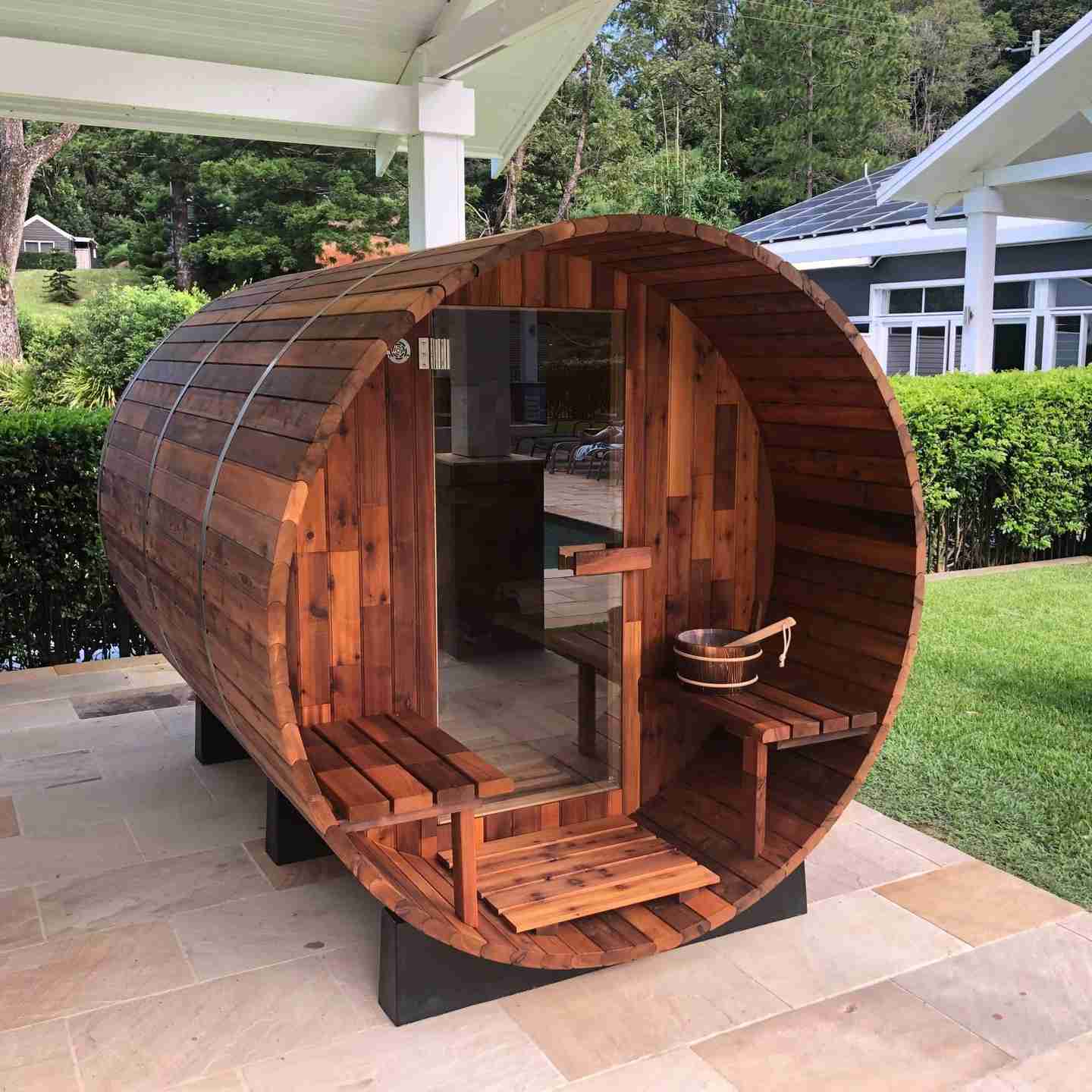
While barrel saunas traditionally utilize the same electric or wood-burning heaters as standard cabins, their unique architecture warrants an exclusive examination. The striking cylindrical shape of a barrel sauna is an engineering marvel; it heats with remarkable efficiency because the curved walls seamlessly push hot air down along the sides, entirely eliminating the stagnant, dead air space that typically accumulates near the flat ceiling of a rectangular room. A standard 6-person barrel typically spans about 6 feet in diameter and extends 7 to 8 feet in length, forging a remarkably intimate and cozy interior atmosphere.
However, the geometric elegance of the barrel requires a spatial compromise. The curvature of the walls inherently reduces the usable width of the benches as they meet the sides; you simply cannot lean flat against a curving wall in the same ergonomic manner as you would in a traditional box cabin. Furthermore, barrel saunas are exclusively designed for outdoor deployment and necessitate a perfectly leveled foundation, such as a compacted gravel pad, a poured concrete slab, or a reinforced wooden deck. If your goal is to acquire a 6-person sauna that functions as a breathtaking sculptural centerpiece in your landscaping while delivering peerless thermal dynamics, premium barrel models stand in a class of their own.
Strategic Placement: Indoor vs. Outdoor Environments
The decision regarding where to physically place your 6-person sauna is the single most influential choice you will make. This determination dictates which models you can purchase, the complexity of the installation process, the specific building materials required, and the nature of your ongoing maintenance routine.
Indoor 6-Person Saunas
Integrating a 6-person sauna inside your home requires a dedicated space measuring at a minimum of 7 feet by 9 feet. This footprint accommodates the structure itself while guaranteeing the necessary exterior clearance for assembly, airflow, and future maintenance. The host room must possess a ceiling height of at least 7 feet and, ideally, should feature a water-resistant flooring surface such as ceramic tile, sealed concrete, or luxury vinyl plank. Consequently, expansive master bathrooms, unfinished basements, dedicated home gymnasiums, and converted garages are the most highly coveted indoor locations.
Indoor models are predominantly sold as freestanding, prefabricated cabin kits designed for intuitive, on-site assembly. Industry-leading brands engineer these indoor massive 6-person saunas with precision-cut, pre-assembled wall panels that seamlessly interlock. This modular approach allows a pair of capable adults to complete the physical erection of the cabin in a single afternoon. Many contemporary indoor units feature expansive, floor-to-ceiling tempered glass front facades, which brilliantly counteract any feelings of confinement and visually integrate the sauna into your broader interior design scheme.
The primary advantage of an indoor installation is the complete elimination of climatic variables. You are forever shielded from driving rain, deteriorating UV rays, and sub-zero blizzards, which vastly extends the pristine aesthetic lifespan of the wood. However, indoor placement necessitates strict vigilance regarding moisture management. You must ensure the host room possesses adequate ambient ventilation or active HVAC extraction to prevent the condensation generated during traditional steam sessions from permeating your home’s drywall and fostering mold growth.
Outdoor 6-Person Saunas
Relocating your 6-person sauna to the great outdoors blows the doors of design limitation wide open. The exterior environment easily accommodates traditional cabins, rustic barrels, hyper-modern cube saunas, and whimsical pod designs. Furthermore, the lack of spatial constraints allows many outdoor models to incorporate lavish supplementary features, including integrated changing vestibules, covered cooling porches, and panoramic, tinted glass walls designed to frame a view of your garden, a lake, or a mountain range.
Deploying a massive outdoor sauna, however, requires rigorous site preparation. You must construct a perfectly level, weight-bearing foundation capable of supporting well over 1,500 pounds (the combined weight of the heavy timber, the stones, and six adult occupants). You must trench and bury the 240V electrical conduit from your home’s main breaker panel to the sauna site, which can be a significant expense if the distance is vast.
Moreover, the timber utilized in an outdoor build must be biologically equipped to wage war against the elements. You cannot use standard, untreated indoor softwoods. Instead, outdoor saunas demand premium, rot-resistant materials such as Thermally Modified Spruce (which undergoes a high-heat baking process to alter its cellular structure), legendary Western Red Cedar, or durable Eastern White Cedar. These elite species naturally repel moisture, resist fungal decay, and deter wood-boring insects, ensuring your investment survives decades of harsh weather.
Precision Spatial Planning and Sizing Requirements
Before you ever add a sauna to your digital shopping cart, you must execute precise physical measurements of your intended space. A 6-person sauna is a monumental piece of furniture, and guessing on dimensions will lead to disastrous consequences.
- 1. The True Footprint: The majority of 6-person saunas boast exterior dimensions hovering between 6 feet by 7 feet and 7 feet by 8.5 feet. However, if you select a luxury model equipped with a front porch or a weather-protected changing room, the total length can easily exceed 10 or 11 feet. When mapping out your floor space with painter’s tape, always verify the exterior dimensions, not the interior bathing space.
- 2. Mandatory Clearances: You cannot wedge a sauna tightly into a corner so that it touches the existing walls of your home. You must mandate a minimum clearance of 6 inches on all sides, and potentially more if dictated by your local municipal building codes. This gap is vital for ambient airflow, preventing localized moisture accumulation, and providing necessary physical access should you ever need to replace a wall panel or service the exterior. For indoor setups, vertical clearance between the sauna roof and the room’s ceiling is also critical for heat dissipation.
- 3. Optimal Ceiling Heights: The interior ceiling of the sauna itself should strictly measure between 6.5 feet and 7 feet. In the realm of thermal dynamics, taller is unequivocally not better. Heat naturally rises; therefore, an excessively high ceiling acts as a trap, hoarding the most intensely heated air high above the bathers’ heads where it provides zero therapeutic value. A lower, tightly controlled ceiling forces the heat down onto the benches where it belongs.
- 4. The Door Swing Radius: By universal safety standards and fire codes, all sauna doors must open outward. You must meticulously calculate the door’s swing radius to ensure it does not collide with adjacent walls, home gym equipment, furniture, or passing foot traffic.
- 5. Electrical Conduit Pathways: Your heavy-duty 240V electrical circuit must journey from your primary breaker panel to the precise location of the sauna heater. In the world of copper wiring, distance equals money. If your home’s electrical panel is situated in the basement on the north side of the property, and you wish to place your outdoor sauna in the deep south corner of your backyard, the cost of trenching and running thick gauge wire over that distance will be substantial. Budget for this reality well in advance.
Mastering Heater Sizing for Large Cabins
The heater is the beating, fiery heart of your traditional or hybrid sauna. Chronically undersizing the heating element is the most pervasive and catastrophic error buyers make, and the consequences are magnified exponentially at the 6-person level due to the massive volume of air involved.
The golden rule of sauna thermodynamics dictates that you require approximately 1 kilowatt (kW) of heating power for every 50 cubic feet of interior volume. If your 6-person sauna measures 6.5′ × 7.5′ × 7′, you possess roughly 340 cubic feet of space. Mathematically, this places your baseline requirement between 6.8kW and 7kW. However, in the real world, you must size up to an 8kW or 9kW unit due to several crucial environmental variables:
First, glass is a terrible insulator. Expansive glass doors and panoramic windows aggressively radiate heat out of the cabin, causing the heater to behave as if the room is significantly larger than its physical footprint. If your chosen model features a full floor-to-ceiling glass front wall, you must mathematically increase your cubic footage calculation by 25% to 50% to compensate for the massive thermal bleed.
Second, if your sauna is located outdoors in a region that experiences harsh, freezing winters, the ambient starting temperature of the wood will be drastically lower than an indoor unit. To conquer this thermal deficit and still reach 180°F in a reasonable timeframe during a January blizzard, a 9kW heater serves as vital, non-negotiable insurance.
Finally, the sheer mass of the volcanic stones matters immensely. A commercial-grade heater featuring a cavernous rock cavity can store a breathtaking amount of thermal kinetic energy. This massive heat reservoir ensures aggressive, thick steam production when water is introduced, and it prevents the room temperature from crashing during the process. For a 6-person enclosure, you should exclusively evaluate heaters capable of holding a minimum of 40 to 60 pounds of high-density sauna stones.
Demystifying Electrical Prerequisites
This is the juncture where casual buyers often stumble. A sprawling 6-person sauna is absolutely not a simple, plug-and-play consumer appliance. It requires industrial-level power. Here is a transparent breakdown of what you are financially and logistically committing to:
An 8kW electric sauna heater typically draws between 33 and 37 amps on a 240-volt system. By electrical code, this necessitates a dedicated 40-amp dual-pole breaker, serviced by robust 8-gauge copper wiring (commonly 8/2 NM-B wire for indoor residential runs). If you upgrade to a 9kW behemoth, the draw pushes closer to 40 amps, meaning your electrician must install a 50-amp breaker and potentially upgrade to 6-gauge wiring, depending on the length of the run and the specific manufacturer’s mandates.
The term “dedicated circuit” is literal. This specific breaker and wire will power the sauna heater and absolutely nothing else. You cannot piggyback this connection off your electric dryer, your oven, or your central air conditioning unit.
You must hire a licensed, bonded, and insured electrician to perform this installation. They will safely route the circuit from your main panel, hardwire the connection directly into the heater’s terminal block, install a manual safety disconnect switch within sight of the sauna (as mandated by the National Electrical Code in most jurisdictions), and ensure the entire system is properly grounded. Depending on regional labor rates, the complexity of the wire routing, and the current cost of raw copper, you must allocate a budget of $500 to $2,000 for this professional installation. Do not attempt this as a weekend Do-It-Yourself project unless you hold an active electrical license; the risk of fatal electrocution or devastating property fire is immense.
The Botanical Masterclass: Selecting the Perfect Wood
The specific species of timber utilized to construct your sauna heavily influences its structural longevity, its visual majesty, its aromatic profile, its ability to retain heat, and how the benches physically feel against your bare skin. Because a 6-person sauna contains a vast surface area of timber, selecting the correct wood is paramount.
Western Red Cedar
This is the undisputed monarch of outdoor sauna construction. Sourced primarily from the Pacific Northwest, Western Red Cedar is imbued with natural oils and resins (thujaplicins) that render it incredibly resistant to moisture, aggressive fungal rot, and wood-boring insects. It boasts a breathtaking spectrum of colors ranging from honey-blonde to deep amber, and it famously emits that intoxicating, spicy, woodland aroma when heated. Crucially, cedar has an exceptionally low thermal conductivity rating, meaning the wood remains remarkably comfortable to sit on, even when the ambient air temperature approaches 200°F.
Thermally Modified Spruce (Thermo-Spruce)
Rapidly becoming the material of choice for elite European sauna architects, Thermo-Spruce is a marvel of modern lumber engineering. The wood is subjected to an intense, multi-day baking process inside specialized oxygen-free kilns, reaching temperatures exceeding 400°F. This brutal thermal treatment permanently alters the cellular structure of the wood, cooking away the sugars and resins that typically attract rot and insects. The result is a hyper-stable, moisture-repellent timber that boasts an incredibly long outdoor lifespan and a rich, uniform, dark-chocolate aesthetic.
Canadian Hemlock
Hemlock is the unquestioned workhorse of the indoor and infrared sauna industries. It is a highly affordable, structurally stable, light-colored softwood that provides excellent thermal insulation. Notably, hemlock is entirely hypoallergenic and practically odorless, making it the perfect selection for users who are highly sensitive to the potent, lingering scent of cedar. However, hemlock is strictly an indoor-only material; it lacks the natural chemical defenses required to survive prolonged outdoor exposure without rapid decay.
Thermo-Aspen
While rarely used for the exterior walls due to cost, Thermo-Aspen is the absolute pinnacle of luxury for interior sauna benches and backrests. Aspen is a smooth, knot-free deciduous hardwood that absolutely will not splinter. When thermally treated, its thermal conductivity drops to near zero. This means that even in the most blisteringly hot sauna, a Thermo-Aspen bench will literally feel cool and velvety to the touch, drastically elevating the comfort of your 6-person bathing experience.
Integrating Smart Technology into Your 6-Person Sauna
In the modern era of wellness, your 6-person sauna should be as intelligent as it is therapeutic. Upgrading to a technologically integrated sauna transforms the user experience from analog to effortlessly digital.
The centerpiece of this technological revolution is the Wi-Fi-enabled digital controller. Elite heater brands now offer advanced wall-mounted digital interfaces that connect directly to your home’s wireless network. Through a dedicated smartphone application, you can activate your massive 6-person sauna from your office desk, during your evening commute, or while still lying in bed on a snowy Sunday morning. By the time you are ready to bathe, the 400-cubic-foot cabin has already reached your exact, pre-programmed target temperature.
Furthermore, these smart systems allow for granular control over the environment. You can set weekly heating schedules, monitor real-time energy consumption, control the interior LED lighting spectrum, and even receive push notifications alerting you when the sauna has reached optimal heat or if the door has been left ajar. For families sharing a 6-person unit, smart apps allow different users to save their bespoke “bathing profiles”—meaning the sauna will automatically adjust to 150°F for your spouse’s gentle session, but crank up to 185°F for your intense weekend sweat.
Sensory Upgrades: Chromotherapy, Aromatherapy, and Audiotherapy
A true 6-person wellness sanctuary should engage all the human senses, not just the body’s thermoregulatory system. Integrating advanced sensory features can dramatically elevate the psychological benefits of your sauna sessions.
Medical-Grade Chromotherapy
Also known as color light therapy, chromotherapy utilizes high-intensity, full-spectrum LED arrays mounted in the ceiling or behind backrests. Different wavelengths of colored light are believed to trigger specific psychological and physical responses. Flooding the spacious cabin with deep blue light can stimulate the parasympathetic nervous system, drastically reducing anxiety and promoting a state of profound calm before bed. Conversely, illuminating the sauna in vibrant red or orange light can boost energy levels, enhance circulation, and invigorate the mind prior to a morning workout.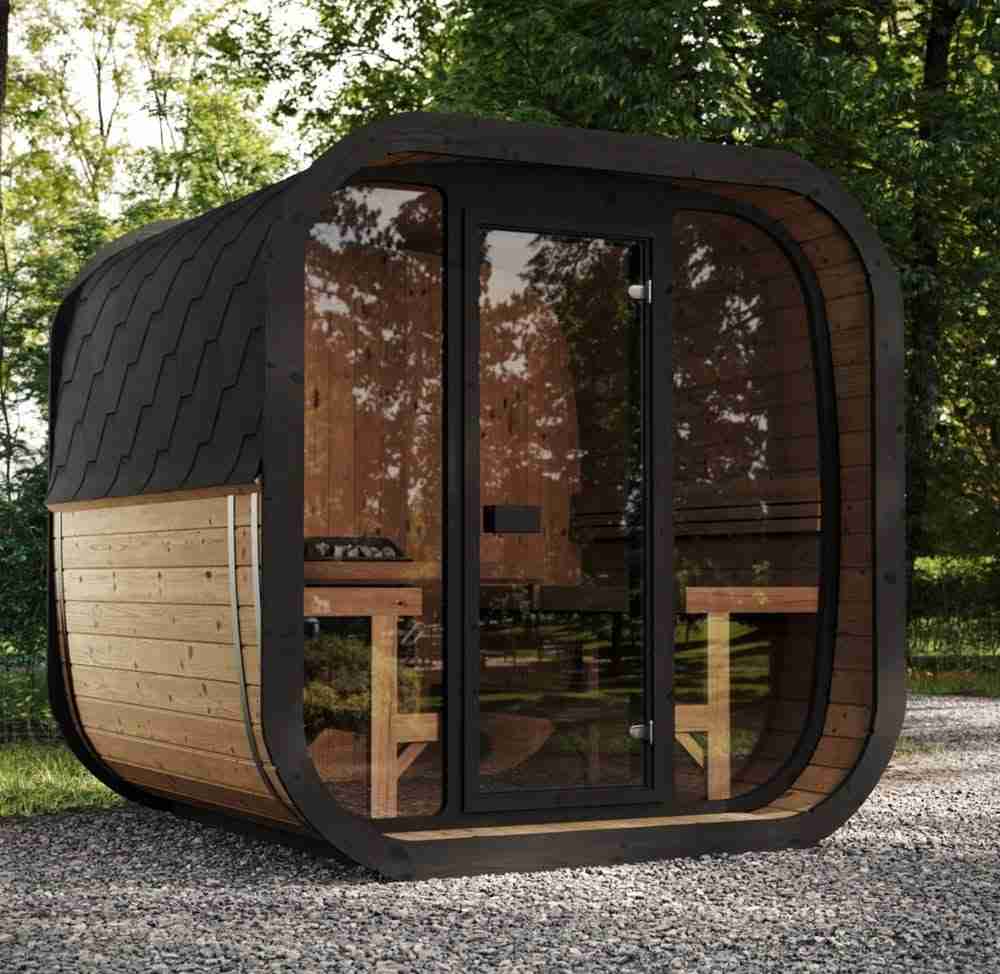
Integrated Aromatherapy & Audiotherapy
To further enhance the communal aspect of a 6-person sauna, modern units frequently incorporate sophisticated acoustic and olfactory systems. Heat-resistant, marine-grade Bluetooth speakers concealed beneath the lower benches allow you to pipe in guided meditations, acoustic music, or ambient nature soundscapes, creating a deeply immersive environment. Pairing this with a dedicated stainless-steel aromatherapy cup suspended directly over the hot stones allows you to diffuse potent essential oils—like respiratory-clearing eucalyptus, calming lavender, or grounding cedarwood—into the steam cloud, creating an unparalleled, multi-sensory spa experience in your own home.
Financial Expectations: What Does a 6-Person Sauna Cost?
A sauna of this magnitude is a generational investment in your property and your physiological health. To prevent sticker shock, here are the highly realistic, transparent price brackets you can expect to navigate based on technology and build quality:
- Indoor Infrared Cabins ($5,500 to $9,000): These represent the most fiscally accessible entry point into the 6-person market. Because they utilize low-amperage carbon panels rather than massive stone heaters, manufacturing costs are lower.
- Traditional Indoor Cabin Kits ($9,000 to $15,000): This broad spectrum accounts for the leap from basic hemlock kits to master-crafted, Thermo-Spruce European imports adorned with architectural glass and high-end digital controls.
- Traditional Outdoor Cabins ($9,000 to $18,000+): You are paying a substantial premium for extreme weatherproofing, heavy-duty roofing materials, and thicker thermal envelopes. Elaborate models featuring attached changing rooms or showers command the highest prices.
- Classic Barrel Saunas ($6,000 to $10,000): Barrels are incredibly material-efficient to manufacture and do not require complex roof framing, allowing you to secure a massive 6-person capacity at a highly reasonable price point.
- Hybrid Multiplex Cabins ($8,000 to $20,000+): Because you are effectively purchasing two entirely distinct heating systems and stuffing them into one heavily insulated luxury shell, these ultimate-versatility units sit at the apex of the pricing pyramid.
Beyond the core purchase price, you must maintain a supplementary budget. You will need $500 to $2,000 for the licensed electrical installation, $200 to $1,500 for proper outdoor foundation preparation, and roughly $200 for essential accessories like a wooden bucket, a deep-welled ladle, a reliable thermometer/hygrometer, ergonomic headrests, and premium vulcanite sauna stones.
The Logistics of Assembly and Installation
The vast majority of residential 6-person saunas are shipped as modular, flat-packed kits. This is a brilliant logistical necessity; a fully constructed, 7-foot-wide room simply cannot be maneuvered through residential gates, standard doorways, or twisting basement stairwells.
When your sauna arrives via heavy freight, you will uncrate a series of pre-fabricated panels. The physical assembly of the wooden structure is genuinely accessible for two relatively handy adults. Utilizing basic household tools—a cordless drill, a spirit level, and a rubber mallet—you can interlock the tongue-and-groove wall panels, secure the roof, and install the pre-built benching systems within roughly 4 to 8 hours.
However, as previously emphasized, you must halt your DIY efforts the moment you reach the electrical components. The installation of the heavy-duty heater and the final hardwiring connection must be surrendered to your licensed electrician. Attempting to bypass this legal requirement can instantly void the manufacturer’s warranty, nullify your homeowner’s insurance policy, and put your family in mortal danger.
The Profound Physiological Benefits of Heat Therapy
The medical justification for investing in a home sauna has never been stronger. Voluminous peer-reviewed research, heavily spearheaded by comprehensive, decades-long studies conducted in Finland and published in major medical journals, has definitively proven that frequent sauna bathing (defined as 4 to 7 sessions per week) drastically reduces the risk of fatal cardiovascular events, strokes, and all-cause mortality.
Subjecting the body to extreme heat induces a state of artificial fever, prompting the cardiovascular system to work harder. Heart rates elevate, blood vessels vasodilate, and circulation improves dramatically, mimicking the physiological effects of moderate aerobic exercise. This hyper-perfusion of blood accelerates muscular recovery, flushes metabolic waste products, and temporarily alleviates chronic joint pain. Furthermore, the intense heat triggers a massive release of endorphins and promotes deep, restorative sleep by recalibrating the body’s natural circadian temperature drops.
Owning a spacious 6-person sauna specifically amplifies these benefits because comfort equals consistency. If you are cramped in a tiny box, you will naturally cut your sessions short. When you have the sprawling space to lie down, elevate your legs, or share the experience with a loved one, you will stay in the heat longer and use the sauna far more frequently, unlocking the cumulative, life-altering health benefits.
Maintaining Your Investment for Decades
A meticulously maintained sauna will easily provide 20 to 30 years of flawless service. Despite the massive surface area of a 6-person unit, the required maintenance protocols are surprisingly minimal if executed consistently:
- The Golden Post-Session Rule: After your final round of heat, leave the electric heater running for an additional 15 minutes and prop the glass door open slightly. This allows the intense residual heat to rapidly evaporate all lingering moisture and sweat, single-handedly preventing 95% of potential mold or mildew issues.
- Weekly Hygiene: Using a soft cloth and a deeply diluted solution of water and white vinegar (or a specialized, non-toxic sauna cleaner), gently wipe down the benches to remove body oils. Vacuum the floor to clear away fallen hair and microscopic skin cells.
- Biannual Stone Maintenance: Every six months, entirely empty the rock cavity of your heater. Wash the stones to remove dust, and mercilessly discard any rocks that have cracked or crumbled due to extreme thermal cycling. Repack the heater with fresh stones, ensuring there is plenty of loose space between them for optimal air convection.
- Annual Exterior Care: For outdoor models, execute a thorough inspection of the roof for any weather damage. If you purchased an untreated wood like standard cedar, consider applying a manufacturer-approved, non-toxic UV-protectant oil to the exterior only, to prevent the wood from weathering to a silver-gray. Never apply stains or sealants to the interior of a sauna.
Frequently Asked Questions
1. How much physical floor space is strictly required for a 6-person sauna?
To comfortably accommodate a 6-person sauna, you must prepare an absolute minimum footprint of 6 feet by 8 feet for the physical structure, plus a mandatory 6-inch buffer zone on all exterior sides for airflow and maintenance. Therefore, your host room or outdoor foundation pad must measure no less than 7 feet by 9 feet. If you are upgrading to a luxury model that features an exterior cooling porch or a private changing vestibule, your spatial requirement will easily expand to 8 feet by 12 feet or greater.
2. What exact size electric heater is optimal for a 6-person capacity?
Due to the immense interior volume (typically 300 to 400 cubic feet), an 8kW or 9kW electric heater is the unquestioned standard. Do not attempt to save money by purchasing a 6kW unit; it will struggle endlessly and fail to reach deep therapeutic temperatures. If your chosen design features massive glass walls, or if the sauna will reside outdoors in a freezing northern climate, you must default to the maximum 9kW option to overcome the significant environmental heat loss.
3. Can I physically assemble and wire a 6-person sauna entirely by myself?
The physical erection of the wooden cabin is specifically engineered to be a realistic, highly rewarding DIY project for two capable adults, utilizing basic hand tools over a single weekend. However, the electrical phase is strictly off-limits for amateurs. The installation of the dedicated 240V/40-50 amp circuit and the final hardwiring of the massive heater must be executed by a certified, licensed electrician to ensure compliance with local building codes and to guarantee absolute fire safety.
4. How long does a massive 6-person sauna take to heat up?
Assuming you have paired the cabin with the correct 8kW or 9kW heater, a traditional 6-person sauna will reach its searing target temperature of 165°F to 185°F in approximately 30 to 45 minutes. Infrared models, which do not need to superheat heavy stones or ambient air, will reach their operational temperatures of 120°F to 150°F much faster, typically within 15 to 20 minutes.
5. Is a 6-person sauna considered “too big” if it’s usually just used by two people?
Absolutely not. In the world of saunas, extra space is synonymous with supreme luxury. A 6-person interior allows two individuals to lie completely flat on the benches simultaneously, which is the ultimate, most physiologically beneficial way to experience heat therapy. Furthermore, an 8kW heater consumes the exact same amount of electricity whether there are two people inside or six. Purchasing a larger unit now eliminates the profound regret homeowners often feel when they buy a small unit and later realize they have no room to stretch out or host guests.
The Perfect Closing: Your Next Steps to Wellness
Selecting the perfect 6-person sauna is a transformative decision that upgrades not just your real estate, but the fundamental quality of your daily life. This size classification strikes the ultimate balance, offering the sprawling, uncompromised luxury required to recline in total peace, while possessing the vast capacity to bring family and friends together for shared rituals of profound wellness. By carefully calculating your spatial dimensions, investing in the robust 8kW or 9kW heating power necessary for this volume, choosing a timber species uniquely suited to your climate, and committing to the proper electrical infrastructure, you are laying the groundwork for decades of reliable, life-enhancing heat therapy.
Whether you are drawn to the visceral, lung-expanding steam of a traditional Finnish cabin, the gentle, modern embrace of low-EMF infrared panels, or the architectural majesty of a sprawling outdoor cedar barrel, the perfect sanctuary is waiting for you. Do not compromise on your space or your comfort. Step confidently into the world of large-capacity saunas, and transform your home into the ultimate retreat for health, connection, and deep, enduring relaxation.