The determination of whether an infrared sauna or a traditional sauna is “better” is not a binary choice, but rather a decision dependent entirely on your specific health goals, heat tolerance, and desired physiological outcomes. To summarize the verdict: Traditional saunas are generally superior for cardiovascular health and endurance conditioning due to their ability to rapidly raise core body temperature and induce a high-intensity cardiovascular response. Conversely, infrared saunas are often the better choice for skin rejuvenation, beginners with lower heat tolerance, and those seeking a milder, more meditative experience. While both modalities offer overlapping benefits such as relaxation, improved circulation, and stress reduction, the traditional Finnish style excels at heart health, while infrared technology offers unique advantages for collagen production and dermatological clarity. Ultimately, the “best” sauna is the one that aligns with your specific wellness objectives and which you can commit to using consistently.
1. What distinguishes the heating mechanisms of traditional versus infrared saunas?
To the uninitiated, walking into a sauna feels the same regardless of the technology: you enter a wood-lined room, sit on a bench, and begin to sweat. However, the physics governing these two experiences are fundamentally different. Understanding this distinction is the first step in determining which modality suits your needs.
The Physics of Convection: Traditional Saunas
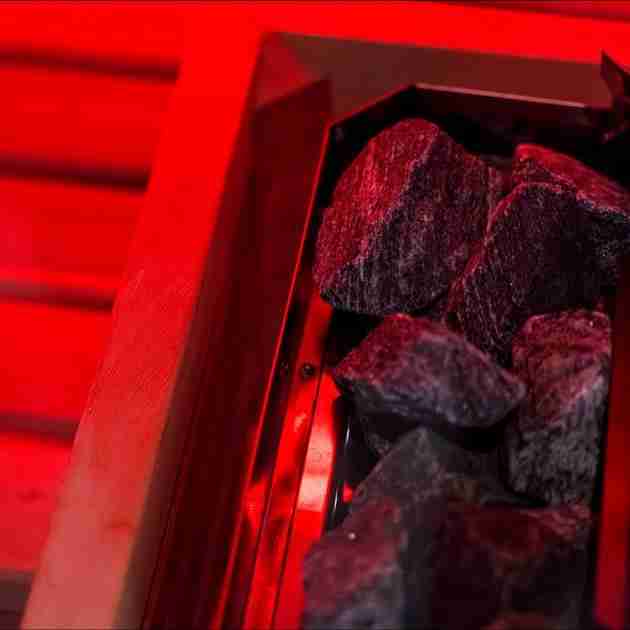
The traditional sauna, often referred to as a Finnish sauna, operates on the principle of convection. In these units, a heat source—historically a wood-burning fire, but now more commonly a high-powered electric heater—superheats a pile of rocks. These rocks radiate heat into the air, raising the ambient temperature of the room to intense levels, typically ranging between 150 and 220 degrees Fahrenheit (65–105 degrees Celsius). The hot air then makes contact with your skin, heating your body from the outside in. This environment is characterized by intense, dry heat, though humidity can be temporarily spiked by tossing water onto the heated stones (a practice known as löyly), creating a burst of steam that intensifies the sensation of heat.
The Physics of Radiation: Infrared Saunas
In stark contrast, infrared saunas do not rely on heating the air to heat the body. In fact, if you were to walk into an infrared sauna, the air temperature might only register between 100 and 165 degrees Fahrenheit (38–73 degrees Celsius), a range that feels significantly more manageable to many people. Instead of a stove, these cabins utilize ceramic or metallic panels embedded in the walls to emit far-infrared light. This light is a form of electromagnetic energy that is invisible to the human eye but felt as radiant heat.
According to Dr. Sam Setareh, director of clinical cardiology at Beverly Hills Cardiovascular, the key difference lies in the delivery system. “An infrared sauna uses infrared light to directly heat your body, rather than heating the air around you like a traditional sauna,” Dr. Setareh explains. This radiant energy penetrates the skin, heating the body from the inside out. This allows users to stay inside the unit for longer periods—often 30 to 45 minutes—compared to the 10 to 15-minute intervals typical of traditional saunas. While the mechanism is less aggressive, the result is a profound sweat that many find more detoxifying, albeit achieved through a much gentler atmospheric experience.
2. How do the cardiovascular impacts differ between high-heat and light-based therapies?
For decades, the gold standard of sauna research has come from Finland, where sauna bathing is an integral part of the culture. A landmark study published in 2015, which surveyed 2,315 men over twenty years, firmly established a link between frequent sauna use and reduced risks of cardiovascular disease and all-cause mortality. However, this research was conducted almost exclusively using traditional, high-heat saunas. The question recently posed by researchers is whether infrared technology can match these heart-healthy benefits.
The Heat Shock Response
When you enter a traditional sauna set to 180 degrees Fahrenheit, your body initiates a fight-or-flight thermoregulatory response. Your heart rate spikes, blood vessels dilate (vasodilation) to move blood to the skin’s surface in an attempt to cool down, and cardiac output increases. This physiological state mimics the effects of moderate-to-vigorous exercise.
According to a recent study published in the American Journal of Physiology, traditional saunas are significantly more effective at inducing this cardiovascular strain than their infrared counterparts. The study compared traditional saunas, infrared saunas, and hot tub immersion. Dr. Christopher T. Minson, a professor of human physiology at the University of Oregon and the study’s lead author, notes that the traditional sauna and the hot tub emerged as the clear winners for heart health.
The Core Temperature Factor
“The bottom line is that the far-infrared sauna, by far, showed the least [noticeable] rise in core body temperature—and therefore had the least cardiovascular impact,” states Dr. Minson. Because the ambient air in an infrared sauna is cooler, the body does not have to work as hard to thermoregulate. While the infrared rays are heating the tissue, the respiratory system is still inhaling relatively cooler air, preventing the core temperature from rising as rapidly as it does in a traditional convection oven environment.
This does not render infrared saunas useless for heart health, but it changes the timeline required to see results. “I’m not going to say that far-infrared saunas aren’t healthy,” Dr. Minson clarifies. “I’m just going to say that you’re going to have to do it for a lot longer—months and months and months—to see [cardiovascular] benefits.” For those seeking a passive cardiovascular workout that mimics the effects of a brisk walk or light jog, the intense heat of the traditional sauna remains the superior tool.
3. Why is infrared light therapy frequently cited as superior for dermatology and skin aesthetics?
While the traditional sauna reigns supreme for the heart, the infrared sauna appears to claim the crown for the skin. In a traditional sauna, the primary interaction with the skin is thermal stress. You sweat profusely, which can clear pores, but the extreme heat can sometimes exacerbate conditions like rosacea or cause broken capillaries in sensitive individuals.
Infrared technology, however, operates on the spectrum of light, which offers unique photobiological effects beyond simple heating. Dr. Dara Spearman, a board-certified dermatologist, highlights the distinction between sweating and true skin rejuvenation. “Even if you sweat a lot, you’re not sweating toxins out of your sweat glands,” Dr. Minson adds, debunking a common myth. Sweat is primarily water and salt. Therefore, the volume of sweat is less important than what the energy is doing to the cells.

Cellular Stimulation and Collagen
Infrared light possesses the ability to penetrate the dermis, the thick layer of living tissue below the epidermis which forms the true skin. This deep penetration stimulates the mitochondria—the powerhouses of the cells—boosting energy production and metabolism. More importantly, this stimulation can trigger the production of collagen and elastin.
“From a detoxification standpoint, if you have clogged pores or acne-type skin, then the deeper it penetrates, the better you’re going to clear those pores out,” says Dr. Spearman. Furthermore, research published in the Yonsei Medical Journal supports the claim that infrared radiation can improve skin roughness and texture. The light stimulates fibroblasts, the cells responsible for creating the structural framework of tissues.
Dr. Spearman emphasizes that for anti-aging purposes, depth matters. “If you’re looking to improve collagen production and things like that, that definitely needs to be done at a deeper level, where the collagen tissue and the elastin fibers reside. [With an infrared sauna], you’re going to increase blood flow more to that second layer of skin, and you’re going to see more improvement there than you would with a traditional sauna.” Consequently, for users targeting fine lines, wrinkles, acne, or overall skin tone, the infrared sauna offers a clear advantage.
4. Where does the scientific consensus stand on muscle recovery and deep tissue penetration?
One of the most pervasive marketing claims surrounding infrared saunas is their ability to penetrate inches deep into the body to heal torn muscles and soothe aching joints. The logic presented is that because infrared light can travel deeper than hot air, it must be superior for athletic recovery. However, the medical community urges caution regarding these claims.
The Theory vs. The Evidence
The theory is that deep heat increases blood flow to the muscles, flushing out metabolic waste products like lactic acid and delivering oxygen-rich blood to repair micro-tears. “Compared to traditional saunas, it is thought that the heat would penetrate deeper into the skin and the tissues,” explains Dr. Setareh. “So, that deeper penetration could, I guess, target the muscles and the joints, making it more beneficial for chronic pain relief, muscle recovery, and flexibility.”
However, when put to the test, the science is less conclusive. Dr. Minson expresses skepticism about the exaggerated depth of penetration often advertised by manufacturers. “I still think far-infrared saunas are healthy, but I also think that the claims from the far-infrared sauna companies are way outblown beyond the science,” he warns. His research team conducted experiments monitoring internal tissue temperature and found that the stimulus from far-infrared did not reach the profound muscular depths often cited in brochures.
The Indirect Benefit
This does not mean infrared saunas fail to aid recovery. They undeniably increase peripheral circulation. Even if the heat is primarily concentrated in the skin and subcutaneous fat, the systemic relaxation and increased blood flow generally benefit the musculoskeletal system. The warmth helps relax tensed muscles and stiff joints, reducing the perception of pain. However, the notion that infrared light is performing deep-tissue surgery on your quadriceps is likely an overstatement. For muscle recovery, the benefit likely comes from the general application of heat and the relaxation response, a benefit shared by both traditional and infrared units.
5. Who benefits most from the lower temperatures of infrared cabins compared to Finnish steam?
The choice between saunas often comes down to the user’s personal tolerance profile. The traditional sauna is an extreme environment. Temperatures of 190°F+ can feel suffocating to some; the air is hot to breathe, the nostrils can tingle, and the heart races. For some, this is a euphoric challenge. For others, it is a panic-inducing stressor.
The Heat-Sensitive and The Elderly
Infrared saunas serve as a vital entry point for the wellness world. Because they operate at much lower temperatures (110°F–140°F), the experience is far more gentle. Users can breathe easily, read a book, or listen to a podcast without feeling overwhelmed by heat. “Infrared saunas could offer the practical benefit of serving as an entry point for people who are new to saunas and may not yet feel comfortable with the higher heat of a traditional sauna,” agree Dr. Setareh and Dr. Minson.
This makes infrared ideal for:
- Beginners: Those who have never experienced heat therapy.
- Elderly Individuals: Who may not have the cardiovascular stability to handle the extreme vascular dilation of a traditional sauna.
- Those with Respiratory Issues: The dry, lower-temperature air is less likely to trigger asthmatic responses compared to the heavy steam (löyly) of a Finnish sauna.
- Meditation Seekers: The environment is less physically demanding, allowing for a longer, more contemplative session.
Conversely, the “Who” for traditional saunas includes endurance athletes looking for heat acclimation training, individuals seeking the “runner’s high” associated with endorphin release from extreme heat, and purists who value the cultural ritual of the fire and steam.
6. When is the optimal time to utilize these therapies for maximum physiological adaptation?
Timing and duration are critical variables that differ between the two modalities. Because of the temperature discrepancy, the protocols for use are not interchangeable.
Traditional Sauna Protocols
Due to the intensity, traditional sauna sessions are typically shorter. The optimal window is often cited as 10 to 20 minutes. Staying in longer than this at temperatures exceeding 180°F increases the risk of dehydration and heat exhaustion. The traditional practice often involves “rounds”: 15 minutes in the heat, followed by a cold plunge or cold shower, a rest period, and then re-entry. This contrast therapy pumps the lymphatic system and invigorates the nervous system.
Infrared Sauna Protocols
Infrared sessions are endurance events. Because the heat accumulates slowly and the body is heated directly, it takes longer to induce a profuse sweat. Experts recommend sessions lasting 30 to 45 minutes. This longer duration is necessary to achieve the core temperature rise that a traditional sauna achieves in half the time. Therefore, an infrared sauna is best utilized when you have ample time to relax, perhaps in the evening to aid sleep, or on rest days from the gym.
Dr. Minson provides a pragmatic perspective on the timing: “I think, any time you’re doing something that is aligned to some degree with better health, then it’s worth the time.” Whether it is a quick 15-minute blast in a traditional sauna post-workout or a slow 45-minute burn in an infrared cabin on a Sunday morning, consistency trumps perfection.
The Sensory Experience – A Comparative Walkthrough
To truly understand the choice, one must visualize the sensory details of the experience.
The Traditional Experience:
You open the heavy wooden door and are immediately walled by a wave of heat. It is a physical force. The air smells of roasted spruce or cedar. You sit on the bench, and within two minutes, your skin feels hot to the touch. You grab the ladle and toss water on the rocks. Hiss. An invisible cloud of steam rises, and suddenly the heat feels twice as intense, settling on your shoulders and clearing your sinuses. Your heart pounds—a rhythmic thumping you can feel in your ears. After 15 minutes, you exit, gasping for cool air, your skin mottled red, feeling a rush of endorphins akin to finishing a sprint.
The Infrared Experience:
You step into a cabin that is glowing with a warm, amber hue. It feels warm, like a sunroom on a summer day, but not oppressive. The air is dry and easy to breathe. You sit on the bench and for the first ten minutes, you might wonder if it is working. You scroll through your phone; the device doesn’t overheat. Then, a deep warmth begins to spread from your core. Sweat begins to bead, not from the air stinging your skin, but from deep within. It is a slow, creeping perspiration that eventually becomes a deluge. After 40 minutes, you step out feeling deeply relaxed, loose, and calm, rather than invigorated and rushed.
Investment and Logistics – What to Know Before You Buy
If you are considering installing a sauna at home, the differences extend beyond biology to logistics and economics.
Electrical and Energy Requirements
Traditional saunas are energy hogs. They typically require a dedicated 220V hardwired electrical line (similar to an electric dryer or oven) and a 30-40 amp breaker. They take 30 to 45 minutes to “pre-heat” before you can even get in, which adds to the electricity bill. Infrared saunas are generally more efficient. Many lighter models can plug into a standard 120V household outlet (though dedicated circuits are recommended), and they are ready to use almost immediately or within 10-15 minutes. They consume significantly less power because they are not trying to heat the entire volume of air in the room.
Installation and Maintenance
Traditional saunas require careful attention to ventilation and moisture control. Because you are introducing steam (water on rocks), mold is a potential risk if the room is not properly vented. Infrared saunas are “dry” saunas. They produce no moisture and require no special ventilation for humidity, making them much easier to install in a bedroom, basement, or carpeted area. However, infrared panels are delicate electronic components; if a panel fails, it can be expensive to replace, whereas a traditional heater is a relatively simple mechanical device consisting of heating elements and rocks.
Frequently Asked Questions (FAQs)
1. Does an infrared sauna burn as many calories as a traditional sauna?
Generally, no. While both types of saunas increase metabolic rate, the traditional sauna burns more calories per minute. This is because the extreme heat of a traditional sauna forces the heart to work significantly harder to cool the body down, mimicking cardiovascular exercise. While infrared sauna companies often claim massive calorie burns (up to 600 per session), these numbers are often inflated. The majority of “weight” lost in any sauna is water weight, which is regained upon rehydration. However, the caloric burn in a traditional sauna is higher due to the increased cardiac demand.
2. Is electromagnetic field (EMF) radiation a concern with infrared saunas?
This is a common concern among wellness enthusiasts. Because infrared saunas use electrical panels to generate light waves, they emit Electromagnetic Fields (EMF). In the past, some cheaper models emitted high levels of EMFs. However, modern, high-quality infrared saunas are typically designed to be “Low-EMF” or “Ultra-Low EMF,” often utilizing technology to cancel out magnetic fields. Traditional saunas (specifically the electric heaters) also emit EMFs, but because you sit further away from the heater than you do from infrared panels, the exposure is often lower. If this is a concern, look for third-party tested low-EMF infrared models.
3. Can I use my phone or tablet inside the sauna?
This is one of the practical “perks” of the infrared sauna. Because the ambient air temperature is lower (usually under 150°F), it is generally safe to bring electronics inside for short periods, allowing you to listen to music or read e-books. In a traditional sauna, where temperatures soar past 180°F and steam is present, electronics will almost certainly overheat and shut down within minutes, and moisture damage is a real risk. The infrared sauna is the friendlier option for the tech-addicted, though many purists argue that the digital detox is part of the health benefit.