Introduction
If you’ve ever stepped out of a sauna, toweled off, hit the scale, and felt like you just “lost” two pounds… yeah, that little dopamine hit is real. So is the confusion that follows when the “loss” is gone by dinner.
Here’s the boring truth hiding under the sweat: most sauna “weight loss” is just you temporarily shrinking your water tank. Your body didn’t magically melt fat because you sat in a hot box scrolling your phone.
And the distinction matters. End users chase phantom progress. Wellness operators get stuck explaining why a client’s “three-pound drop” wasn’t a breakthrough. Commercial buyers end up dealing with complaints when customers realize the scale is a liar with good lighting.
So let’s talk about what’s actually happening in your body during a sauna session—and what the number on the scale really means.
What Really Changes in Your Body During One Hour in a Sauna
Sweat loss and temporary body weight reduction
In a sauna, your body dumps fluid to cool you down. That’s the whole show. And because 1 liter of water weighs about 1 kilogram (2.2 lb), sweat loss can make the scale drop fast.
Under typical sauna conditions, sweat loss is often estimated around 0.6 to 1.0 kg per hour (about 1.3–2.2 lb)—and it can swing higher or lower depending on heat, humidity, body size, and whether you came in already dehydrated.
Real-world study examples line up with that: one experiment using +80°C Finnish sauna exposure reported ~0.7–0.9 kg body weight drop after 1 hour. That’s not fat. That’s fluid leaving the building.
Fluid loss is the primary source of short-term weight change
When you sweat hard, you’re losing water and electrolytes (especially sodium). Plasma volume can dip, your blood becomes more concentrated for a while, and your heart has to work harder to keep circulation steady.
This is also why people can feel lightheaded after “pushing it” in high heat. You didn’t “detox.” You got mildly dehydrated.
Core temperature regulation and cardiovascular response
Sauna heat raises core temperature and kicks your cardiovascular system into gear. Heart rate commonly climbs into ranges you’d associate with light-to-moderate activity, depending on the protocol and the person.
One study measuring blood pressure and heart rate during a single sauna session found the cardiac load during sauna use was comparable to moderate exercise output (about 60–100 watts)—which sounds impressive until you remember: you’re still not using large muscle groups, and this isn’t the same as training.
Energy expenditure compared to light physical activity
Yes, you burn some extra calories in the sauna because your body is doing heat management. But it’s not a cheat code.
A study in young sedentary overweight men using repeated sauna bouts reported a 60-minute treatment produced an average body mass drop of ~0.65 kg, and their measured physiological strain rose over successive bouts. Translation: it’s work for the body—but the scale drop is still mostly water.
Popular media summaries of the research tend to put sauna calorie burn in the “modest” range, not “running on a treadmill” range.
Why fat loss does not occur at sauna-level heat exposure
Fat loss requires a meaningful energy deficit. Sitting in heat doesn’t reliably create that. You might get a temporary metabolic bump (one older experiment noted metabolic rate increases after sauna exposure), but the math still isn’t enough to explain multi-pound “losses.”
And sweating itself doesn’t burn much energy. Sweating is a cooling mechanism, not a fat-burning mechanism—so chasing more sweat is basically chasing more dehydration.

Water Weight Loss vs. Fat Loss: Understanding the Difference
What “water weight” actually means
“Water weight” is just fluid your body is carrying—in blood plasma, inside muscles, between cells, and moving through digestion. When you sit in a sauna, you reduce that fluid temporarily.
But you also lose electrolytes. That’s why the classic “sauna cut” (fighters love it) can leave people feeling wrecked: less water + less sodium = lower blood volume + worse tolerance to heat and exertion.
Rapid rebound after rehydration
Drink water (and eat normally) and the scale rebounds. Not because you “failed,” but because your body is restoring normal fluid balance.
Also: after big sweat loss, replacing only plain water isn’t always the move—electrolyte balance matters, especially if you’re doing long sessions or stacking sauna with workouts.
Why scale numbers can be misleading
The scale is brutally honest about mass, and totally clueless about meaning.
Short-term drops tell you almost nothing about body fat. If you want real progress, you’d look at trends over weeks, waist measurements, or body composition—not a post-sauna weigh-in when you’re at peak dehydration.
Risks of repeated dehydration-based weight loss
This is where the “quick win” gets dumb.
Sports medicine guidance often flags ~2% body mass loss as a threshold where hydration loss starts messing with how you feel and perform, and the risk picture gets worse as dehydration increases.
If you’re repeatedly trying to “lose weight” via sauna, you’re basically practicing controlled dehydration. That can backfire—headaches, dizziness, cramps, lousy workouts, and a higher chance of heat illness if you overdo it.
Why session duration and temperature control matter
Most sauna research protocols aren’t “one heroic 60-minute bake.” They’re often shorter exposures (like 5–20 minutes), repeated with breaks. There’s a reason for that: heat stress stacks.
Factors That Influence How Much Weight You Appear to Lose
Sauna type and heat delivery method
Traditional saunas and steam rooms heat the air (and sometimes raise humidity). Infrared heats you more directly at lower air temperatures, which can change comfort and how long people stay inside.
If humidity is high, sweat evaporation slows, you feel hotter, and people often tap out sooner—or sweat harder in shorter time. Either way, your “weight loss” is still fluid.
Session variables
Turn the temperature up, extend the session, cut the breaks, and you’ll usually see a bigger scale drop. Not because you discovered a hack. Because you increased dehydration.
That’s why controlled protocols matter, and why “how much weight did I lose?” is a lousy metric unless you also track: session time, cabin temp, and how much you drank before/after.
Individual differences
Bigger bodies often sweat more in absolute terms. People with higher BMI can also experience greater sauna-induced body mass loss, and may be at higher risk for dehydration if they treat it like a contest.
And if you sauna regularly, you can acclimate—your body may sweat earlier or more efficiently. That can change the scale swing, but again: it’s still mostly water moving around.
Professional Sauna Design and Weight-Loss Perception
Here’s the part wellness businesses learn the hard way: people confuse “I sweated a lot” with “I burned fat.” If your setup encourages extreme, uncontrolled heat exposure, you’ll spend a lot of time doing customer service.
Why controlled infrared environments change user perception
A controlled infrared cabin tends to create a more consistent experience: steadier session temps, less “spike and suffer,” fewer users trying to prove something to their friends. That makes the after-session story easier to manage—“I feel better” instead of “why did my weight bounce back?”
Infrared doesn’t magically make fat loss happen. It just reduces the odds that users turn the sauna into dehydration theater.
Example: Full-spectrum infrared sauna systems for residential and light commercial use
Smartmak’s product page for the 2–3 person luxury indoor full spectrum infrared sauna is here: Custom Luxury 2–3 Person Indoor Full Spectrum Infrared Sauna Room.
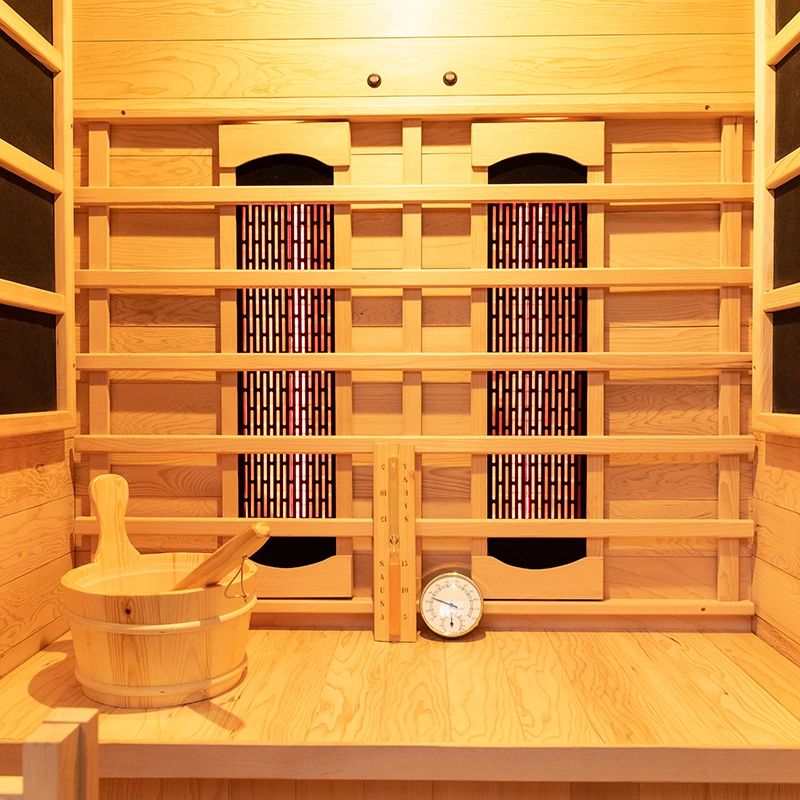
It’s positioned around controllable, repeatable sessions—stuff that matters when you’re trying to keep user expectations sane:
- Near, mid, and far infrared wavelengths
- Digital temperature control and session timing
- Enclosed cabin design for consistent heat exposure
If you want more context pieces to link clients to (so staff don’t have to repeat the same speech 40 times), Smartmak already has a couple:
- Can a sauna help you lose weight? 7 truths about saunas and weight loss
- How often should you use an infrared sauna
- Do saunas help you lose belly fat? (Ultimate guide)
Value for B2B buyers and wellness operators
The win isn’t “weight loss.” The win is fewer problems:
- Easier education: you can clearly separate “water weight swings” from actual body composition change.
- Less misuse: fewer guests turning sessions into heat marathons.
- Fewer disputes: fewer “your sauna didn’t work” complaints when the scale rebounds the next day.
Conclusion
One hour in a sauna mostly makes you lighter because you temporarily ran low on fluid. That’s it. The scale drop is real, but it’s not fat loss.
If you want sustainable weight management, you’re back to the unsexy basics: food, movement, sleep, stress. Saunas can support those—recovery, relaxation, routine—but they don’t replace them.
That’s why a well-designed custom infrared sauna—with precise temperature control, session timing, and consistent heat delivery—not only supports real wellness goals but also helps manage user expectations. These systems keep the experience on the right track: wellness, not wishful thinking.
FAQ
Is sauna weight loss permanent?
No. The immediate “loss” is mostly water leaving through sweat, and it typically returns when you rehydrate and eat normally. Permanent weight loss requires a sustained calorie deficit over time, not a hot room.
How much water weight can you lose in a sauna?
A common range discussed in research is roughly 0.6–1.0 kg (1.3–2.2 lb) per hour of sweat loss under sauna conditions, with plenty of individual variation. Some studies report around ~0.7–0.9 kg drop after 1 hour in a Finnish sauna protocol.
Does sweating in a sauna burn fat?
Sweating is cooling, not fat burning. Sauna heat can raise heart rate and slightly raise energy expenditure, but the big weight change you see right after is fluid loss—not body fat being “sweated out.”
Is infrared sauna better for weight loss than steam sauna?
If “weight loss” means “scale drop right after,” both can cause water loss. Infrared often runs at lower air temperatures than traditional sauna/steam setups, which can make sessions feel more tolerable—but it doesn’t turn sauna time into a fat-loss substitute for exercise.
Can daily sauna use help with weight management?
It can help indirectly—routine, stress reduction, recovery, sleep support—depending on the person. But daily use should be approached with basic heat safety and hydration in mind, and it’s still not the main driver of fat loss. If you’re consistently leaving sessions down 2% of body weight, that’s not a “plan,” it’s dehydration practice.